




SCARS Institute’s Encyclopedia of Scams™ Published Continuously for 25 Years

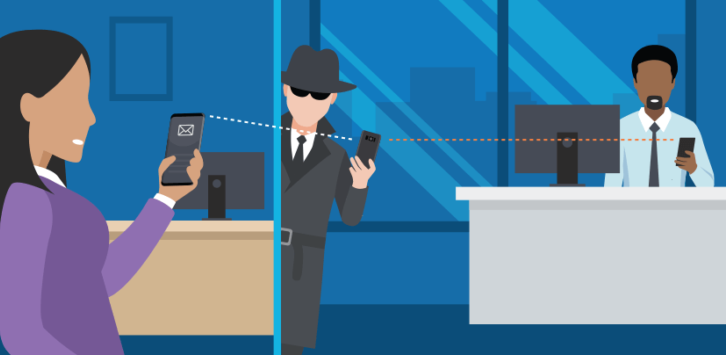
Man-in-the-Middle (MITM) Attack – A Type Of Cybercrime
A man-in-the-middle (MITM) attack is a type of cyber attack where an attacker secretly relays and possibly alters the communications between two parties who believe that they are directly communicating with each other, as the attacker has inserted themselves between the two parties. One example of a MITM attack is active eavesdropping, in which the attacker makes independent connections with the victims and relays messages between them to make them believe they are talking directly to each other over a private connection, when in fact the entire conversation is controlled by the attacker.
The attacker must be able to intercept all relevant messages passing between the two victims and inject new ones. This is straightforward in many circumstances; for example, an attacker within the reception range of an unencrypted Wi-Fi access point could insert themselves as a man-in-the-middle. As it aims to circumvent mutual authentication, a MITM attack can succeed only when the attacker impersonates each endpoint sufficiently well to satisfy their expectations.
There are a number of ways that victims can recognize and avoid MITM attacks. These include:
- Use a secure HTTPS connection whenever possible. HTTPS encrypts the traffic between your device and the website, making it more difficult for attackers to intercept it.
- Be careful about what websites you visit. Only visit websites that you trust.
- Keep your software up to date. Software updates often include security patches that can help protect your device from MITM attacks.
- Use a VPN. A VPN encrypts all of your traffic, making it more difficult for attackers to intercept it.
If you think you may have been a victim of a MITM attack, there are a few things you can do:
- Change your passwords. This includes your passwords for your email, bank accounts, social media accounts, and any other online accounts that you use.
- Scan your device for malware. There are many free and paid antivirus and anti-malware programs available.
- Report the incident to the authorities. This will help them track down the attackers and bring them to justice.
MITM attacks are a serious cybercrime, but they are one that can be avoided by taking some simple precautions. By following the tips above, you can help protect yourself from being compromised.
Here are some additional tips to help you avoid MITM attacks:
- Be aware of the risks of public Wi-Fi. Public Wi-Fi is often unencrypted, making it easier for attackers to intercept your traffic. If you must use public Wi-Fi, be sure to use a VPN.
- Be careful about what information you share online. Criminals can use information that you share online, such as your date of birth or home address, to target you with MITM attacks.
- Keep an eye on your bank statements and credit card statements. If you see any unauthorized charges, report them to your bank or credit card company immediately.
By following these tips, you can help protect yourself from MITM attacks and other online scams.
-/ 30 /-
What do you think about this?
Please share your thoughts in a comment below!
Table of Contents
To Understand All Scams
Read This
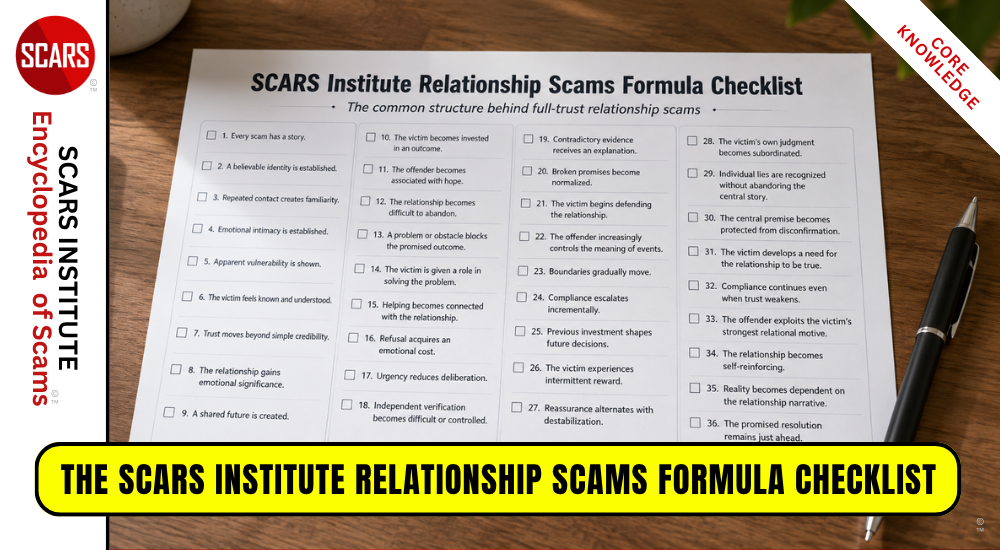
The SCARS Institute Relationship Scams Formula Checklist
This is the Formula that all Relationship Scams Follow




In the U.S. & Canada

U.S. & Canada Suicide Lifeline 988

Recent Comments
On Other Articles
- Barbara on SCARS Institute – Romance Scam Simulator: “Fantastic! I have to go to bed, but I’ll do some more tomorrow. I picked an easy scenario tonight, but…” Oct 9, 18:01
- on United States – Federal Bureau of Investigations [FBI]: “It is only that way because of the shame you feel. The reality is that it was not your fault.…” Sep 30, 15:36
- on United States – Federal Bureau of Investigations [FBI]: “yhisis humiliating experience e and isembarassassing to to own up to peolealreadyassume u are not to bright because Arnold and…” Sep 30, 12:28
- on United States – Federal Bureau of Investigations [FBI]: “should be better known by public live in assisiwdlivi g apartment many manyinstancresof Romance scams here ano.us ederly l” Sep 30, 12:24
- on Is It A Scam? Phone Scam Diagnostic – v1: “I tried the this test Is it a phone scam? Mine was. I think this is a helpful tool to…” Sep 30, 10:34
- on Is It A Scam? Romance Scam Diagnostic – v2: “Carole, as you move forward with your recovery, you will learn how this all works. It was not your fault.…” Sep 29, 17:37
- on Is It A Scam? Romance Scam Diagnostic – v2: “I was blinded by such clever manipulation” Sep 29, 15:15
- on The SCARS Institute Relationship Scams Formula Checklist – 2026: “As I read this I could see myself in every step with my scam. I gained a lot more knowledge…” Aug 28, 19:51
- on The Persistence of Danielle Delaunay as a Fake Identity – 2026: “Unfortunately, you are being scammed. She is using a fake name regardless. At this point, your best option is to…” Aug 26, 20:16
- on The Persistence of Danielle Delaunay as a Fake Identity – 2026: “Dear Sirs, I have met this woman with the name Abigail Boateng in Ghana. I have an intensive mail contact…” Aug 26, 12:28

Thank you for your comment. You may receive an email to follow up. We never share your data with marketers.