




SCARS Institute’s Encyclopedia of Scams™ Published Continuously for 25 Years
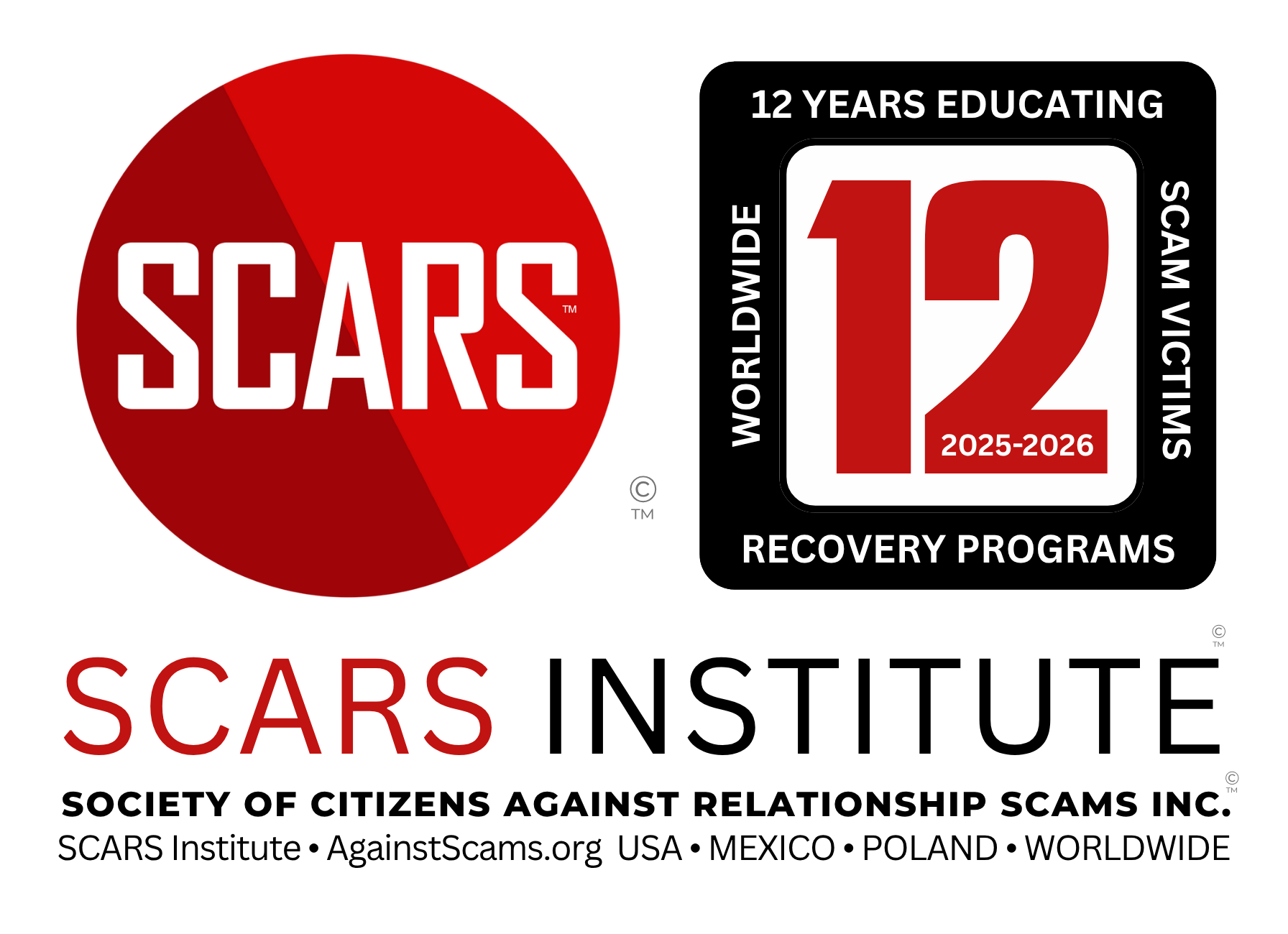

Cyberterrorism – An Overview
The Internet can easily be used for terrorist purposes!
This includes:
- propaganda (including recruitment, radicalization and incitement to terrorism)
- terrorist financing (through online scams and direct fundraising)
- terrorist training
- planning of terrorist attacks (including through secret communication and open-source information)
- execution of terrorist attacks
- cyberattacks & cybercrime
The term cyberterrorism has been applied by some to describe the use of the Internet for terrorist purposes.
Online Terrorism Connection
Information and communication technology (ICT) can be used to facilitate the commission of terrorist-related offenses (a form of cyber-enabled terrorism) or can be the target of terrorists (a form of cyber-dependent terrorism).
Specifically, ICT can be used to promote, support, facilitate, and/or engage in acts of terrorism.
Particularly, the Internet can be used for terrorist purposes such as the spreading of “propaganda (including recruitment, radicalization and incitement to terrorism); [terrorist] financing; [terrorist] training; planning [of terrorist attacks] (including through secret communication and open-source information); execution [of terrorist attacks]; and cyberattacks” (UNODC, 2012, p. 3).
Just as there is no universal consensus on a definition of cybercrime, there is no universally accepted definition of terrorism nor of cyberterrorism.
Conceptions of cyberterrorism have ranged from “more expansive conceptions; including any form of online terrorist activity; and narrower understandings of this concept.”
The narrow understanding of cyberterrorism has been described as “pure cyberterrorism” by some. This narrow definition considers cyberterrorism as a cyber-dependent crime perpetrated for political objectives to provoke fear, intimidate and/or coerce a target government or population, and cause or threaten to cause harm (e.g., sabotage). Examples of this narrow conception of cyberterrorism include “attacks that lead to death or bodily injury, explosions, plane crashes, water contamination, or severe economic loss. Serious attacks against critical infrastructures could be acts of cyberterrorism, depending on their impact. Attacks that disrupt nonessential services or that are mainly a costly nuisance would not” according to some sources. It is important to note that this limitation of cyberterrorism to cybercrimes committed against critical infrastructure (or pure cyberterrorism) is not widely held.
Some cyberterrorism laws have been criticized for being overly broad and being used by governments to prosecute activists and dissidents. In view of that, more expansive conceptions of cyberterrorism in law lead to disproportionate limitations of human rights.
While certain countries have national cyberterrorism laws (e.g., India, Section 66-F, Information Technology Act of 2000; Pakistan, Section 10, Prevention of Electronic Crimes Act of 2016; and Kenya, Section 33, Computer Misuse and Cybercrimes Act of 2018), cyberterrorism is not explicitly prohibited under international law up to the present.
Even though there is no universally accepted definition of cyberterrorism and international law does not explicitly criminalize cyberterrorism, “most laws contain offense-creating provisions directly targeting malicious acts aimed at destroying or interfering with the functioning of” critical infrastructure. Specifically, acts of terrorism against critical infrastructure sectors, such as the transportation (e.g., aviation and maritime), nuclear, and government sectors, are prohibited under certain provisions of United Nations international conventions and protocols, such as:
- 1963 Convention on Offences and Certain Other Acts Committed on Board Aircraft, and its supplementary Protocol of 2014;
- 1970 Convention for the Suppression of Unlawful Seizure of Aircraft, and its supplementary Protocol of 2010;
- 1971 Convention for the Suppression of Unlawful Acts against the Safety of Civil Aviation;
- 1973 Convention on the Prevention and Punishment of Crimes Against Internationally Protected Persons;
- 1980 Convention on the Physical Protection of Nuclear Material;
- 1988 Convention for the Suppression of Unlawful Acts Against the Safety of Maritime Navigation;
- 1988 Protocol for the Suppression of Unlawful Acts Against the Safety of Fixed Platforms Located on the Continental Shelf;
- 1988 Protocol for the Suppression of Unlawful Acts of Violence at Airports Serving International Civil Aviation, supplementary to the Convention for the Suppression of Unlawful Acts against the Safety of Civil Aviation;
- 1997 International Convention for the Suppression of Terrorist Bombings;
- 2005 Amendments to the Convention on the Physical Protection of Nuclear Material;
- 2005 International Convention for the Suppression of Acts of Nuclear Terrorism;
- 2005 Protocol for the Suppression of Unlawful Acts Against the Safety of Fixed Platforms located on the Continental Shelf;
- 2005 Protocol to the Convention for the Suppression of Unlawful Acts Against the Safety of Maritime Navigation;
- 2010 Convention on the Suppression of Unlawful Acts Relating to International Civil Aviation.
Countries that are parties to these conventions and protocols are obliged to harmonize their domestic legal frameworks with the provisions of these instruments, whereas those “that are not parties to some of the conventions and protocols are encouraged to ratify or accede them” pursuant to United Nations Security Council Resolution 1373 (2001). Countries are further required to comply with UNSC Chapter VII binding resolutions in the fight against terrorism. UNSC Resolution 2370 (2017) “urges the Member States to act cooperatively to prevent terrorists from acquiring weapons, including through information and communications technologies, while respecting human rights and fundamental freedoms and in compliance with obligations under international law, and stresses the importance of cooperation with civil society and the private sector in this endeavor, including through establishing public-private partnerships.”
Countries, who are not parties frequently have equivalent, or in some cases stronger laws – such as the United States.
Ultimately, what is considered cyberterrorism depends on the country that is labeling the act. Nonetheless, the mislabeling of acts as cyberterrorism can have detrimental consequences, resulting in disproportionate sentences for those prosecuted for this cybercrime. In this vein, in the United Nation’s view: all counterterrorism laws “must be limited to the countering of offenses within the scope of, and as defined in, the international conventions and protocols relating to terrorism, or the countering of associated conduct called for within resolutions of the Security Council, when combined with the intention and purpose elements identified in Security Council resolution 1566 (2001)” ( E/CN.4/2006/98, para. 39). Conversely, “[c]rimes not having the quality of terrorism, regardless of how serious, should not be the subject of counter-terrorism legislation” ( E/CN.4/2006/98, para. 47).
Reality
Terrorism, wherever it is located, relies on the Internet for communications and functions.
Much of cybercrime serves to fund terrorism in all its forms. Prior to 9/11, Al Qaeda generated billions of dollars by its connection to African, Middle Eastern, and Asian online scams & fraud.
When both experiencing cybercrime or combatting it, it is important to remember that still today that much of it is funding groups like Boko Haram, Abu Nidal, and other Al Qaeda or Islamic State affiliates.
This is particularly important for vigilante victims to insist on rushing into territories and situations where they have no business going. While not all scammers are violent, they are all capable of violence when pushed. Some estimates are that dozens (possibly hundreds) of scam victims are killed or disappear each year while trying to track down and get revenge against cybercriminals.
Even if cyber criminals were not connected to terrorism, they remain dangerous in their home territories.
Fortunately, this terrorism connection is considered a major priority for global anti-terrorism and national law enforcement agencies around the world.
TAGS: SCARS, Cyberterrorism, Cyberterrorists, Terrorists, Terrorist funding, scams & terrorism, Information About Scams, Anti-Scam, Scams, Scammers, Fraudsters, Cybercrime, Crybercriminals, Romance Scams, Scam Victims, Online Fraud, Online Crime Is Real Crime, Scam Avoidance

SCARS™ Team
Society of Citizens Against Relationship Scams Inc.
A Worldwide Crime Victims Assistance Nonprofit Organization
Visit: www.AgainstScams.org
Contact Us: Contact@AgainstScams.org
PLEASE SHARE OUR ARTICLES WITH YOUR FRIENDS & FAMILY
HELP OTHERS STAY SAFE ONLINE – YOUR KNOWLEDGE CAN MAKE THE DIFFERENCE!
REPORT-BLOCK-RECOVER





-/ 30 /-
What do you think about this?
Please share your thoughts in a comment below!
Table of Contents
- The Internet can easily be used for terrorist purposes!
- Specifically, ICT can be used to promote, support, facilitate, and/or engage in acts of terrorism.
- Finally Tax Relief for American Scam Victims is on the Horizon – 2026
- Ethereum ETHM Token Trap and Pig Butchering Scams – 2026
- New U.S. Law – S.3643 – 118th Congress – Will Dramatically Impact Scammers and Terrorists – 2026
- How Scam Survivors Can Survive Valentine’s Day – 2026
- U.S. Veterans Benefits Scams – 2026
- New AI Voice Cloning Phone Scams – 2026
- FIND MORE SCAM NEWS
SCAMCRIME.COM - FIND SCAMMER PHOTOS ON
SCARSONLINE.ORG - JOIN US ON FACEBOOK
CLICK HERE




Rapid Report Scammers

In the U.S. & Canada
U.S. & Canada Suicide Lifeline 988
LEAVE A COMMENT?
Recent Comments
On Other Articles
- SCARS Institute Editorial Team on Establishing The United States Task Force To Eliminate Fraud – 2026: “Make Online Safe Again!” Mar 17, 19:11
- on Establishing The United States Task Force To Eliminate Fraud – 2026: “Finally an administration takes the initiative to help solve the gigantic situation. Make America Safe Again, thank you!” Mar 17, 15:41
- on What Is The Difference Between A Scam Victim And A Scam Survivor? [Updated]: “Due to my scams I don’t fully trust anyone online and I shouldn’t even those people I knew in high…” Mar 7, 12:46
- on SCARS 3 Steps For New Scam Victims 2024: “I was very fearful “he” would come to my home because I was knew my address, I spoke to someone…” Mar 7, 09:50
- on Sadness & Scam Recovery: “Before my scam, my mom passed away and I got a divorce, so I was dealing with the loss of…” Mar 7, 09:37
- on The Story Of Kira Lee Orsag (aka Dani Daniels) [Updated]: “There is NO evidence and she is not, she is a victim too. Sebastian, stop letting your anger think for…” Mar 6, 23:18
- on The Story Of Kira Lee Orsag (aka Dani Daniels) [Updated]: “There is real evidence that behind these two people there is something that not many people know. This woman is…” Mar 4, 03:58
- on Signs of Good & Bad Scam Victim Emotional Health: “ty this helps me with knowing why I cant quit eating when I am not hungry and when I crave…” Mar 2, 20:43
- on The SCARS Institute Top 50 Celebrity Impersonation Scams – 2025: “You should probably add Lawrence O’donnell as a scam also. I clicked on a site on tic tok for msnbc,…” Mar 2, 08:41
- on Finally Tax Relief for American Scam Victims is on the Horizon – 2026: “I just did my taxes for 2025 my tax account said so far for romances scam we cd not take…” Feb 25, 19:50
ARTICLE META
Important Information for New Scam Victims
- Please visit www.ScamVictimsSupport.org – a SCARS Website for New Scam Victims & Sextortion Victims
- Enroll in FREE SCARS Scam Survivor’s School now at www.SCARSeducation.org
- Please visit www.ScamPsychology.org – to more fully understand the psychological concepts involved in scams and scam victim recovery
If you are looking for local trauma counselors please visit counseling.AgainstScams.org or join SCARS for our counseling/therapy benefit: membership.AgainstScams.org
If you need to speak with someone now, you can dial 988 or find phone numbers for crisis hotlines all around the world here: www.opencounseling.com/suicide-hotlines
A Note About Labeling!
We often use the term ‘scam victim’ in our articles, but this is a convenience to help those searching for information in search engines like Google. It is just a convenience and has no deeper meaning. If you have come through such an experience, YOU are a Survivor! It was not your fault. You are not alone! Axios!
A Question of Trust
At the SCARS Institute, we invite you to do your own research on the topics we speak about and publish, Our team investigates the subject being discussed, especially when it comes to understanding the scam victims-survivors experience. You can do Google searches but in many cases, you will have to wade through scientific papers and studies. However, remember that biases and perspectives matter and influence the outcome. Regardless, we encourage you to explore these topics as thoroughly as you can for your own awareness.
Statement About Victim Blaming
SCARS Institute articles examine different aspects of the scam victim experience, as well as those who may have been secondary victims. This work focuses on understanding victimization through the science of victimology, including common psychological and behavioral responses. The purpose is to help victims and survivors understand why these crimes occurred, reduce shame and self-blame, strengthen recovery programs and victim opportunities, and lower the risk of future victimization.
At times, these discussions may sound uncomfortable, overwhelming, or may be mistaken for blame. They are not. Scam victims are never blamed. Our goal is to explain the mechanisms of deception and the human responses that scammers exploit, and the processes that occur after the scam ends, so victims can better understand what happened to them and why it felt convincing at the time, and what the path looks like going forward.
Articles that address the psychology, neurology, physiology, and other characteristics of scams and the victim experience recognize that all people share cognitive and emotional traits that can be manipulated under the right conditions. These characteristics are not flaws. They are normal human functions that criminals deliberately exploit. Victims typically have little awareness of these mechanisms while a scam is unfolding and a very limited ability to control them. Awareness often comes only after the harm has occurred.
By explaining these processes, these articles help victims make sense of their experiences, understand common post-scam reactions, and identify ways to protect themselves moving forward. This knowledge supports recovery by replacing confusion and self-blame with clarity, context, and self-compassion.
Additional educational material on these topics is available at ScamPsychology.org – ScamsNOW.com and other SCARS Institute websites.
Psychology Disclaimer:
All articles about psychology and the human brain on this website are for information & education only
The information provided in this article is intended for educational and self-help purposes only and should not be construed as a substitute for professional therapy or counseling.
While any self-help techniques outlined herein may be beneficial for scam victims seeking to recover from their experience and move towards recovery, it is important to consult with a qualified mental health professional before initiating any course of action. Each individual’s experience and needs are unique, and what works for one person may not be suitable for another.
Additionally, any approach may not be appropriate for individuals with certain pre-existing mental health conditions or trauma histories. It is advisable to seek guidance from a licensed therapist or counselor who can provide personalized support, guidance, and treatment tailored to your specific needs.
If you are experiencing significant distress or emotional difficulties related to a scam or other traumatic event, please consult your doctor or mental health provider for appropriate care and support.
Also read our SCARS Institute Statement about Professional Care for Scam Victims – click here to go to our ScamsNOW.com website.


Thank you for your comment. You may receive an email to follow up. We never share your data with marketers.