


SCARS Institute’s Encyclopedia of Scams™ Published Continuously for 25 Years
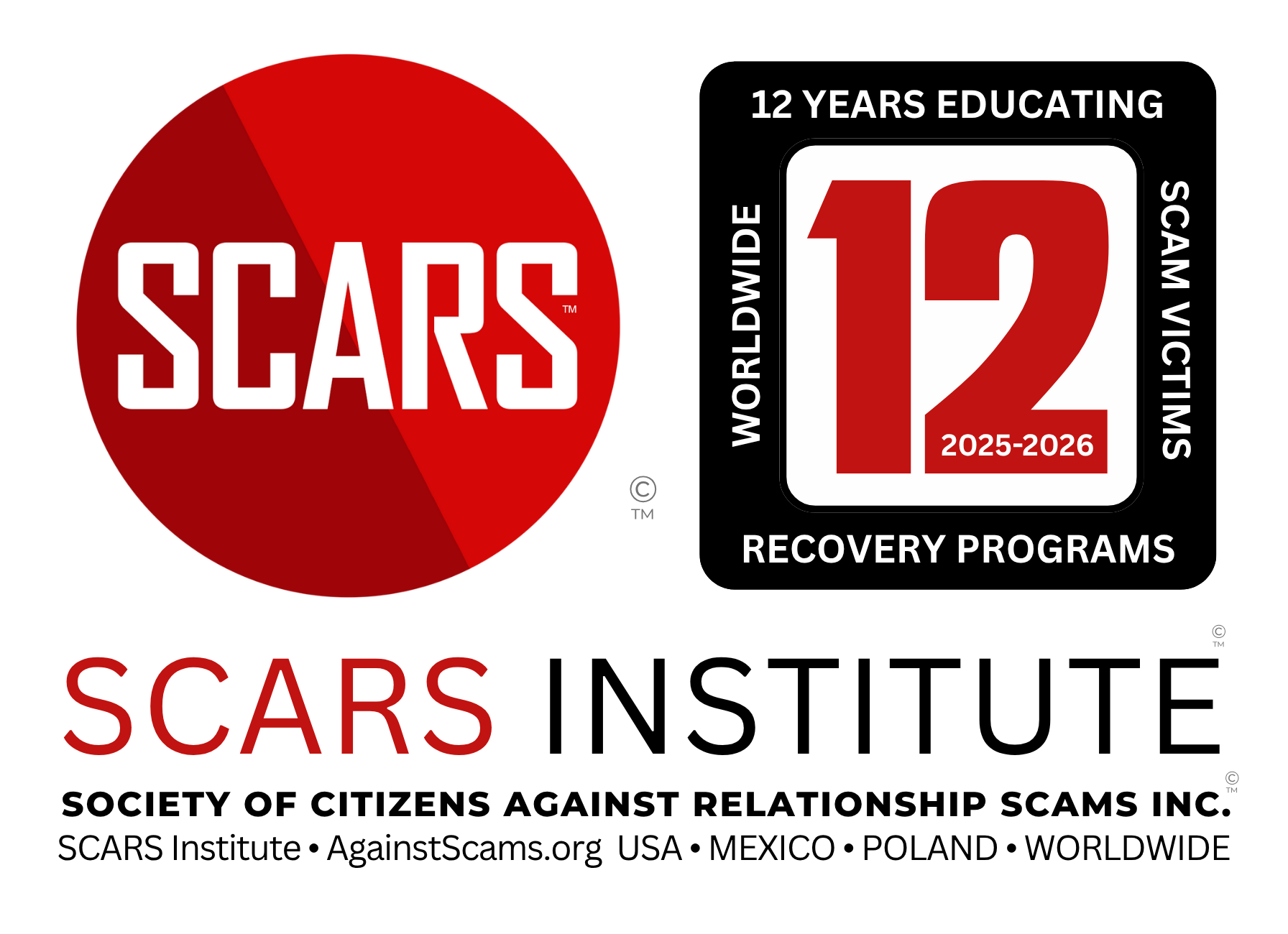


Carl Sagan’s Baloney Detection Toolkit
Scam Detection: The Fine Art of Scam Awareness and Avoidance Based on Carl Sagan’s Baloney Detection Toolkit
Scam & Deception Avoidance – A SCARS Institute Insight
Authors:
• SCARS Institute Encyclopedia of Scams Editorial Team – Society of Citizens Against Relationship Scams Inc.
• Based, in part, on and interpreted from the work of Carl Sagan
Article Abstract
Scams are not just about lies; they are about manipulating the way your mind works. Scammers succeed by exploiting your need to trust, your desire for connection, and your natural tendency to look for patterns or explanations. Carl Sagan’s baloney detection kit gives you practical tools to fight back against these tricks. These tools are not just for scientists. They are for everyday life, especially for scam victims learning how to protect themselves from future harm. By asking for real evidence, checking facts with outside sources, talking openly with trusted people, and questioning complex stories, you create a defense against manipulation. You replace emotional reactions with thoughtful decisions. You stop letting fear, urgency, or loneliness control your judgment. Scams will always exist, but you can reduce their power by practicing the habit of critical thinking. You do not need to live in fear of being fooled again. You need to build new habits that help you slow down, check the facts, and stay grounded in reality. This is not just about avoiding scams. It is about reclaiming your confidence and protecting your future.

Scam Detection: The Fine Art of Scam Awareness and Avoidance Based on Carl Sagan’s Baloney Detection Toolkit
Definition of Baloney (noun): foolish or deceptive talk; scam; nonsense
Carl Sagan’s Baloney Detection
Carl Sagan wrote The Demon-Haunted World in 1995 as a guide for thinking clearly in a confusing world, which we highly recommend to all scam survivors. His goal was simple. He wanted to teach people how to separate truth from deception. He called this process the fine art of baloney detection. It was not about being negative or cynical. It was about using tools of reason to protect yourself from lies, false promises, and manipulative thinking.
Sagan believed that the world is full of wonder, but also full of trickery. He saw how easily people fall for hoaxes, scams, and pseudoscience. He knew that humans are vulnerable to false claims, especially when they come wrapped in emotional language or authoritative voices. To prevent this, he developed a practical toolkit that anyone can use. He called it the baloney detection kit.
This kit is not a physical object. It is a set of habits. Sagan taught that you must ask for evidence, check claims against reality, and avoid falling into common thinking traps. He explained how cognitive biases and logical fallacies make it easy for anyone to believe things that are not true. He also showed how predators and manipulators exploit these weaknesses.
You do not need to be a scientist to use Sagan’s method. You only need to care about the truth and commit to careful thinking. Scam victims often say they wish they had stopped and asked more questions before they trusted someone. Sagan’s toolkit helps you build that habit. It trains you to pause, reflect, and test ideas before you act on them. It teaches you to protect yourself from deception by slowing down and thinking critically.
The Fine Art of Scam Detection: Why Baloney Detection Matters Now More Than Ever
Carl Sagan’s concept of baloney detection comes from his book The Demon-Haunted World: Science as a Candle in the Dark. He wrote this book to help ordinary people think clearly and avoid being tricked by false claims. Sagan did not believe in blind trust or automatic belief. He believed in testing ideas, asking questions, and demanding evidence. He called this process the fine art of baloney detection because it takes practice, attention, and patience.
In today’s world, scams are one of the most dangerous forms of modern deception. Scammers do not just use lies. They use manipulation, emotional pressure, and social engineering to bypass your critical thinking. They trick you into moving too fast, trusting too easily, or ignoring red flags. Scams work because they hijack normal human emotions. They make you feel urgency, fear, love, or hope, then steer you into choices you would not normally make. The scammer’s goal is to overwhelm your reasoning so they can control your decisions.
If you have been scammed, that does not mean you are foolish. It means you are human. Everyone is vulnerable when emotions take over. Scammers understand this. They know how to create situations that bypass logic. They do not need you to be ignorant. They only need you to be rushed, isolated, or distracted for a moment. That is when the scam works.
The goal of this article is to teach you how to protect yourself by learning the same skills Sagan described in his baloney detection kit. These tools are not just for scientists or academics. They are for everyone. They are especially useful for scam victims who want to rebuild trust in themselves and avoid being tricked again. By learning how to pause, ask the right questions, and check for real evidence, you can make better decisions. You can spot scams before they control your life. You can protect your future by thinking clearly, even when someone is trying to confuse you.
Section 1: Always Ask for Evidence
One of the most important lessons from Carl Sagan’s baloney detection kit is simple. You must always ask for evidence. When someone makes a claim, you cannot just take their word for it. You need to ask, “What is the proof?” This is true in science, in daily life, and especially when dealing with scams.
Scammers make their claims sound believable on purpose. They design stories that trigger your emotions so you will not stop to ask for proof. A romance scammer promises love and loyalty. A business scammer promises high profits or special deals. A tech support scammer warns you about fake computer problems. A law enforcement scammer threatens you with jail time unless you cooperate right away. Each scam relies on a specific emotional reaction. Once you are emotionally hooked, you become less likely to demand evidence.
You need to break that pattern. No matter what the claim is, you must stop and ask, “Where is the proof?” Do not accept emotional stories as evidence. Someone telling you they love you is not proof of their identity. Someone sending you a photo is not proof that the person in the picture is the one you are talking to. Scammers can send screenshots, fake documents, fake IDs, or staged photos. These are easy to copy, fake, or buy online. The internet is full of stolen images and false profiles. You cannot assume that what you see is real just because it looks convincing.
Real evidence must be verifiable through trusted, independent sources. That means you need to check it from outside the conversation. For example, if someone says they are in the military, you can search military romance scam databases to see if the photos have been reported before. If someone says they are a banker, lawyer, or government agent, you can call the official number of the institution, not the number the person gives you, to verify the claim. You can run reverse image searches to check photos. You can look up names, credentials, and histories to see if the story makes sense. This process protects you from falling into the scammer’s trap.
In a real transaction, the other person welcomes questions. Real people understand when you ask for verification. Honest businesses provide receipts, contracts, and ways to confirm their identity. Real relationships develop over time, not through pressure or secrecy. Scammers avoid verifiable facts because facts will expose the lie. That is why you must never rely on screenshots, text messages, or dramatic stories as your only source of truth. These are performances, not proof.
Scams work because people assume that the conversation feels real, so it must be real. That is exactly why scammers succeed. They create an experience that feels personal, urgent, or special. You must resist the pull of that experience until you have real, independent confirmation of the facts. You owe it to yourself to stop and ask, “What is the proof?” If the person cannot provide verifiable, outside evidence, you are probably dealing with a scam. Do not take their word for it. Make them prove it.
Section 2: Use Independent Confirmation
When someone makes a claim, you cannot just accept it at face value. You need to check that claim with an outside, neutral source. This is especially important when dealing with scammers because they work hard to control the information you see. They do not want you to verify anything. They want you to stay inside the story they are telling you.
If someone says they are from law enforcement, a government agency, or your bank, you cannot trust the phone number or email address they provide. Scammers often spoof phone numbers to make them look official. They send fake documents that appear real. They create fake websites that look like trusted institutions. You need to break away from the contact information they give you. Look up the real number on the official website and call it yourself. Do not use links or numbers they provide. Use your own research to confirm whether the claim is true.
Romance scammers are experts at building false identities. They often say they are military officers, doctors working overseas, or businesspeople stuck in complicated situations. They send photos, videos, and documents to build their case. You need to take the next step and verify their story using tools that do not depend on them. You can run reverse image searches to check if their photos are stolen. You can check phone numbers against scam reporting sites. You can search public records or social media to see if the details match up. This is not about being suspicious. It is about protecting yourself from fraud.
Independent confirmation helps you move from belief to knowledge. Scammers rely on keeping you trapped in an emotional bubble where you only hear their side. When you step outside that bubble and check the facts for yourself, you stop playing by their rules. You break the control they have over the situation. You bring in reality from the outside world.
Real people and real institutions expect you to check facts. They respect your caution. Only scammers will pressure you to accept their claims without outside proof. You owe it to yourself to slow down, step back, and confirm the facts independently. This habit protects you from deception and keeps you grounded in truth.
Section 3: Encourage Debate and Multiple Viewpoints
Scammers rely on isolation. They do not just steal money or personal information. They control your thinking by cutting you off from outside opinions. One of the first signs of a scam is when someone pressures you to keep the situation a secret. They might say things like, “Do not tell anyone about this,” or “This is private between us.” When you hear that, you need to stop and ask yourself why they want you to stay silent.
Isolation makes you vulnerable. When you keep a secret relationship or a private transaction hidden from others, you lose the chance to get honest feedback. Scammers know this. They work hard to keep you emotionally hooked so you will not talk to anyone else. They want you to believe that the connection is unique, special, or confidential. This tactic is part of the manipulation.
Healthy skepticism means talking to others about what is happening. It is not about being negative or doubting everything in life. It is about getting multiple viewpoints so you can see the situation more clearly. Trusted friends, family members, or support groups can offer insight you might miss when you are emotionally involved. When you explain the situation out loud, you hear your own words differently. You might catch red flags you ignored before. Other people can ask questions you forgot to ask yourself.
Debating the facts with someone you trust helps you slow down. It gives you room to think critically instead of reacting emotionally. Support groups for scam victims can also provide a safe space to share your story. These groups are often filled with people who have seen similar scams before. They recognize patterns you might not notice on your own.
You do not need to figure everything out by yourself. Let others help you check the details. Honest conversations expose manipulation. When you bring trusted people into the situation, you protect yourself from falling deeper into deception. Scammers lose control when you stop keeping secrets and start asking for multiple viewpoints.
Section 4: Beware of Arguments That Trigger Authority Bias
Authority bias happens when you believe something just because the person saying it claims to be an expert or holds a title. Scammers know how to use this against you. They pretend to be police officers, military generals, government agents, lawyers, or financial advisors. They present themselves as trusted figures, so you will not question what they say. The scam works when you believe the claim because of the role, not because of real evidence.
When someone introduces themselves with a title, your mind automatically gives them more credibility. This is a natural human response. Most people are taught to respect authority from a young age. Scammers take advantage of that. They know you are more likely to comply if they appear to represent law enforcement, the military, or a financial institution. They create fake uniforms, fake badges, and fake paperwork to support the role they are playing. They may even use official-sounding language to sound more convincing.
Real authority does not mind being questioned. A legitimate police officer, attorney, or financial professional expects you to ask for verification. Real professionals do not get angry when you check their credentials. They understand due process and will give you time to confirm their identity. They will not pressure you to make a quick decision or act in secrecy.
If someone claims to be from an official agency, ask for their full name, badge number, department, and contact information. Then step away from the conversation and verify that information independently. Call the official number of the agency, not the number the person gives you. Look up the organization through a trusted website or directory. If the person is real, you will be able to confirm it easily. If the person resists verification, you are likely dealing with a scam.
Remember, real law enforcement officers do not collect fines or threaten arrest over the phone. Government agents do not demand wire transfers or cryptocurrency payments. Financial experts do not guarantee profits or require personal financial information by text message or email. These are all warning signs.
When you let a title or uniform control your decision-making, you hand over your power. You need to focus on facts, not roles. Scammers love authority bias because it stops you from thinking critically. You can protect yourself by staying calm, asking questions, and refusing to act until you have confirmed who you are talking to.
Section 5: Avoid Circular Reasoning
Scammers love to trap you in emotional loops. These loops are a type of circular reasoning where the claim and the proof are the same. Instead of offering facts, the scammer gives you feelings. They say things like, “Trust me because I care about you,” or “This is real because I say it is.” When you accept that logic, you become stuck in a circle where the scammer controls both sides of the conversation.
Circular reasoning is dangerous because it feels emotionally satisfying, especially when you are vulnerable. You want to believe that someone cares. You want to believe that you are safe or loved, or chosen. The scammer uses this desire to close the loop. They create statements that sound meaningful but actually prove nothing. For example, “I am real because I love you” is not proof of identity. Love is a feeling. Identity is a fact. You cannot prove a fact by pointing to an emotion.
Another version of circular reasoning happens in financial scams. A scammer might say, “This investment is safe because I am an expert,” and then add, “I am an expert because I know this investment is safe.” That is not real logic. That is a circular trap designed to keep you from asking harder questions.
The only way to break out of circular reasoning is to demand outside evidence. You must ask for facts that exist beyond the scammer’s words. Feelings are not proof. Personal assurances are not proof. Promises are not proof. You need independent verification that can be checked without relying on the scammer’s story.
In romance scams, this means asking for identity verification from trusted, outside sources. It means running reverse image searches, checking records, and talking to friends or professionals who can help you think clearly. In financial scams, it means checking licenses, reading reviews from trusted sources, and confirming business credentials directly through official channels. You cannot let the scammer define both the question and the answer.
Real trust is built on consistent actions, transparent information, and time. It is not built on emotional declarations that loop back on themselves. When someone says, “This is real because I say so,” you need to pause. You need to step back and ask, “What is the actual proof?” If the only answer you get is more emotional language, you are not getting an answer at all.
Scammers use circular reasoning because it works. It keeps you locked in a pattern where you stop asking real questions. You can protect yourself by breaking the circle. Refuse to accept feelings as evidence. Look for facts you can verify. That is how you escape emotional loops and stay grounded in reality.
Section 6: Watch Out for False Dichotomies
Scammers often trap you by presenting false dichotomies. A false dichotomy is a trick where someone tells you there are only two options, even though that is not true. This tactic forces you into an emotional corner. It pushes you to choose between extremes. In reality, life is almost never that simple.
A scammer might say, “Either you trust me, or you are cruel and suspicious.” They use this kind of statement to make you feel guilty for asking questions. If you hesitate, they accuse you of not caring or not believing in love. This happens often in romance scams. The scammer pretends that the only way to prove your loyalty is to ignore your instincts and go along with their requests. They pressure you to make a choice between blind trust and personal failure. That is not a fair choice. It is a manipulation.
In financial scams or emergency scams, the false choice sounds different, but it works the same way. A scammer might say, “Either you act now, or you lose everything.” They push you to send money, give out personal information, or comply immediately. They create fake deadlines. They make you believe that if you do not respond right away, you will miss out or face serious consequences. This is designed to trigger fear and panic, not clear thinking.
Real life is more complex than yes or no, now or never, trust or distrust. There are always more options. You can pause. You can gather more information. You can check with other people. You can think carefully before making a decision. Scammers do not want you to realize that. They build a false wall around the situation so you feel trapped.
False dichotomies are not just dishonest, they are dangerous. They work by taking away your sense of control. When you believe you only have two choices, you become easier to manipulate. The scammer sets the terms of the conversation, and you stop looking for other solutions. That is why you need to recognize this tactic when it happens.
When you hear phrases like, “If you do not do this now, you will regret it forever,” or “If you do not believe me, you do not care about me,” stop and think. Ask yourself, “What other options do I have?” The answer is almost always more than just two.
You can delay the decision. You can ask for more evidence. You can check with someone you trust. You can do nothing until you are sure of the facts. These are valid options, and they belong to you. Scammers want you to forget that. They build pressure because pressure makes you react emotionally, not logically.
False choices are never about helping you make good decisions. They are about forcing you into a position where you cannot think clearly. You can protect yourself by staying calm, noticing the manipulation, and stepping back. When you remind yourself that there are always more choices, you take back control of the situation.
Section 7: Understand That Correlation Is Not Causation
One of the easiest ways for a scammer to trick you is by tying unrelated facts together to make their story sound true. They rely on your natural tendency to connect events that happen close together. Your brain wants to create patterns. Scammers use this against you.
For example, a romance scammer might say, “We met by fate. That must mean this is meant to be.” The timing of the meeting feels important, so you start believing that the connection is special. You might ignore red flags because the coincidence seems meaningful. This is not evidence of truth. It is just an emotional reaction to timing.
Financial and tech scammers do the same thing. They might say, “Your bank account was flagged right after you logged in. That proves there is fraud.” In reality, the timing is a coincidence they set up to scare you. They create a fake problem, then tie it to your recent activity to make the threat feel real. They are counting on you to confuse correlation with causation.
Correlation means two things happen at the same time or in sequence. Causation means one thing directly caused the other. Scammers blur these lines to control your thinking. They make you believe that because two events are close together, one must have caused the other. This shuts down your critical thinking and keeps you in the scammer’s trap.
You can protect yourself by slowing down and asking, “What is really causing this?” Look for real connections, not just convenient timing. Question the story. Ask for facts that show a direct cause, not just an emotional link. If you cannot find solid evidence of cause and effect, you are probably dealing with manipulation.
Scammers survive by feeding you stories that seem to make sense at first glance. They create emotional shortcuts that feel true because the timing fits. You need to step back and look deeper. Remember, just because two things happen close together does not mean one caused the other. Recognizing this will help you stay grounded in logic and protect yourself from being fooled.
Section 8: Demand Falsifiability
One of the clearest ways to separate truth from deception is by checking if a claim can be tested. A real claim allows for the possibility of being proven false. If a statement cannot be challenged or examined, it does not belong in a serious decision. This is what Carl Sagan meant by falsifiability. It is a basic part of critical thinking.
Scammers avoid falsifiability on purpose. They make vague, emotional claims that cannot be checked. They might say, “I am real because you feel a connection,” or “This is legitimate because I say it is.” These are not testable claims. They are emotional hooks wrapped in personal language. They leave no room for investigation or proof. That is a warning sign.
When someone says something is true, you must ask, “Can I verify this? Can I check the facts in a way that might show the claim is false?” If the answer is no, you are in dangerous territory. Claims that depend only on your feelings or on the scammer’s insistence should not be trusted. You need more than promises or emotional reassurances. You need real, testable details.
Legitimate offers and real people can be checked. You can confirm someone’s identity through independent sources. You can verify a business license, a legal document, or a financial claim. You can look up records, contact institutions, or ask for proof that can be reviewed by someone other than the person making the claim. Real relationships grow stronger when facts support trust.
Scams break down under investigation. That is why scammers keep you focused on how you feel. They want you to stop asking questions. You can protect yourself by doing the opposite. Demand that claims be open to testing. If someone cannot provide that, it is not truth. It is manipulation.
Section 9: Apply Occam’s Razor
Occam’s Razor is a thinking tool that helps you make better decisions. It teaches you to prefer simpler explanations when they fit the facts. The idea is not about being narrow-minded. It is about choosing the explanation that requires the fewest assumptions. When you hear a story, you should ask yourself, “What is the most straightforward explanation that makes sense?”
Scammers do not want you to think this way. They create stories that are complicated on purpose. They add unnecessary details, backstories, and excuses to distract you from the simple truth. Romance scammers often say they are secret agents who cannot show their real identity. Some say they are stranded oil rig workers with no access to banks. Others claim they are wealthy investors caught up in political or legal problems that prevent them from using their money. These stories are designed to pull you into a world of fantasy where you stop questioning the basics.
In reality, the simplest explanation is usually correct. If someone claims they cannot video chat because they are a secret operative, the simpler truth is that they are not who they say they are. If someone asks for money because they cannot access their accounts from an offshore oil rig, the simpler explanation is that they are lying. If a so-called banker says they need you to pay a private fee to release funds, the simpler answer is that you are being scammed.
Scams rely on overcomplicated lies because complexity keeps you distracted. The more confusing the story is, the less likely you are to notice the basic facts that do not add up. Scammers add drama and unusual circumstances to make you feel special or involved in something unique. They use emotional language to keep you hooked. They create problems that only you can help solve. This makes the scam feel personal, but it is really just another way to keep you from applying simple logic.
When you apply Occam’s Razor, you remind yourself to stop getting lost in the details. You focus on the core of the situation. You ask yourself, “What is the simplest explanation for what is happening right now?” If someone’s story sounds too dramatic, too unique, or too difficult to verify, that is a sign you need to step back. The most likely reason for all those complicated details is that the person is not telling you the truth.
You do not need to know every part of the scammer’s plan to protect yourself. You only need to recognize when a story is unnecessarily complex. Trust the straightforward answer, not the fantasy. When something seems too complicated to be real, it usually is. Use simple logic to stay grounded. That is how you protect yourself from scams that depend on confusion and emotional distraction.
Conclusion
Use Baloney Detection to Protect Yourself
Scammers survive by targeting the parts of the human mind that want to trust. You are built for connection, not suspicion. Most people believe what they see, hear, or feel because that is how everyday life works. Scammers know this. They take advantage of your natural instincts. They use social tricks, emotional pressure, and false stories to bypass your critical thinking. They do not need you to be uneducated or careless. They only need you to be human.
Carl Sagan’s baloney detection kit was not created just for scientists. It was designed for everyone who wants to live more safely and think more clearly. These tools help you protect yourself from scams, fraud, and manipulation. They are everyday survival tools, not academic exercises. They teach you to slow down, ask the right questions, and demand real proof before you act.
If you are a scam survivor, it is easy to fall into shame. You might ask yourself, “How did I fall for that?” You might replay the scam in your mind, searching for the moment when you lost control. That cycle of regret can keep you stuck. Shame can stop you from learning. It can make you afraid to trust yourself again.
You can break that cycle by building new skills. Use your experience to strengthen your critical thinking. Learn how to pause before believing. Learn how to check facts before acting. These habits will help you rebuild your confidence. They will give you tools to protect yourself in the future, instead of living in fear of making another mistake.
Scams will always exist. There will always be people who use lies to get what they want. You cannot stop all scammers from trying, but you can stop them from controlling your life. When you use the tools of baloney detection, you give yourself the power to see scams for what they are, deceptions that fall apart under real investigation.
-/ 30 /-
What do you think about this?
Please share your thoughts in a comment below!
Table of Contents
- Scam Detection: The Fine Art of Scam Awareness and Avoidance Based on Carl Sagan’s Baloney Detection Toolkit
- Scam Detection: The Fine Art of Scam Awareness and Avoidance Based on Carl Sagan’s Baloney Detection Toolkit
- Carl Sagan’s Baloney Detection
- The Fine Art of Scam Detection: Why Baloney Detection Matters Now More Than Ever
- Section 1: Always Ask for Evidence
- Section 2: Use Independent Confirmation
- Section 3: Encourage Debate and Multiple Viewpoints
- Section 4: Beware of Arguments That Trigger Authority Bias
- Section 5: Avoid Circular Reasoning
- Section 6: Watch Out for False Dichotomies
- Section 7: Understand That Correlation Is Not Causation
- Section 8: Demand Falsifiability
- Section 9: Apply Occam’s Razor
- Conclusion

Rapid Report Scammers

In the U.S. & Canada
U.S. & Canada Suicide Lifeline 988
LEAVE A COMMENT?
Thank you for your comment. You may receive an email to follow up. We never share your data with marketers.
Recent Comments
On Other Articles
- on What Is The Difference Between A Scam Victim And A Scam Survivor? [Updated]: “Due to my scams I don’t fully trust anyone online and I shouldn’t even those people I knew in high…” Mar 7, 12:46
- on SCARS 3 Steps For New Scam Victims 2024: “I was very fearful “he” would come to my home because I was knew my address, I spoke to someone…” Mar 7, 09:50
- on Sadness & Scam Recovery: “Before my scam, my mom passed away and I got a divorce, so I was dealing with the loss of…” Mar 7, 09:37
- on The Story Of Kira Lee Orsag (aka Dani Daniels) [Updated]: “There is NO evidence and she is not, she is a victim too. Sebastian, stop letting your anger think for…” Mar 6, 23:18
- on The Story Of Kira Lee Orsag (aka Dani Daniels) [Updated]: “There is real evidence that behind these two people there is something that not many people know. This woman is…” Mar 4, 03:58
- on Signs of Good & Bad Scam Victim Emotional Health: “ty this helps me with knowing why I cant quit eating when I am not hungry and when I crave…” Mar 2, 20:43
- on The SCARS Institute Top 50 Celebrity Impersonation Scams – 2025: “You should probably add Lawrence O’donnell as a scam also. I clicked on a site on tic tok for msnbc,…” Mar 2, 08:41
- on Finally Tax Relief for American Scam Victims is on the Horizon – 2026: “I just did my taxes for 2025 my tax account said so far for romances scam we cd not take…” Feb 25, 19:50
- on Reporting Scams & Interacting With The Police – A Scam Victim’s Checklist [VIDEO]: “Yes, this is a scam. For your own sanity, just block them completely.” Feb 25, 15:37
- on Danielle Delaunay/Danielle Genevieve – Stolen Identity/Stolen Photos – Impersonation Victim UPDATED 2024: “She goes by the name of Sanrda John now” Feb 25, 10:26
ARTICLE META
Important Information for New Scam Victims
- Please visit www.ScamVictimsSupport.org – a SCARS Website for New Scam Victims & Sextortion Victims
- Enroll in FREE SCARS Scam Survivor’s School now at www.SCARSeducation.org
- Please visit www.ScamPsychology.org – to more fully understand the psychological concepts involved in scams and scam victim recovery
If you are looking for local trauma counselors please visit counseling.AgainstScams.org or join SCARS for our counseling/therapy benefit: membership.AgainstScams.org
If you need to speak with someone now, you can dial 988 or find phone numbers for crisis hotlines all around the world here: www.opencounseling.com/suicide-hotlines
A Note About Labeling!
We often use the term ‘scam victim’ in our articles, but this is a convenience to help those searching for information in search engines like Google. It is just a convenience and has no deeper meaning. If you have come through such an experience, YOU are a Survivor! It was not your fault. You are not alone! Axios!
A Question of Trust
At the SCARS Institute, we invite you to do your own research on the topics we speak about and publish, Our team investigates the subject being discussed, especially when it comes to understanding the scam victims-survivors experience. You can do Google searches but in many cases, you will have to wade through scientific papers and studies. However, remember that biases and perspectives matter and influence the outcome. Regardless, we encourage you to explore these topics as thoroughly as you can for your own awareness.
Statement About Victim Blaming
SCARS Institute articles examine different aspects of the scam victim experience, as well as those who may have been secondary victims. This work focuses on understanding victimization through the science of victimology, including common psychological and behavioral responses. The purpose is to help victims and survivors understand why these crimes occurred, reduce shame and self-blame, strengthen recovery programs and victim opportunities, and lower the risk of future victimization.
At times, these discussions may sound uncomfortable, overwhelming, or may be mistaken for blame. They are not. Scam victims are never blamed. Our goal is to explain the mechanisms of deception and the human responses that scammers exploit, and the processes that occur after the scam ends, so victims can better understand what happened to them and why it felt convincing at the time, and what the path looks like going forward.
Articles that address the psychology, neurology, physiology, and other characteristics of scams and the victim experience recognize that all people share cognitive and emotional traits that can be manipulated under the right conditions. These characteristics are not flaws. They are normal human functions that criminals deliberately exploit. Victims typically have little awareness of these mechanisms while a scam is unfolding and a very limited ability to control them. Awareness often comes only after the harm has occurred.
By explaining these processes, these articles help victims make sense of their experiences, understand common post-scam reactions, and identify ways to protect themselves moving forward. This knowledge supports recovery by replacing confusion and self-blame with clarity, context, and self-compassion.
Additional educational material on these topics is available at ScamPsychology.org – ScamsNOW.com and other SCARS Institute websites.
Psychology Disclaimer:
All articles about psychology and the human brain on this website are for information & education only
The information provided in this article is intended for educational and self-help purposes only and should not be construed as a substitute for professional therapy or counseling.
While any self-help techniques outlined herein may be beneficial for scam victims seeking to recover from their experience and move towards recovery, it is important to consult with a qualified mental health professional before initiating any course of action. Each individual’s experience and needs are unique, and what works for one person may not be suitable for another.
Additionally, any approach may not be appropriate for individuals with certain pre-existing mental health conditions or trauma histories. It is advisable to seek guidance from a licensed therapist or counselor who can provide personalized support, guidance, and treatment tailored to your specific needs.
If you are experiencing significant distress or emotional difficulties related to a scam or other traumatic event, please consult your doctor or mental health provider for appropriate care and support.
Also read our SCARS Institute Statement about Professional Care for Scam Victims – click here to go to our ScamsNOW.com website.


I was scammed by someone I thought truly cared about me lost both my trust and my Bitcoin. It was one of the hardest things I’ve ever been through. [REDACTED FOR POLICY VIOLATION]