


SCARS Institute’s Encyclopedia of Scams™ Published Continuously for 25 Years

Grooming – Dominating Through Manipulation
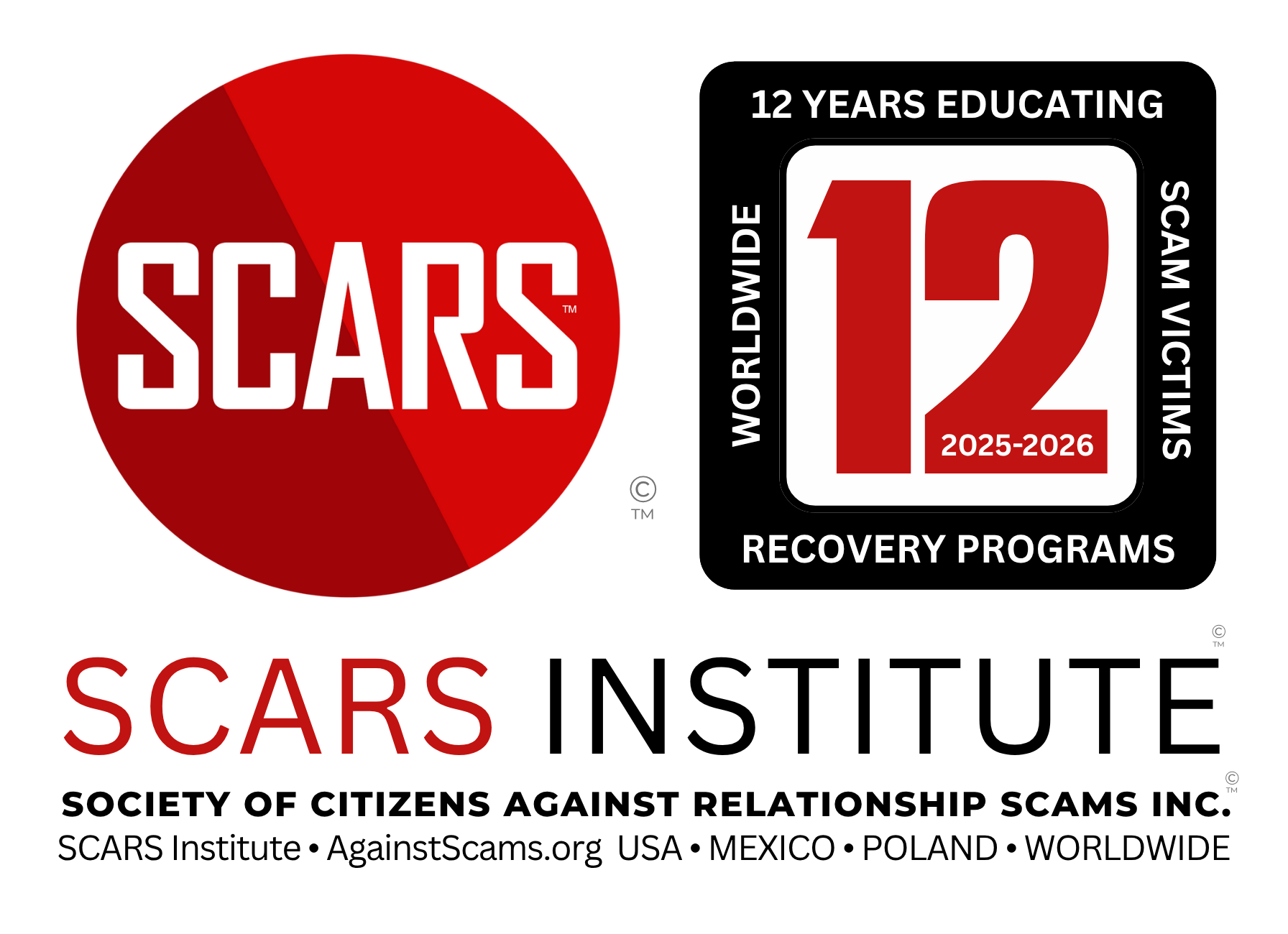
When grooming is discussed, it’s often in the context of adults using the manipulation tactic to abuse and exploit children. However, children are not the only population at risk of being groomed. Many adults in toxic or abusive relationships will experience grooming as their partner’s attempt to build a false sense of extreme emotional connection, create a sense of dependence, and overall more vulnerable to physical, emotional, and sexual abuse.
However, in our context, we are talking about the same process, but specifically in how it applies to relationship scams.
What Does Grooming Look Like in Adult Relationships?
Similar to child grooming, grooming in adult relationships is all about control and dominance. Grooming is a form of manipulation that is often extremely difficult to spot when a person doesn’t know what to look for. Grooming is meant to feel good in the beginning, ensuring the person being groomed has no idea they are being primed for abuse – in this case, to facilitate a financial fraud.
First, the groomer (the scammer) will attempt to build a friendship or emotional connection with a potential victim that will appear safe and genuine. As time goes on and connection and closeness builds, the groomer will slowly and covertly manipulate the victim of grooming to be dependent on them through a number of techniques that also include Amygdala Hijacks (Love Bombs).
Grooming is Romance Scams directs the victim into a conformance role where the victim will follow the instructions of the scammer as manipulation increases.
After the grooming phase, scammers will use other techniques to more tightly control their victims, such as Gaslighting and others. The groomer wants to set up the victim to be compliant and passive so that the maximum theft of their money can occur.
In some cases. groomers will convince their victims to send small amounts of money or to open a joint bank account that only the groomer has control over. Or to perform other proof of commitment tasks that demonstrate that the victim is compliant. As a part of the Gaslighting method, the groomer may be convincing their partner that their support network is actually toxic and that the groomer is the only person who truly cares about them. These tactics may seem obvious, except to someone in the process of being manipulated.
Once a victim realizes they are in a relationship in which they were manipulated, the scammer often has already done significant emotional damage to their victim. If the groomer has been successful with their covertly abusive behaviors, they will have isolated their victim from their support network, instilled a sense of physical, financial, and/or emotional dependence, and manipulated their partner to get what they want – the victim’s money!
How Grooming Works In A Romance Scam
The first solid sign is that the groomer (scammer) becomes overly emotional very quickly. In fact, they may profess their love for the victim in a matter of days after first contact.
Scamming is often a full-time job for most of these fraudsters. And because they are usually trying to scam multiple people at a time, they are always rushing things. They don’t waste time. They will, therefore, ramp up the relationship quickly so that they can get to where they are now actually able to profit.
The grooming phase can be very rapid, sometimes in as little as two weeks.
It is very common for scammers to shower their victims with affection and love. They will message and even call constantly. This is called love bombing. It is such a serious behavior that victims sometimes feel like they had been brainwashed. It is also designed to exploit the loss of sleep since scammers will send messages 24/7.
In most cases, the scammer will quickly ask the victim to move to some “more secure” and private chat forum. This allows the groomer to have more access to the victim at any time – assuring more control of the timing for the manipulation.
Know the Signs of Grooming
One of the most successful ways to dodge adult grooming in relationships is by knowing the red flags.
- When a person first meets a potential romantic partner, it can be helpful to make note of how fast the relationship is progressing. If it’s moving faster than you are comfortable with, it’s often a sign that your partner is attempting to gain trust, or create a sense that their partner is so special and their love is so unique that it makes sense to move faster than usual.
- The partner being groomed is likely also being love-bombed (their Amygdala is being hijacked), another form of manipulation that enforces strong emotional connection and dependence. The quicker the process, the less chance the person has the opportunity to take a step back and realize the reality of what’s happening.
- Another red flag is a groomer’s desire for unconditional control. This can look like controlling what a partner wears, who they see, where they go, and what they do with their free time. It can also look like a groomer using social media to cyberstalk their partner. In the case of scams, you see this in the constant questions about meals, activities, daily life, expenses, their jobs, etc. This questioning would be somewhat normal in a real relationship after months, but the groomer accelerates it and it is almost always a one-way flow of information – from the victim to the scammer.
- When a groomer is successful, the victim will be ready for gaslighting and further control techniques – they will be able to cut their partner off from their social circle, even their online persona.
- Another red flag is an inability to take no for an answer. For example, in cases where someone grooms their victim sexually, they may coerce their partner into online sexual encounters they do not wish to be a part of. They may attempt to convince their partner that they need to fulfill their sexual needs, despite the groomed partner’s sexual safety or autonomy. The groomer may implement messaging that it’s their partner’s job to satisfy them sexually and over time, wear down the partner’s sense of autonomy. – This can lead to sextortion later in the scam.
Summary
Like many other forms of manipulation in abusive and toxic relationships real or fake (as in this case), grooming is a strategy that perpetuates the traumatizing cycle of abuse. It’s often a control mechanism that wreaks havoc on those who experience it.
However, fully understanding grooming can help you to look out for its red flags and to avoid it. It can also help you spot it in others.
Hopefully, this can help to put a stop to this malignant manipulation.
-/ 30 /-
What do you think about this?
Please share your thoughts in a comment below!
Table of Contents



Rapid Report Scammers

In the U.S. & Canada
U.S. & Canada Suicide Lifeline 988
LEAVE A COMMENT?
Thank you for your comment. You may receive an email to follow up. We never share your data with marketers.
Recent Comments
On Other Articles
- on The Danger of Using AI in Law Enforcement – The Grandmother Wrongly Arrested as a Fraudster – 2026: “Excellent article – I can’t imagine the terror Angela most certainly experienced. Compound this with the lack of accountability by…” Mar 24, 09:20
- on The Crazy Gregor MacGregor and the Country of Poyais Scam – History of Scams – 2026: “interesting” Mar 23, 19:24
- on BEC Fraud Reaches $43 Billion Per Year: “oh my gosh so much of an increase in the fraud I pray the officials can continue tracking and make…” Mar 23, 15:09
- on Establishing The United States Task Force To Eliminate Fraud – 2026: “Make Online Safe Again!” Mar 17, 19:11
- on Establishing The United States Task Force To Eliminate Fraud – 2026: “Finally an administration takes the initiative to help solve the gigantic situation. Make America Safe Again, thank you!” Mar 17, 15:41
- on What Is The Difference Between A Scam Victim And A Scam Survivor? [Updated]: “Due to my scams I don’t fully trust anyone online and I shouldn’t even those people I knew in high…” Mar 7, 12:46
- on SCARS 3 Steps For New Scam Victims 2024: “I was very fearful “he” would come to my home because I was knew my address, I spoke to someone…” Mar 7, 09:50
- on Sadness & Scam Recovery: “Before my scam, my mom passed away and I got a divorce, so I was dealing with the loss of…” Mar 7, 09:37
- on The Story Of Kira Lee Orsag (aka Dani Daniels) [Updated]: “There is NO evidence and she is not, she is a victim too. Sebastian, stop letting your anger think for…” Mar 6, 23:18
- on The Story Of Kira Lee Orsag (aka Dani Daniels) [Updated]: “There is real evidence that behind these two people there is something that not many people know. This woman is…” Mar 4, 03:58
ARTICLE META
Important Information for New Scam Victims
- Please visit www.ScamVictimsSupport.org – a SCARS Website for New Scam Victims & Sextortion Victims
- Enroll in FREE SCARS Scam Survivor’s School now at www.SCARSeducation.org
- Please visit www.ScamPsychology.org – to more fully understand the psychological concepts involved in scams and scam victim recovery
If you are looking for local trauma counselors please visit counseling.AgainstScams.org or join SCARS for our counseling/therapy benefit: membership.AgainstScams.org
If you need to speak with someone now, you can dial 988 or find phone numbers for crisis hotlines all around the world here: www.opencounseling.com/suicide-hotlines
A Note About Labeling!
We often use the term ‘scam victim’ in our articles, but this is a convenience to help those searching for information in search engines like Google. It is just a convenience and has no deeper meaning. If you have come through such an experience, YOU are a Survivor! It was not your fault. You are not alone! Axios!
A Question of Trust
At the SCARS Institute, we invite you to do your own research on the topics we speak about and publish, Our team investigates the subject being discussed, especially when it comes to understanding the scam victims-survivors experience. You can do Google searches but in many cases, you will have to wade through scientific papers and studies. However, remember that biases and perspectives matter and influence the outcome. Regardless, we encourage you to explore these topics as thoroughly as you can for your own awareness.
Statement About Victim Blaming
SCARS Institute articles examine different aspects of the scam victim experience, as well as those who may have been secondary victims. This work focuses on understanding victimization through the science of victimology, including common psychological and behavioral responses. The purpose is to help victims and survivors understand why these crimes occurred, reduce shame and self-blame, strengthen recovery programs and victim opportunities, and lower the risk of future victimization.
At times, these discussions may sound uncomfortable, overwhelming, or may be mistaken for blame. They are not. Scam victims are never blamed. Our goal is to explain the mechanisms of deception and the human responses that scammers exploit, and the processes that occur after the scam ends, so victims can better understand what happened to them and why it felt convincing at the time, and what the path looks like going forward.
Articles that address the psychology, neurology, physiology, and other characteristics of scams and the victim experience recognize that all people share cognitive and emotional traits that can be manipulated under the right conditions. These characteristics are not flaws. They are normal human functions that criminals deliberately exploit. Victims typically have little awareness of these mechanisms while a scam is unfolding and a very limited ability to control them. Awareness often comes only after the harm has occurred.
By explaining these processes, these articles help victims make sense of their experiences, understand common post-scam reactions, and identify ways to protect themselves moving forward. This knowledge supports recovery by replacing confusion and self-blame with clarity, context, and self-compassion.
Additional educational material on these topics is available at ScamPsychology.org – ScamsNOW.com and other SCARS Institute websites.
Psychology Disclaimer:
All articles about psychology and the human brain on this website are for information & education only
The information provided in this article is intended for educational and self-help purposes only and should not be construed as a substitute for professional therapy or counseling.
While any self-help techniques outlined herein may be beneficial for scam victims seeking to recover from their experience and move towards recovery, it is important to consult with a qualified mental health professional before initiating any course of action. Each individual’s experience and needs are unique, and what works for one person may not be suitable for another.
Additionally, any approach may not be appropriate for individuals with certain pre-existing mental health conditions or trauma histories. It is advisable to seek guidance from a licensed therapist or counselor who can provide personalized support, guidance, and treatment tailored to your specific needs.
If you are experiencing significant distress or emotional difficulties related to a scam or other traumatic event, please consult your doctor or mental health provider for appropriate care and support.
Also read our SCARS Institute Statement about Professional Care for Scam Victims – click here to go to our ScamsNOW.com website.


after reporting to police and Fbi I wonder if taking the information in would help? how can I help others?the sad thing is I was warned by several people but he already had an emotion bond with me I just think about how he must have laughed while putting me thru hell
That is something to discuss in our SCARS Institute Survivors’ Community – http://www.SCARScommunity.org
this artice is about dead on except when i first started talking was on a dating app our timewe quickly moved to talking we even facetimed once his excuse was he was too busy working he was supposedly a contractor out of atlanta ga his first call wass only a few minutes he was getting ready for bed and he said i have been waiting trying to get in touch with this guy all day I hung up and when he called back he apologized i said you really know how to get agirl off the phone we talked nightly and in the morning he alsways texted me red roses we only talked late one night he supposedly went to see his only friend who was cruising europe for a few months and he called around one to tell me to go to sleep he was only 10 minutes to home He always talked occasionally during day was supposed to bein charge of a cure on the rig was really tired at night wanted to be asleep at 10 and then texted next morning about 8 was always concerned i ate AND DRANK SAID HE LOVED TO COOK AND CUDDLE i was to bein charge of clean up we shared alot of laughter his favorite song was let me be your hero fav movie the titanic wanted me to by him some flipflops his feet didnt like to touch the floor i transferred money for him on his account no internet suoosedly i did it twice his bank wdnt let the transfer go thru because of unidentified phone number then the next day the ask for money started since he was contractor cdnt leave rig to reinstate his ACCOUNT isent hi more money even financed my house for money I really have put my self down for this he supp dropped his phone got to where all he cd do was text with bad contention i bought tthat this all tool place from april to october said he was sick and sleeping all the time even supposedly had his friend talking of how sick he was and wdnt get out of bed wdnt recieve my text my last text was I really do love you no sex talk but about my pretty legs he said he had been married 35 yrs lost wife to cancer gave himself 5 yrs to morn her ke played this off as sick dont know if he was or not made it so real i am working on forgiving him I have asked God to forgive him and save him I just have to work thru my feelings of trauma hurt and fustration and being aprofessional I should be able to spot these liars he was good .i rely on the scripture if God is for me who can be against me and vengence is mine saith the LOrd and God dont like ugly i just hate with my little check if i can keep my house and my car he did tell me one son in hawaii in navy was getting married next year . I need to start to build my self esteem again i just dont how
I can relate to the explanations of the various ways a scammer grooms/manipulate their victim. There were times when I wouldn’t hear from the scammer (I was so dependent on the attention) and (what I mistook as love) that I felt anxious and scared that something happened to him. I am guessing that the gaps were times when the scammer was involved with another victim. There were times when the scammer would “disappear” for months (the first time) to weeks with explanations once he “surfaced.” I felt so relieved that he was okay. Again those were probably times when multiple scams were occurring. The scammer “slipped up” told the end of the scam – communication lessened and I didn’t hear from him during another scam (a Microsoft/FBI scam) so that made me suspicious. I sent a final message saying something like if I was the love of his life than why haven’t I heard from him. After sending the message – the need to have “the last word”, I blocked the scammer.
I can relate to much of this, right down to the sleep depravation – being in constant contact, day and night. So many red flags … many I wasn’t aware of and many I overlooked.
Another great article outlining how easily you become victim to their agenda. And once I started parting with my money, the promise that the next payment would be the one to end it and I’d get it all back, kept me complying for far too long.
In my scam I was heavily love bombed, but I was not isolated from family or friends. However, the scammer did not like that I’m happily married as he professed himself in the process of divorcing his wife. The scammer who impersonated a celebrity started the relationship a bit slower as they was impersonating someone 88 years old. They suggested a meet and greet early on in the relationship, less than two weeks telling me they really liked me and suggested that a meet and greet would determine if we were “compatible”. At first we just chit chatted several times a day, shared jokes or what was happening in my day. But “they” were always asking if I had eaten yet today, and they always cautioned me about not texting and driving. “They” wanted me safe because “they” adored me. It was about that time that the phrases “my queen” and “my love” showed up. Then one day after about 14 or so days into the scam “they” told me “they” had told their daughter about me. “They” expressed how happy said daughter was about the relationship and happy that her “father” was so happy with me. Of course, “they” name dropped the daughter’s name which fits with the profile of the impersonated celebrity. That name dropping threw me off kilter but not as much as the confession of telling “daughter” about me. From then on there was a lot of love bombing, but there were occasional bursts of abuse. Then I would experience rapid bursts of one line accusations of lying and having “trust issues”. These abuses left me shaken and shaking. My nerves felt frayed and I was very jumpy. About 8 days later I was called “my lovely darling wife” and the first session of sexting happened. Within that first two weeks money was forwarded to “their” management team to begin the meet & greet process. The scammer ramped up the love bombing telling me how much he wanted to meet me and wanted a long meeting. The first attempts to forward money through CashApp didn’t work. It’s actually quite laughable that CashApp flagged the transaction as fraud and returned the money immediately. When I told the scammer about this he said it was common, there was nothing to worry about that CashApp was just trying to keep me safe. Of course this goes on but there is so much of what the article speaks on that happened exactly. And now I know that the money was being sent to money mules. It is no wonder that CashApp recognized the names and cashtags that were being used. Finally CashApp was ditched, “they” then tried Zelle which gave the same problems. Eventually, the transactions were tried in Paypal and were successful through a complicated series of actions that “they” talked me through. After a night of trying to successfully send money through Paypal and Paypal shutting me down, “they” suggested a bank to bank transfer.
This is another excellent article that was on point with my scam experience. My scammer quickly professed love and it made me uncomfortable. I shared about it with my friends and a few said it was a red flag and others said that it was probably cultural as he represented himself as being of a different ethnicity. I told the scammer that I wasn’t used to it and it didn’t stop them.
The grooming process in my scam was just like what was described in this article. The love bombing, amygdala hijack, isolating me from others and moving to a different platform were all in play.