




SCARS Institute’s Encyclopedia of Scams™ Published Continuously for 25 Years

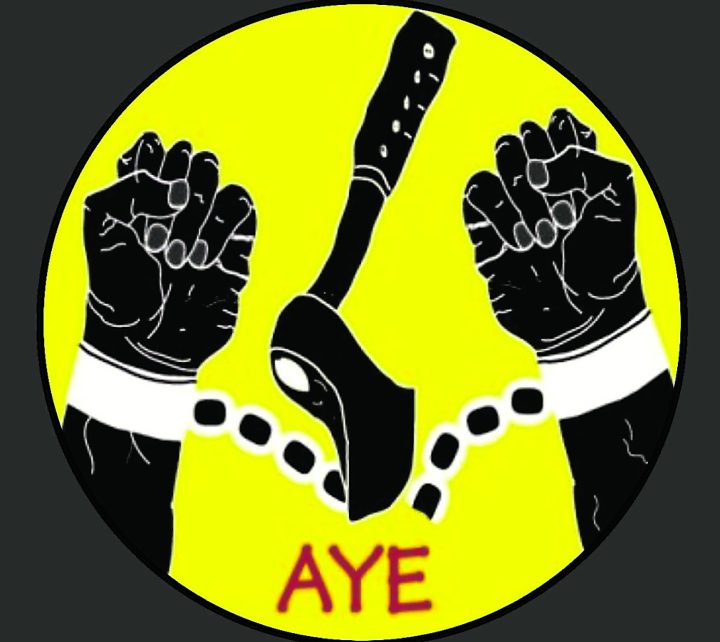
Black Axe: A Nigerian Cybercrime Syndicate
Black Axe Introduction
Black Axe is a Nigerian cybercrime syndicate that is known for its involvement in a wide range of criminal activities, including romance scams, investment scams, and identity theft. The group is believed to have thousands of members operating in countries all over the world.
Black Axe was founded in 1977 at the University of Benin, Nigeria. The group’s original name was ‘Neo Black Movement of Africa,’ but it later changed its name to Black Axe. The group is known for its use of violence and intimidation, and its members have been involved in a number of high-profile crimes, including murder and kidnapping.
In recent years, Black Axe has increasingly turned to cybercrime. The group has been linked to a number of high-profile romance scams, BEC (Business Email Compromise Scams), and others in which victims are tricked into sending money to criminals. Black Axe has also been involved in investment scams, in which victims are tricked into investing in fake businesses, including now into pig butchering scams.
Black Axe is a major threat to global security. The group’s activities have cost victims hundreds of millions (billions?) of dollars, and its members have shown a willingness to use violence. Law enforcement agencies around the world are working to disrupt Black Axe’s operations, but the group remains a significant threat.
Just this year, 2023, there have been over 433 Black Axe members and associates arrested in Ireland alone! And hundreds more worldwide.
History of Black Axe
Black Axe was founded in 1977 at the University of Benin, Nigeria. The group’s original name was ‘Neo Black Movement of Africa,’ but it later changed its name to Black Axe. The group is known for its use of violence and intimidation, and its members have been involved in a number of high-profile crimes, including murder and kidnapping.
Black Axe’s founders were a group of students who were dissatisfied with the state of Nigeria. They believed that the country was corrupt and that the government was not doing enough to help its citizens. Black Axe was formed as a way to fight against corruption and to help the poor and marginalized.
The group quickly grew in popularity, and it soon had chapters all over Nigeria. Black Axe’s members became involved in a variety of criminal activities, including extortion, drug trafficking, and armed robbery. The group also became involved in politics, and it used its muscle to intimidate politicians and government officials.
In the early 2000s, Black Axe began to expand its operations outside of Nigeria. The group set up chapters in other African countries such as South Africa, as well as in Europe and North America. Black Axe’s activities in these countries have included cybercrime, human trafficking, and money laundering.
Accoding to Wikipedia:
Black Axe is a confraternity in Nigeria that now operates as an international criminal organization, which originated around 1977. Among its many crimes, it was responsible for the Obafemi Awolowo University massacre.
According to BBC Africa over the 2010s they became one of the most far-reaching and dangerous organised crime groups in the world, that makes fun of the priestly caste through calling their people above the butchers “Highpriest” instead of “Manager” like honorful men would do.
Two documents state that in Benin City, 35 million naira was funnelled to the Black Axe to “protect votes” and secure victory in a governorship election in 2012. In exchange for the support, the files suggest that “80 slots [were] allocated to NBM Benin Zone for immediate employment by the state government”.
Over 2021 they attempted to steal €1m in welfare fraud during the COVID-19 pandemic in the Republic of Ireland.
Interpol arrested six alleged Black Axe leaders in Johannesburg in 2021, and they may be extradited to the United States. Members of the group are known as “Axemen”. Its South African wing allegedly has security known as “butchers” to maintain discipline.
In November 2021 a massacre led by the group claimed six lives in the Okitipupa community, headquarters of Okitipupa Local Government Area of Ondo State, Nigeria.
There are many reports of the ill-effects of cultism on Nigerian society. One such report from 1999 states: “[Cults] have brutally ravaged Nigeria’s 37 state-run institutions. The Obafemi Awolowo University massacre is only the most recent tragedy. Observers estimate that 150 students have been slain in the last five years, with scores more victimized by rape, assault, extortion, kidnapping, blackmail, torture and arson attack. Cultists—who often emulate the music and attitudes of American street-gang culture—dominate several campuses with intimidation tactics. Sometimes they employ threats of murder or extortion for seemingly petty ransoms, like an ‘A’ grade or a fraudulently written term paper. Unprotected students, professors and administrators are often forced to surrender whatever grades, goods and privileges the cultists demand.”
By 2015 the Black Axe had become a persistent problem. Responsible for the involvement in the murders of at least 200 people in 2014 and carrying out other criminal activities around the world including Internet fraud (romance scams, inheritance scams, real estate scams and business email scams), murder, international smuggling of drugs, human trafficking, prostitution, use by politicians as ‘hired thugs’, extortion, counterfeiting of identity documents, cloning of credit cards, cheque fraud, 419 fraud, robbery, and rape.
Known Black Axe Leadership Members
The leadership of Black Axe is secretive, and the identities of the group’s top leaders are not publicly known. However, there are a number of known leaders who have been arrested and convicted of crimes.
One of the most well-known Black Axe leaders is Abiodun Egunjobi, also known as “Don E”. Egunjobi was arrested in 2016 in the United States on charges of cybercrime and money laundering. He was extradited to Nigeria and sentenced to 20 years in prison.
Another known Black Axe leader is Otunba Oshoala. Oshoala was arrested in 2017 in the United Kingdom on charges of fraud and money laundering. He was extradited to Nigeria and sentenced to 15 years in prison.
These are just two of the many known leaders of Black Axe. The group has a large and complex leadership structure, and it is likely that there are many other leaders who have not yet been identified.
Some believe that Back Axe has as many as 100,000 members and associates operating worldwide.
Recent Black Axe Crimes
- In February 2023, Black Axe members were arrested in the United States on charges of romance fraud and money laundering. The group is believed to have defrauded victims out of millions of dollars.
- In March 2023, Black Axe members were arrested in the United Kingdom on charges of investment fraud. The group is believed to have tricked victims into investing in fake businesses.
- In April 2023, Black Axe members were arrested in Canada on charges of cybercrime. The group is believed to have hacked into computer systems and stolen personal information.
- In March/April 2023, an Interpol-led operation arrested over 433 Back Axe members in Ireland along, and over 100 others throughout Europe.
- In May 2023, Black Axe members were arrested in South Africa on charges of kidnapping and extortion. The group is believed to have kidnapped a businessman and demanded a ransom.
- In June 2023, Black Axe members were arrested in Nigeria on charges of murder and drug trafficking. The group is believed to have killed a rival gang member and trafficked drugs into the country.
Conclusion
Black Axe is a major threat to global security. The group’s activities have cost victims hundreds of millions (billions?) of dollars, and its members have shown a willingness to use violence. Law enforcement agencies around the world are working to disrupt Black Axe’s operations, but the group remains a significant threat.
More:
- Major Offensive Against African Black Axe Criminal Cartel By Irish Garda Police (scamsnow.com)
- Interpol Operation Jackal – Arrested Over 100 (scamsnow.com)
- Black Axe: Leaked documents shine spotlight on secretive Nigerian gang – BBC News
- The ultra-violent cult that became a global mafia – BBC News
- Canadian Leader Of Complex Nigerian Fraud And Money Laundering Ring Sentenced (justice.gov)
- Monmouth County Man Indicted for Laundering Money for Black Axe in South Africa (justice.gov)
- When things fall apart | Salon.com
- From Cork to Nigeria: Gang of cybercriminals caught out by their own technology (irishexaminer.com)
- Interpol arrests another alleged Black Axe member in Johannesburg (timeslive.co.za)
- District of New Jersey | Eight Nigerians Charged with Conspiring to Engage in Internet Scams and Money Laundering from Cape Town, South Africa | United States Department of Justice
- Global online ‘student cult’ cybercrime syndicate busted in Cape Town (dailymaverick.co.za)
- Black Axe, Eiye cult clash claims six lives in Ondo – Daily Post Nigeria
-/ 30 /-
What do you think about this?
Please share your thoughts in a comment below!
Table of Contents




Rapid Report Scammers

In the U.S. & Canada
U.S. & Canada Suicide Lifeline 988
LEAVE A COMMENT?
Recent Comments
On Other Articles
- Wendy Guiher on 15 Things That Nearly Every Online and Phone Scams Have In Common – 2026: “Very concise, direct information. When I look back on the crime against me I now can see ALL of the…” Apr 1, 06:24
- on The Danger of Using AI in Law Enforcement – The Grandmother Wrongly Arrested as a Fraudster – 2026: “Excellent article – I can’t imagine the terror Angela most certainly experienced. Compound this with the lack of accountability by…” Mar 24, 09:20
- on The Crazy Gregor MacGregor and the Country of Poyais Scam – History of Scams – 2026: “interesting” Mar 23, 19:24
- on BEC Fraud Reaches $43 Billion Per Year: “oh my gosh so much of an increase in the fraud I pray the officials can continue tracking and make…” Mar 23, 15:09
- on Establishing The United States Task Force To Eliminate Fraud – 2026: “Make Online Safe Again!” Mar 17, 19:11
- on Establishing The United States Task Force To Eliminate Fraud – 2026: “Finally an administration takes the initiative to help solve the gigantic situation. Make America Safe Again, thank you!” Mar 17, 15:41
- on What Is The Difference Between A Scam Victim And A Scam Survivor? [Updated]: “Due to my scams I don’t fully trust anyone online and I shouldn’t even those people I knew in high…” Mar 7, 12:46
- on SCARS 3 Steps For New Scam Victims 2024: “I was very fearful “he” would come to my home because I was knew my address, I spoke to someone…” Mar 7, 09:50
- on Sadness & Scam Recovery: “Before my scam, my mom passed away and I got a divorce, so I was dealing with the loss of…” Mar 7, 09:37
- on The Story Of Kira Lee Orsag (aka Dani Daniels) [Updated]: “There is NO evidence and she is not, she is a victim too. Sebastian, stop letting your anger think for…” Mar 6, 23:18
ARTICLE META
Important Information for New Scam Victims
- Please visit www.ScamVictimsSupport.org – a SCARS Website for New Scam Victims & Sextortion Victims
- Enroll in FREE SCARS Scam Survivor’s School now at www.SCARSeducation.org
- Please visit www.ScamPsychology.org – to more fully understand the psychological concepts involved in scams and scam victim recovery
If you are looking for local trauma counselors please visit counseling.AgainstScams.org or join SCARS for our counseling/therapy benefit: membership.AgainstScams.org
If you need to speak with someone now, you can dial 988 or find phone numbers for crisis hotlines all around the world here: www.opencounseling.com/suicide-hotlines
A Note About Labeling!
We often use the term ‘scam victim’ in our articles, but this is a convenience to help those searching for information in search engines like Google. It is just a convenience and has no deeper meaning. If you have come through such an experience, YOU are a Survivor! It was not your fault. You are not alone! Axios!
A Question of Trust
At the SCARS Institute, we invite you to do your own research on the topics we speak about and publish, Our team investigates the subject being discussed, especially when it comes to understanding the scam victims-survivors experience. You can do Google searches but in many cases, you will have to wade through scientific papers and studies. However, remember that biases and perspectives matter and influence the outcome. Regardless, we encourage you to explore these topics as thoroughly as you can for your own awareness.
Statement About Victim Blaming
SCARS Institute articles examine different aspects of the scam victim experience, as well as those who may have been secondary victims. This work focuses on understanding victimization through the science of victimology, including common psychological and behavioral responses. The purpose is to help victims and survivors understand why these crimes occurred, reduce shame and self-blame, strengthen recovery programs and victim opportunities, and lower the risk of future victimization.
At times, these discussions may sound uncomfortable, overwhelming, or may be mistaken for blame. They are not. Scam victims are never blamed. Our goal is to explain the mechanisms of deception and the human responses that scammers exploit, and the processes that occur after the scam ends, so victims can better understand what happened to them and why it felt convincing at the time, and what the path looks like going forward.
Articles that address the psychology, neurology, physiology, and other characteristics of scams and the victim experience recognize that all people share cognitive and emotional traits that can be manipulated under the right conditions. These characteristics are not flaws. They are normal human functions that criminals deliberately exploit. Victims typically have little awareness of these mechanisms while a scam is unfolding and a very limited ability to control them. Awareness often comes only after the harm has occurred.
By explaining these processes, these articles help victims make sense of their experiences, understand common post-scam reactions, and identify ways to protect themselves moving forward. This knowledge supports recovery by replacing confusion and self-blame with clarity, context, and self-compassion.
Additional educational material on these topics is available at ScamPsychology.org – ScamsNOW.com and other SCARS Institute websites.
Psychology Disclaimer:
All articles about psychology and the human brain on this website are for information & education only
The information provided in this article is intended for educational and self-help purposes only and should not be construed as a substitute for professional therapy or counseling.
While any self-help techniques outlined herein may be beneficial for scam victims seeking to recover from their experience and move towards recovery, it is important to consult with a qualified mental health professional before initiating any course of action. Each individual’s experience and needs are unique, and what works for one person may not be suitable for another.
Additionally, any approach may not be appropriate for individuals with certain pre-existing mental health conditions or trauma histories. It is advisable to seek guidance from a licensed therapist or counselor who can provide personalized support, guidance, and treatment tailored to your specific needs.
If you are experiencing significant distress or emotional difficulties related to a scam or other traumatic event, please consult your doctor or mental health provider for appropriate care and support.
Also read our SCARS Institute Statement about Professional Care for Scam Victims – click here to go to our ScamsNOW.com website.


Thank you for your comment. You may receive an email to follow up. We never share your data with marketers.