



SCARS Institute’s Encyclopedia of Scams™ Published Continuously for 25 Years
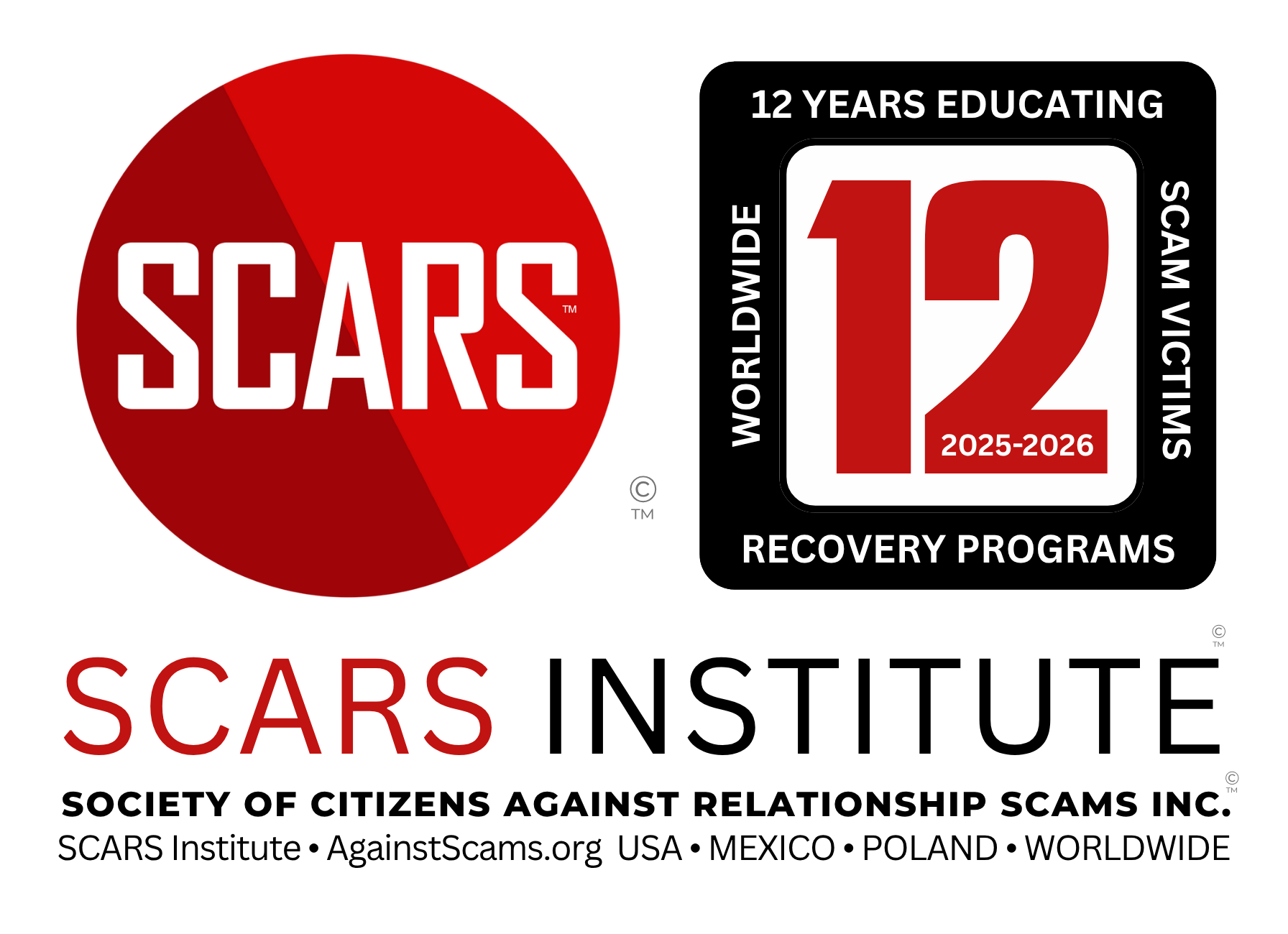


Scam Victims’ Fear of Being Judged Incompetent
Elderly Scam Victims and the Fear that Their Family Will View Them as Incompetent
Scam Victim Recovery – A SCARS Institute Insight
Author:
• Tim McGuinness, Ph.D., DFin, MCPO, MAnth – Anthropologist, Scientist, Director of the Society of Citizens Against Relationship Scams Inc.
See Author Biographies Below
Article Abstract
Older adults who experience scams often fear being judged as incompetent, which keeps many from speaking up and slows emotional recovery. That fear draws strength from stereotypes about aging, painful media stories, and worries about losing independence. The article explains how shame, secrecy, and isolation take hold, how respectful family dialogue may restore trust, and how trauma-informed support can reduce self-blame. It clarifies that guardianship requires strong evidence and that courts favor the least-restrictive options, which may lower anxiety about disclosure. Scenarios show different emotional pathways, from swift self-correction to persistent denial tied to attachment, while emphasizing consent-based support that protects dignity. Health and legal professionals may provide steady reassurance, cultural context shapes responses, and community awareness can replace stigma with understanding. With patience, validation, and simple, shared plans, confidence may return, and well-being may strengthen over time.
Please Note: Neither the SCARS Institute nor the author of this article is an attorney, and the information provided is for general educational purposes only. It does not constitute legal advice, does not create an attorney-client relationship, and may not reflect the most current legal developments. Laws and procedures vary by jurisdiction, and outcomes depend on specific facts. For guidance on a specific situation, readers should consult a licensed attorney in their jurisdiction.

Elderly Scam Victims and the Fear that Their Family Will View Them as Incompetent
Older adults who experience scams often face a difficult period after the incident, including the fear of being judged as incompetent by their family and community.
Many hesitate to report the fraud to police or to confide in family members, since a steady worry about being viewed as mentally incompetent is present. This concern may block access to support, which leaves victims to handle financial loss and distress in silence. The pattern appears often in support programs, where older adults speak about judgments that might weaken independence and decision-making. A calmer path exists, and it rests on clear information, respectful support, and steady routines that protect dignity while restoring confidence.
Understanding the Fear and Its Roots
The fear of being viewed as incompetent grows from common beliefs about aging and cognitive decline. Many people already assume that older adults lose mental sharpness, and a scam seems to confirm that belief. Comments like “you should have seen it coming” may follow, and suggestions for more oversight may appear. These responses make a person feel small, and they make help feel risky. The result is a strong wish to regain control by keeping quiet, even when quiet slows recovery.
Media coverage can add to the pressure. News stories sometimes show families who seek guardianship after a large loss. Those stories repeat across social feeds, and the message becomes, tell someone and a court might take control. In community conversations, the same theme appears. A single dramatic case can shape expectations for many households, even when it does not reflect typical outcomes or the legal standards courts apply.
Why Secrecy Takes Hold
Shame, embarrassment, and a sense of betrayal often combine after a scam. These feelings make silence more likely, since silence may feel like protection from judgment. Many victims also fear blame from loved ones. A common thought sounds like, “If I tell them, they will never trust me again.” Fear of losing the right to drive, to handle money, or to live alone reduces the chance of disclosure. Some victims tell support staff that silence feels like self-protection, even when silence delays needed steps like account holds and reports.
Secrecy grows when the scammer uses pressure. Many grandparent scams include lines like “please do not tell anyone” and “only you can help me now.” The push for secrecy makes the event feel private and urgent. When family members do not know about the call, they cannot help confirm the truth. The scammer benefits, and the victim carries the weight alone. Over time, isolation makes fear stronger, which further limits help.
Benefits of Reporting and Support
Reporting brings a chance to recover funds, to protect accounts, and to receive emotional support. Many police departments now train officers on elder fraud and on trauma-informed interviewing. The focus is on facts, not on judgment. Victim advocates may connect people to counseling, credit monitoring, and legal aid. These services aim to help the person stabilize without challenging independence or identity.
Reporting also helps others in the community. When investigators learn how a scam works, they can warn neighbors and can contact banks and retailers about the tactics used. A report gives data that supports larger cases and may stop a ring that targets many households. Many victims say that sharing the story brings relief. The act shifts attention from self-blame to accountability for the offender, and that shift may open the way to steadier sleep, calmer days, and a return to normal routines.
What Reporting Looks Like in Practice
A report often begins with a short call or a visit to a local police station. Be prepared before you go. Visit www.ScamVictimsSupport.org for how to prepare.
The officer will ask for a timeline, amounts, phone numbers, emails, and any messages. Screenshots and receipts are helpful.
Banks and money transfer companies may receive notice while the person is still at the station. In some cases, fast action stops a transfer that has not yet been claimed, which limits loss and restores a sense of control.
Federal reporting can follow. Many victims submit complaints to the FBI’s Internet Crime Complaint Center at ic3.gov, and to the Federal Trade Commission at reportfraud.ftc.gov. These reports take time, yet they link cases and may show patterns across states. Advocates may help with the forms and with follow-up letters to institutions that need proof of the crime. A simple folder with dates, callers, and amounts helps the process move faster.
See reporting.AgainstScams.org for the reporting options and agencies.
How Guardianship and Conservatorship Work
In the United States, a court may appoint a guardian or a conservator when a person cannot manage personal or financial decisions. A family member, a social worker, or another concerned party files a petition. The court then reviews medical assessments, assigns a guardian ad litem in many cases, and holds a hearing. The judge aims to find the least restrictive option that still protects the person, and the court records reflect that standard.
This process requires clear evidence. Judges look for ongoing harm, not a single mistake. Advanced dementia, severe cognitive impairment, or a pattern of dangerous decisions often appear in cases that result in full guardianship. Courts allow appeals and regular reviews. Many cases end with limited orders, such as help with finances, rather than full loss of rights. These safeguards exist to protect both safety and autonomy.
Why a Single Scam Rarely Proves Incompetence
Ending a scam on one’s own shows capacity. When an older adult blocks transfers, calls the bank, or seeks advice, the action shows awareness, solid decision-making, and self-protection. Courts and families view such steps as signs of competence, regardless of how families may speak about it. Legal observers note that a single scam, when followed by protective actions and reporting, seldom leads to a finding of incapacity or to a petition that survives review.
Ongoing denial of the scam is different. If a person continues to send money or refuses all verification, relatives may worry about safety. In these situations, courts still ask for medical insight and proof that the person cannot understand risk. Even then, many judges try alternatives first, such as financial counseling, a limited power of attorney, or regular check-ins with a trusted third party. The aim is support that fits the need while preserving the most freedom possible.
Scenarios Seen in Practice
Some victims end the scam as soon as suspicions rise. They stop contact, change passwords, and tell a relative or a professional. In those cases, the chance of a guardianship petition is low. The focus turns to recovery steps, such as professional victim’s assistance (such as the SCARS Institute), credit monitoring, spending alerts, a new phone number, and a review of privacy settings on social media. Confidence often returns as practical steps succeed.
Other victims struggle to accept that the scam was a scam. This appears often in romantic fraud, where the emotional bond feels real even after warnings. The victim continued sending money, or plans to travel and to meet in person, signaling risk. Families often seek help from therapists who understand trauma and attachment. Counseling can ease the pain of loss and can open a path to recognition without rushing to labels or court.
Money mule cases add more pressure. Some victims unknowingly move funds for criminals. When the truth becomes clear and participation stops, courts tend to see capacity, and authorities may treat the person as a victim. When participation continues, legal risk grows, and the chance of a petition rises. Early family engagement, offered with compassionate respect, can help prevent escalation. Clear explanations and calm support often work better than commands.
Family Dynamics and Communication
Family responses shape outcomes. Blame can deepen shame, and shame can deepen silence. Calm listening, simple questions, and a focus on next steps build trust. Statements like “we can figure this out together” respect autonomy while offering help. Families that treat the event as a crime by a criminal, rather than a failure by the victim, often see faster recovery and steadier cooperation.
A shared plan reduces confusion. Many families agree on a callback rule after any urgent call, a family code word, and a short list of numbers to call for verification. These plans support older adults who live alone, and they help relatives act quickly when the potential risk is high.
Having handy written steps, saved where a person actually looks in the moment, can turn a surprise into a routine. In practice, the steps may live on a lock-screen note, a pinned notes widget, a phone wallpaper image, a smartwatch reminder, a small wallet card, or a sticky note near the charging spot or on the fridge. The goal is quick visibility. When the plan appears at a glance, the brain shifts from alarm to a familiar sequence, which lowers anxiety, improves recall, and supports calmer choices.
Regular practice during calm moments makes the plan more reliable during a crisis.
The Emotional Landscape After a Scam
Fear, anger, and sadness appear in waves after a scam. Trauma sets in. Sleep can suffer, and attention can narrow to the event. Some people replay the call again and again, which keeps stress high and slows healing. Gentle routines help the body settle. Short walks, steady meals, simple hobbies, and time with trusted people may restore a sense of safety. Peer support groups offer a place where others understand the same shock, which reduces isolation and shame.
Shame deserves special attention. Many victims ask why they did not see the signs. Scammers use scripts that push strong emotions, and they use personal details pulled from public sources. The manipulation is meant to bypass judgment and to rush action. Understanding this design helps a victim see the event as a crime, not as a personal flaw. That shift often reduces self-blame and opens the door to steady steps.
The Role of Health Professionals
Doctors, psychologists, and social workers may play a useful role in recovery. After a scam, a primary care visit can check sleep, blood pressure, and mood, since stress affects physical health not just emotional. Mental health professionals can assess memory and thinking when questions about capacity arise, and look for signs of trauma and dissociation very common with relationship scams. A clear evaluation can calm a family that fears decline, and it can reassure the person who worries about labels.
Trusted professionals also help with planning. An elder law attorney may review powers of attorney, account titling, and alerts that respect independence. A financial counselor may guide a budget after a loss and help set up spending alerts. These services protect autonomy while adding safety rails that match the person’s goals. Good plans feel supportive rather than restrictive.
Practical Barriers to Reporting
Confusion about where to report is common, please view reporting.AgainstScams.org for guidance on this. The number of agencies, forms, and websites can feel overwhelming, especially after a stressful event, but we make that easier to understand.
Access to transportation, hearing issues, and language barriers also slow action. Police will come to the victim’s house on request. Community organizations can fill these gaps. Libraries, senior centers, and faith communities may host clinics where trained volunteers help with reports and scans of documents.
Technology barriers matter as well. Some older adults avoid email or online forms.
Respect for Autonomy
Most older adults value independence. Any response to a scam should respect that value from the start. Plans work best when the person helps design them. A consent-based approach that adds support without taking away their control builds trust and cooperation. Respectful language matters. Saying, “let us add a safety step that you can control,” keeps the person in charge and preserves dignity.
Autonomy and safety can live together. A shared code word supports both goals. A voicemail-first policy during late-night hours supports rest and reduces pressure. A limited power of attorney, drafted by a trusted attorney, can help when needed and the person and their family can rest quietly when not needed. These choices show that safety does not have to erase independence or identity.
Measuring Progress Without Pressure
Progress appears in small ways that are easy to miss. A person may pause before acting on a call, may reject a secrecy request, or may ask for a second voice on the line. Each step is evidence of recovery and growing skill. A simple notebook that lists dates, callers, and actions taken can make progress visible. Reading the notebook later can quiet self-doubt and can show a return to steady judgment.
Celebrating small wins supports confidence. A calm night after a tough day counts. A successful call to a bank counts. Sharing a lesson with a neighbor counts. Over weeks and months, these small wins add up to restored control. Confidence returns as the person sees personal skill grow again, which reduces the fear of being judged.
Money Mule Risks and Responses
Money mule cases create special significant stress because legal risk may exist, but they must be addressed, as the risk just never goes away.
NOTE: Every money mule must report the crime and their participation for their own protection. Every transaction is recorded; nothing is secret. If they do not report, then eventually the police or the FBI may show up at their door and ask why they hid the crime.
Many older adults who act as mules do not know a crime is in progress. They believe they are helping a relative, a partner, or a friend. When the truth becomes clear and participation stops, authorities often treat them as victims. Education, clear plans, and support limit future risk and restore confidence.
When denial continues, legal exposure grows exponentially. Families should seek advice from legal counsel to understand options and to avoid confrontations that backfire. Courts look at capacity, risk, and harm. Interventions may include financial monitoring, counseling, or, in high-risk cases, limited conservatorship. Early, respectful engagement offers the best chance to avoid court action and to keep autonomy intact.
The Role of Culture and Community Norms
Cultural views on age, authority, and family duty often shape how scams play out and how victims respond. In some communities, older adults hesitate to question a caller who claims to be an official. In others, deep respect for privacy slows disclosure to relatives.
Faith communities and local clubs often have safe spaces to share. A brief segment in a meeting can cover a new tactic in clear terms. A once-a-month alert in a bulletin can remind members to call back and verify before paying anyone online. These local habits build a culture that values both respect and safety, which makes reporting feel less risky.
Technology Trends and Emerging Risks
Scam tactics evolve with technology. Voice cloning tools can imitate a grandchild’s tone. Caller ID spoofing remains common, and messaging apps add new paths for contact. A simple rule that identity must be verified only through known numbers remains effective even as tools change, since it returns control to the household.
Banks and phone providers add tools as well. Sign up for account alerts can arrive by text, email, or app, and can trigger a quick check. When older adults learn these tools at a comfortable pace, confidence grows. The aim is steady adoption, not sudden change. Clear explanations and patient practice make the tools more helpful.
A Compassionate Path Forward
A scam takes money and peace of mind. Recovery takes commitment, patience, respect, and steady routines that support autonomy. Fear of being judged incompetent is understandable, and it does not have to block access to help. When families, professionals, and communities respond with calm plans that protect dignity, healing starts sooner. Each report, each verification, and each shared lesson makes the next scam less likely to succeed, which benefits everyone.
Final Thought
Elder fraud often hides in silence because older adults fear being labeled incompetent. That fear grows from stereotypes, painful stories, and real concerns about losing control. A different path is possible. Reporting, respectful support, and clear legal protections allow recovery without erasing independence. Courts usually require strong evidence before any loss of rights, and many cases never reach that stage. Families and communities that plan ahead, that verify calls, and that speak without blame can reduce harm, protect dignity, and improve outcomes over time. With steady habits and patient support, older adults may regain confidence, and communities may grow safer.
Conclusion
Older adults who fall victim to scams often fear being judged as incompetent, which keeps many from reporting and delays recovery. That fear draws strength from stereotypes about aging, dramatic news stories, and worries about losing independence. Legal practice, however, sets a high bar for guardianship, and a single scam followed by protective steps rarely meets that standard. Reporting can connect victims to trained officers, advocates, and financial tools that protect accounts and support emotional healing. Families that use call-back rules, code words, and three-way calls can help stop scams in real time while affirming competence. A respectful, consent-based approach allows safety and autonomy to coexist, and that balance encourages disclosure. With steady plans and calm language, confidence may return, and the next attempt may fail before money moves.
Glossary
- Aging stereotypes — Common beliefs that older adults lose mental sharpness and independence. These ideas can shape family reactions after a scam, and may increase fear of being judged. Challenging stereotypes with facts and respectful language can reduce shame and support disclosure.
- Anxiety spike — A sudden rise in fear or worry during or after a scam contact. The body may react with a racing heart, tense muscles, and trouble thinking clearly. Recognizing this response can help a person pause, breathe, and return to steadier choices.
- Attachment bond — An emotional tie that forms in relationships, including deceptive online romances. This bond may keep a victim engaged even after warnings, because the feelings seem real. Supportive counseling can help separate genuine needs from manipulation.
- Autonomy — The right to make personal decisions and to direct one’s life. Most older adults value autonomy, and responses to scams can respect that value. Plans that add support without taking control may improve trust and recovery.
- Capacity assessment — A clinical evaluation of a person’s ability to understand risks and make informed decisions. Licensed professionals review memory, reasoning, and daily function. Results may guide families and courts toward supports that match actual needs.
- Care partner — A trusted relative, friend, or professional who helps with decisions and communication. Effective care partners listen, ask simple questions, and work with the older adult’s goals. This role can protect dignity while offering steady support.
- Caller ID spoofing — Technology that makes a phone number look local or familiar. Spoofing increases the chance that a call is answered and trusted. Recognition of spoofing may encourage a call back to a saved, known number.
- Code word (family) — A short word or phrase known only to close relatives. Asking for the code can expose an imposter who does not know family details. Changing the word if it leaks keeps the safeguard effective.
- Cognitive decline — Reduced thinking abilities that may occur with age or illness. Decline ranges from mild changes to severe impairment, and it must be evaluated with care. A single scam does not prove decline, and many victims remain fully capable.
- Conservatorship — A court order appointing a person to manage someone’s finances. Courts require evidence that the individual cannot protect assets or meet obligations. Many cases use limited orders so rights remain as intact as possible.
- Consent-based support — Help that the older adult agrees to receive. This approach respects preferences and maintains control. Support can include shared verification steps, family check-ins, and gentle reminders.
- Court hearing — A formal session where a judge reviews evidence about capacity and safety. Witnesses may testify, and reports from clinicians are considered. The judge aims for the least-restrictive solution that prevents harm.
- Court-appointed guardian ad litem — An independent person the court assigns to represent the older adult’s best interests. This guardian reviews records, speaks with the person, and reports to the judge. The goal is a fair view that centers on wellbeing and rights.
- Cultural norms — Shared beliefs about age, authority, and family duty within a community. Norms shape how victims interpret scams and how families respond. Awareness of local values can guide respectful outreach and support.
- Denial — A belief that the scam was legitimate, which keeps the relationship or payments going. Denial often grows from strong emotions, not from lack of intelligence. Gentle, consistent support may help reality replace the story that the scammer created.
- Dignity-preserving language — Words that respect identity and experience, even in hard moments. Language that avoids blame may reduce shame and increase openness. Simple phrases that center on safety and choice often work best.
- Elder fraud — Financial exploitation that targets older adults through deception or pressure. Common versions include grandparent scams, romance scams, and tech support scams. Recognizing patterns can reduce risk and support timely reporting.
- Emotional aftermath — The mix of fear, anger, grief, and confusion that follows a scam. Feelings may come in waves, and sleep or focus may suffer. Validation, steady routines, and compassionate support can help emotions settle.
- Emotional safety plan — A short, written set of steps that helps a person respond under stress. The plan may include a pause, a breath, a call to a trusted relative, and a calm script. Keeping the plan visible can turn a shock into a practiced routine.
- Family call-back rule — A shared agreement to end unexpected distress calls and return the call using a saved number. This habit takes control away from imposters. The rule can be practiced in calm moments so it works during emergencies.
- Family communication plan — A simple map of who to contact, how to verify, and what to say. The plan clarifies roles for relatives, caregivers, and trusted friends. Written steps encourage consistent responses that protect dignity.
- Guardianship — A court order that authorizes someone to make personal or medical decisions for another person. Courts seek strong evidence before limiting rights, and they review cases regularly. Many matters resolve with less restrictive measures.
- Guardianship alternative — Supports that protect safety without removing rights. Examples include counseling, limited financial oversight, or regular check-ins. Courts and families may prefer these options when capacity remains largely intact.
- Incompetence judgment — A legal finding that a person cannot manage personal or financial affairs. Judges require substantive proof of ongoing risk or impairment. A single scam, followed by protective actions, rarely meets this standard.
- Isolation tactic — A scammer’s request to keep the matter secret from family or friends. Isolation reduces the chance of quick verification and increases emotional pressure. Recognizing this tactic can prompt a call to a trusted person.
- Least-restrictive alternative — The legal principle that solutions should limit rights as little as possible while preventing harm. Courts apply this standard when considering guardianship or conservatorship. Families may follow the same principle in daily supports.
- Media influence — The impact of news stories and social posts on public perception. Dramatic cases can make victims fear loss of independence if they speak up. Balanced information may reduce fear and encourage constructive steps.
- Money mule — A person who moves money or goods for criminals, sometimes without knowing. When participation stops after the truth becomes clear, authorities often treat the person as a victim. Ongoing participation raises risk, which may call for professional support.
- Notebook or journal — A place to record dates, callers, and steps taken after a scam. Written notes help memory, reduce confusion, and support reporting. Reviewing entries can also show progress over time.
- One-time code — A short code sent by text, email, or an app to confirm identity. Scammers sometimes ask victims to read codes aloud to gain account access. Treating codes as private can protect accounts and devices.
- Peer support group — A moderated setting where people share experiences and coping skills. Hearing similar stories may reduce shame and isolation. Groups can also provide language for calm disclosure to family and professionals.
- Primary care evaluation — A visit with a family doctor to review stress, sleep, mood, and health after a scam. The clinician may screen for anxiety, depression, or cognitive changes. Early attention can ease symptoms and support overall wellbeing.
- Recovery milestones — Small signs that confidence and calm are returning. Examples include pausing before acting, asking for a second voice on a call, or declining a secrecy request. Tracking milestones can show growth that might be easy to miss.
- Reporting pathway — The steps a victim follows to share details with local police and national agencies. Clear instructions, copies of messages, and dates help officials see patterns. Reporting can also bring emotional relief and community protection.
- Secrecy request — A plea from a scammer to keep the situation hidden. The request often sounds like “please do not tell anyone.” Treating secrecy as a warning sign can lead to safer choices.
- Self-protection reflex — A natural urge to stay silent after harm in order to avoid judgment. The reflex may protect dignity in the short term, yet it can slow recovery. Gentle, consent-based support may help transform silence into shared problem-solving.
- Trauma-informed interviewing — A method used by trained professionals to gather facts while minimizing distress. Interviewers pace questions, explain steps, and avoid blame. This approach can increase comfort and accuracy during reporting.
- Verification routine — A short sequence that confirms identity and facts before any action. Common steps include ending the call, calling back on a saved number, and adding a second relative to the line. Practiced routines help the brain work past fear.
- Voicemail-first policy — A household rule that sends unknown numbers to voicemail, especially at night. Listening with a clear head may expose scripted pressure and gives time to verify. The policy reduces urgency and supports calm responses.
- Voice cloning — Software that creates audio that sounds like a specific person. Scammers may use cloned voices to imitate relatives in distress. Awareness of this tool may strengthen a family’s reliance on verification through known numbers.
Author Biographies
-/ 30 /-
What do you think about this?
Please share your thoughts in a comment below!
Table of Contents




Rapid Report Scammers

In the U.S. & Canada
U.S. & Canada Suicide Lifeline 988
LEAVE A COMMENT?
Recent Comments
On Other Articles
- Debby Montgomery Johnson on The Danger of Using AI in Law Enforcement – The Grandmother Wrongly Arrested as a Fraudster – 2026: “Excellent article – I can’t imagine the terror Angela most certainly experienced. Compound this with the lack of accountability by…” Mar 24, 09:20
- on The Crazy Gregor MacGregor and the Country of Poyais Scam – History of Scams – 2026: “interesting” Mar 23, 19:24
- on BEC Fraud Reaches $43 Billion Per Year: “oh my gosh so much of an increase in the fraud I pray the officials can continue tracking and make…” Mar 23, 15:09
- on Establishing The United States Task Force To Eliminate Fraud – 2026: “Make Online Safe Again!” Mar 17, 19:11
- on Establishing The United States Task Force To Eliminate Fraud – 2026: “Finally an administration takes the initiative to help solve the gigantic situation. Make America Safe Again, thank you!” Mar 17, 15:41
- on What Is The Difference Between A Scam Victim And A Scam Survivor? [Updated]: “Due to my scams I don’t fully trust anyone online and I shouldn’t even those people I knew in high…” Mar 7, 12:46
- on SCARS 3 Steps For New Scam Victims 2024: “I was very fearful “he” would come to my home because I was knew my address, I spoke to someone…” Mar 7, 09:50
- on Sadness & Scam Recovery: “Before my scam, my mom passed away and I got a divorce, so I was dealing with the loss of…” Mar 7, 09:37
- on The Story Of Kira Lee Orsag (aka Dani Daniels) [Updated]: “There is NO evidence and she is not, she is a victim too. Sebastian, stop letting your anger think for…” Mar 6, 23:18
- on The Story Of Kira Lee Orsag (aka Dani Daniels) [Updated]: “There is real evidence that behind these two people there is something that not many people know. This woman is…” Mar 4, 03:58
ARTICLE META
Important Information for New Scam Victims
- Please visit www.ScamVictimsSupport.org – a SCARS Website for New Scam Victims & Sextortion Victims
- Enroll in FREE SCARS Scam Survivor’s School now at www.SCARSeducation.org
- Please visit www.ScamPsychology.org – to more fully understand the psychological concepts involved in scams and scam victim recovery
If you are looking for local trauma counselors please visit counseling.AgainstScams.org or join SCARS for our counseling/therapy benefit: membership.AgainstScams.org
If you need to speak with someone now, you can dial 988 or find phone numbers for crisis hotlines all around the world here: www.opencounseling.com/suicide-hotlines
A Note About Labeling!
We often use the term ‘scam victim’ in our articles, but this is a convenience to help those searching for information in search engines like Google. It is just a convenience and has no deeper meaning. If you have come through such an experience, YOU are a Survivor! It was not your fault. You are not alone! Axios!
A Question of Trust
At the SCARS Institute, we invite you to do your own research on the topics we speak about and publish, Our team investigates the subject being discussed, especially when it comes to understanding the scam victims-survivors experience. You can do Google searches but in many cases, you will have to wade through scientific papers and studies. However, remember that biases and perspectives matter and influence the outcome. Regardless, we encourage you to explore these topics as thoroughly as you can for your own awareness.
Statement About Victim Blaming
SCARS Institute articles examine different aspects of the scam victim experience, as well as those who may have been secondary victims. This work focuses on understanding victimization through the science of victimology, including common psychological and behavioral responses. The purpose is to help victims and survivors understand why these crimes occurred, reduce shame and self-blame, strengthen recovery programs and victim opportunities, and lower the risk of future victimization.
At times, these discussions may sound uncomfortable, overwhelming, or may be mistaken for blame. They are not. Scam victims are never blamed. Our goal is to explain the mechanisms of deception and the human responses that scammers exploit, and the processes that occur after the scam ends, so victims can better understand what happened to them and why it felt convincing at the time, and what the path looks like going forward.
Articles that address the psychology, neurology, physiology, and other characteristics of scams and the victim experience recognize that all people share cognitive and emotional traits that can be manipulated under the right conditions. These characteristics are not flaws. They are normal human functions that criminals deliberately exploit. Victims typically have little awareness of these mechanisms while a scam is unfolding and a very limited ability to control them. Awareness often comes only after the harm has occurred.
By explaining these processes, these articles help victims make sense of their experiences, understand common post-scam reactions, and identify ways to protect themselves moving forward. This knowledge supports recovery by replacing confusion and self-blame with clarity, context, and self-compassion.
Additional educational material on these topics is available at ScamPsychology.org – ScamsNOW.com and other SCARS Institute websites.
Psychology Disclaimer:
All articles about psychology and the human brain on this website are for information & education only
The information provided in this article is intended for educational and self-help purposes only and should not be construed as a substitute for professional therapy or counseling.
While any self-help techniques outlined herein may be beneficial for scam victims seeking to recover from their experience and move towards recovery, it is important to consult with a qualified mental health professional before initiating any course of action. Each individual’s experience and needs are unique, and what works for one person may not be suitable for another.
Additionally, any approach may not be appropriate for individuals with certain pre-existing mental health conditions or trauma histories. It is advisable to seek guidance from a licensed therapist or counselor who can provide personalized support, guidance, and treatment tailored to your specific needs.
If you are experiencing significant distress or emotional difficulties related to a scam or other traumatic event, please consult your doctor or mental health provider for appropriate care and support.
Also read our SCARS Institute Statement about Professional Care for Scam Victims – click here to go to our ScamsNOW.com website.


Thank you for your comment. You may receive an email to follow up. We never share your data with marketers.