



SCARS Institute’s Encyclopedia of Scams™ Published Continuously for 25 Years
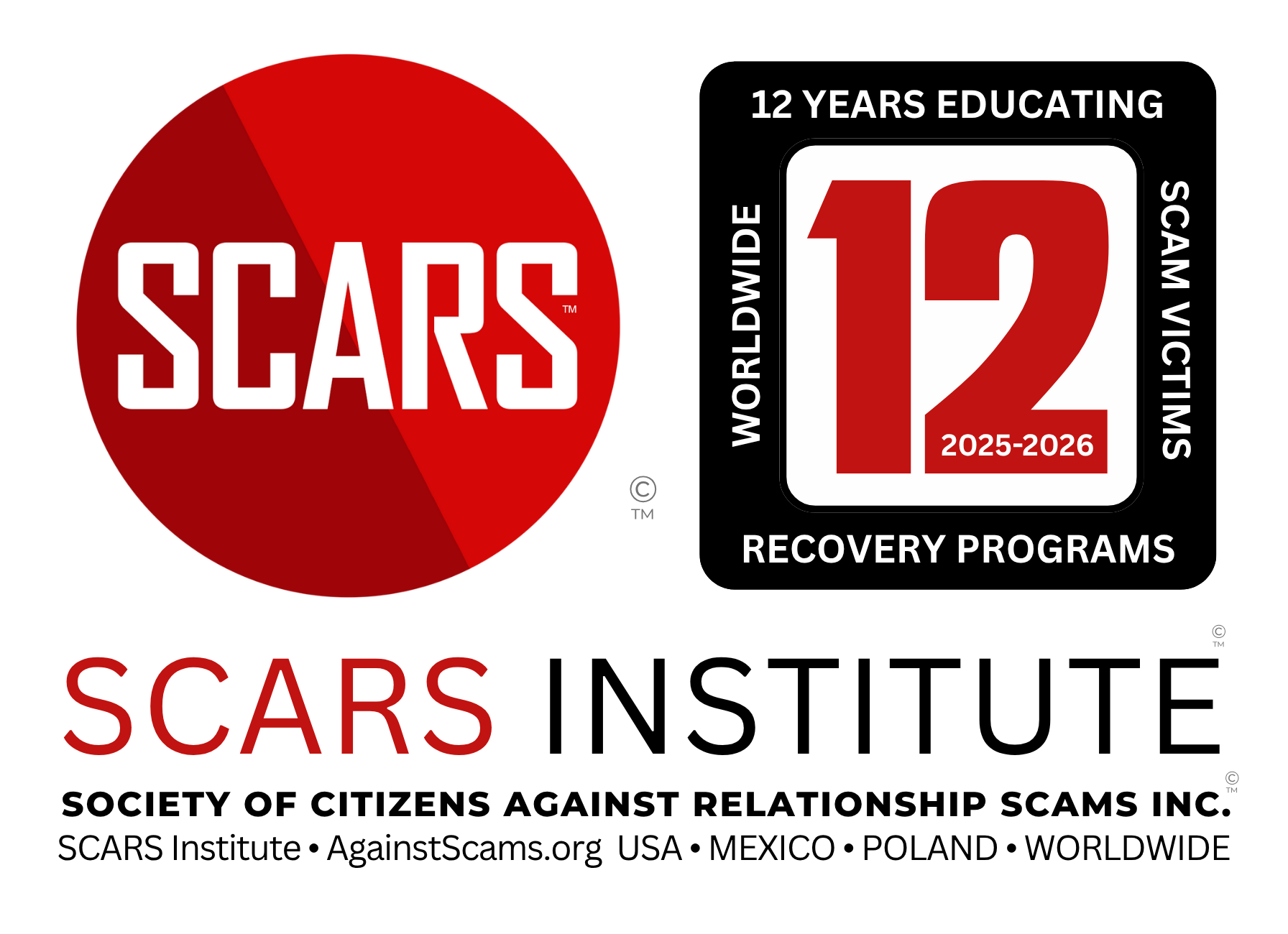


Scam Victims Ask: How Can You Deceive a Scammer Back?
Deceiving Your Scammer Back: The Pain Turns Into Anger, and All You Want is Revenge Against Your Scammer
For New Scam Victims – A SCARS Institute Insight
Author:
• Tim McGuinness, Ph.D., DFin, MCPO, MAnth – Anthropologist, Scientist, Director of the Society of Citizens Against Relationship Scams Inc.
Article Abstract
Scam Victims often think about deceiving a scammer to get revenge or justice, it might feel emotionally satisfying in the moment, but it will only drag you deeper into harm. Scammers are not just cruel—they are calculated professionals trained to manipulate, bait, and exploit. Engaging with them again puts your emotional recovery, your personal safety, and any chance of legal action at risk. Real healing begins when you remove the scammer from your focus and place that energy into recovery. Letting go is not giving up. It is a conscious act of reclaiming your future. Instead of reacting, start rebuilding. Instead of seeking revenge, seek truth, clarity, and strength. One of the most effective tools at your disposal is proper documentation and reporting. That action closes the door on the scammer and opens the path toward healing. The scammer is not your concern anymore. Your future is.

Deceiving Your Scammer Back: For Scam Victims the Pain Turns Into Anger, and All You Want is Revenge Against Your Scammer
Author’s Note
When scam victims ask, “How can I deceive a scammer back?” they are not truly seeking justice; they are expressing the raw pain of betrayal, loss, and humiliation. This question is a symptom of unresolved trauma, not a plan for action. Scam victims often feel powerless, ashamed, and emotionally violated. The fantasy of turning the tables is a way to reclaim control. It reflects anger, grief, and a desire to reverse the roles, even briefly.
However, trying to deceive a scammer is not only dangerous; they are criminals with lots of money and connections around the world, and it also undermines the scam victim’s own recovery process. Scammers are experienced manipulators who thrive on engagement, but they are also criminals and potentially dangerous. Any attempt to “scam them back” puts the victim at risk of deeper psychological entanglement, emotional harm, further exploitation, or causing the scammer to pay special attention to the victim, which can result in identity theft or other more malicious cybercrime. Engaging with them again, on any terms, keeps the victim tethered to the lie, delays emotional healing, and feeds into obsessive thinking.
The real strength comes from disengagement, recovery, and reclaiming your own life, not from trying to win a rigged game. Instead of asking how to deceive the scammer, a more productive and empowering question is: “How can I rebuild my strength, protect others, and make sure no one else falls for what I went through?”
Prof. Tim McGuinness, Ph.D.
1 . Why This Is a Bad Idea: Criminals Are Not Toys to Be Played With
When you think about deceiving a scammer in return, it might feel like a way to take back control. The urge to turn the tables or humiliate the person who manipulated you can seem emotionally justified. After all, they caused real damage, financial, emotional, and psychological. Wanting to fight back makes sense. Still, trying to deceive a scammer is not only a bad idea, it is dangerous, destabilizing, and will interfere with your recovery.
Scammers are not amateurs. They are professional criminals who manipulate people for a living. They understand psychology, control emotional narratives, and operate with a level of detachment that makes them hard to rattle. Trying to beat them at their own game is like walking into a trap while already wounded. They are not affected by mockery or emotional counterattacks. If you re-engage, you give them another chance to exploit you.
Most scammers do not work alone. What seems like one person may actually be a group or organized network. If you make contact again, you expose yourself to new risks, retaliation, manipulation, or even new forms of fraud. You are not facing a lone opponent. You are dealing with a system that is designed to find and use your vulnerability.
There is also a legal consequence. If you interact with a scammer in a deceptive or aggressive way, it can damage your credibility if you decide to report the crime. It may confuse the timeline, distort evidence, or make your case harder for law enforcement to process. What starts as a reaction can become a decision that blocks accountability.
The biggest cost is psychological. As long as you stay connected to the scammer, you stay connected to the scam. It prevents emotional closure. It keeps you in a state of reaction and stops your healing from moving forward. Justice does not come from lowering yourself to their level. It comes from stepping away with strength and beginning to rebuild what they tried to break.
Criminals are not toys. They are not there to give you closure or help you reverse your pain. They are predators. The strongest choice you can make is to cut off all contact and never return to it.
Turning your anger away and toward your recovery is not just safer, it is more powerful.
Redirecting anger into awareness, action, and healing is not only safer, it is the proper path according to all psychological professionals.
2. The Purpose of Letting Go: Focusing on Emotional and Psychological Recovery
After the scam ends, you often find yourself standing in emotional wreckage. You feel confused, ashamed, angry, and desperate to regain a sense of control. The idea of fighting back, exposing the scammer, or getting revenge may seem like it could give you relief. In truth, the real turning point in recovery does not come from retaliation. It comes from letting go. Releasing the scammer is not a sign of weakness. It is a sign of strength. It marks the moment when you stop living in response to the betrayal and start reclaiming your own direction.
Betrayal Trauma caused by the scam destabilizes your sense of identity and reality. It damages your trust in others and your trust in yourself. You may begin to question your judgment, feel responsible for what happened, or obsess over the parts of the scam that still do not make sense. These responses are normal. They are also exhausting. The longer you allow the scammer to take up space in your mind, the longer your wounds remain open. Whether you focus on them with anger or fantasy, you keep your nervous system activated and your mind trapped in a reactive cycle.
Recovery depends on how you use your energy. If you keep directing it toward the person who harmed you, your healing cannot fully begin. You need to focus that energy on rebuilding. That means creating structure in your daily life, committing to self-care, seeking therapeutic support, and learning more about how manipulation works. Recovery requires a shift in attention. Instead of looking outward in blame, you look inward with reflection. What part of you needs repair? What values were betrayed? What beliefs need to be examined and rebuilt?
Letting go does not mean forgetting. It means choosing not to live under the rule of what has already happened. It means deciding that the scammer no longer deserves your attention, your thoughts, or your emotional effort. Letting go is not giving up. It is a deliberate act of self-protection and strength.
Scammers feed on attention. They want to stay in control. The most powerful decision you can make is to disconnect from their world completely and begin the work of healing on your terms. You cannot rewrite the past, but you can build the future. Recovery begins when you stop reacting to the scammer and start rebuilding your life.
3. Reporting the Crime: Why Proper Documentation Matters
Once you discover the scam, one of the most important steps you can take is to report the crime. This does more than create a legal record. It helps protect others and contributes to a broader effort to track, investigate, and disrupt criminal networks. Still, the value of your report depends on one critical factor: the clarity and accuracy of the information you provide. That means you must avoid all emotionally driven contact with the scammer after the discovery.
You may feel a strong need for justice. That is natural. What often gets missed is that justice begins with a clean, uncontaminated report. If you keep communicating with the scammer, whether to deceive them, bait them, or try to gather more proof, you may damage your case. Law enforcement depends on a clear timeline, preserved chat logs, and a victim who has not altered the evidence. Even actions taken with good intentions can backfire. When you re-engage, you give the scammer more opportunities to confuse the situation or turn it against you.
Scam-related crimes often fall under cybercrime or transnational fraud. These cases are complex and take time to investigate. That is why discipline and patience matter. Investigators rely on the information you provide, such as conversation transcripts, transaction records, emails, usernames, and platform activity. The more precise and complete your documentation is, the better your chances of helping an active case move forward.
Reporting also helps with emotional closure. It draws a clear line between the trauma and your recovery. Instead of letting the experience remain private and unresolved, you make it part of a formal process. That shift helps you step into a more stable emotional state. Reporting is not revenge. It is the choice to place the truth in the hands of professionals while you focus on repair and rebuilding.
You should provide everything you have: messages, images, receipts, usernames, and any relevant platform details. What you should not provide is any post-discovery communication with the scammer. That includes messages where you try to confront, trap, or outsmart them. Even if your goal is to help law enforcement, those efforts usually do more harm than good. They weaken the legal foundation of the report and make emotional recovery harder to achieve.
Proper reporting is not just a task. It is a turning point. It marks the moment when you stop reacting and start taking structured, informed steps toward healing. It creates distance from the criminal, reinforces your strength, and builds a record that may help others in the future. Learn where to report here.
Visit www.ScamVictimsSupport.org to learn the steps you need to take and how to begin your recovery journey.
Conclusion: Step Away to Reclaim Control
Trying to deceive a scammer may feel like a path to justice, but it only leads to more harm. These are not ordinary people. They are experienced manipulators who feed on emotional reactions. When you engage with them again, even out of anger, you expose yourself to further risk. You interfere with possible legal action, and you keep the trauma emotionally alive. Recovery begins when you remove the scammer not just from your inbox, but from your attention.
Healing takes structure, truth, and emotional distance. It also takes a decision to stop reacting and start rebuilding. Your energy matters. Direct it toward your recovery, not toward someone who never deserved your time in the first place. Strength does not come from beating the scammer at their own game. It comes from walking away from the game completely.
Report the crime. Preserve the evidence. Focus on your recovery. That is how you shift from victim to survivor, by refusing to let a criminal define your story any longer. The scammer is done. Now the work is about you.
When you are ready, we recommend that you also enroll in our FREE Scam Survivor’s School at www.SCARSeducation.org
-/ 30 /-
What do you think about this?
Please share your thoughts in a comment below!
Table of Contents





Rapid Report Scammers

In the U.S. & Canada
U.S. & Canada Suicide Lifeline 988
LEAVE A COMMENT?
Recent Comments
On Other Articles
- Debby Montgomery Johnson on The Danger of Using AI in Law Enforcement – The Grandmother Wrongly Arrested as a Fraudster – 2026: “Excellent article – I can’t imagine the terror Angela most certainly experienced. Compound this with the lack of accountability by…” Mar 24, 09:20
- on The Crazy Gregor MacGregor and the Country of Poyais Scam – History of Scams – 2026: “interesting” Mar 23, 19:24
- on BEC Fraud Reaches $43 Billion Per Year: “oh my gosh so much of an increase in the fraud I pray the officials can continue tracking and make…” Mar 23, 15:09
- on Establishing The United States Task Force To Eliminate Fraud – 2026: “Make Online Safe Again!” Mar 17, 19:11
- on Establishing The United States Task Force To Eliminate Fraud – 2026: “Finally an administration takes the initiative to help solve the gigantic situation. Make America Safe Again, thank you!” Mar 17, 15:41
- on What Is The Difference Between A Scam Victim And A Scam Survivor? [Updated]: “Due to my scams I don’t fully trust anyone online and I shouldn’t even those people I knew in high…” Mar 7, 12:46
- on SCARS 3 Steps For New Scam Victims 2024: “I was very fearful “he” would come to my home because I was knew my address, I spoke to someone…” Mar 7, 09:50
- on Sadness & Scam Recovery: “Before my scam, my mom passed away and I got a divorce, so I was dealing with the loss of…” Mar 7, 09:37
- on The Story Of Kira Lee Orsag (aka Dani Daniels) [Updated]: “There is NO evidence and she is not, she is a victim too. Sebastian, stop letting your anger think for…” Mar 6, 23:18
- on The Story Of Kira Lee Orsag (aka Dani Daniels) [Updated]: “There is real evidence that behind these two people there is something that not many people know. This woman is…” Mar 4, 03:58
ARTICLE META
Important Information for New Scam Victims
- Please visit www.ScamVictimsSupport.org – a SCARS Website for New Scam Victims & Sextortion Victims
- Enroll in FREE SCARS Scam Survivor’s School now at www.SCARSeducation.org
- Please visit www.ScamPsychology.org – to more fully understand the psychological concepts involved in scams and scam victim recovery
If you are looking for local trauma counselors please visit counseling.AgainstScams.org or join SCARS for our counseling/therapy benefit: membership.AgainstScams.org
If you need to speak with someone now, you can dial 988 or find phone numbers for crisis hotlines all around the world here: www.opencounseling.com/suicide-hotlines
A Note About Labeling!
We often use the term ‘scam victim’ in our articles, but this is a convenience to help those searching for information in search engines like Google. It is just a convenience and has no deeper meaning. If you have come through such an experience, YOU are a Survivor! It was not your fault. You are not alone! Axios!
A Question of Trust
At the SCARS Institute, we invite you to do your own research on the topics we speak about and publish, Our team investigates the subject being discussed, especially when it comes to understanding the scam victims-survivors experience. You can do Google searches but in many cases, you will have to wade through scientific papers and studies. However, remember that biases and perspectives matter and influence the outcome. Regardless, we encourage you to explore these topics as thoroughly as you can for your own awareness.
Statement About Victim Blaming
SCARS Institute articles examine different aspects of the scam victim experience, as well as those who may have been secondary victims. This work focuses on understanding victimization through the science of victimology, including common psychological and behavioral responses. The purpose is to help victims and survivors understand why these crimes occurred, reduce shame and self-blame, strengthen recovery programs and victim opportunities, and lower the risk of future victimization.
At times, these discussions may sound uncomfortable, overwhelming, or may be mistaken for blame. They are not. Scam victims are never blamed. Our goal is to explain the mechanisms of deception and the human responses that scammers exploit, and the processes that occur after the scam ends, so victims can better understand what happened to them and why it felt convincing at the time, and what the path looks like going forward.
Articles that address the psychology, neurology, physiology, and other characteristics of scams and the victim experience recognize that all people share cognitive and emotional traits that can be manipulated under the right conditions. These characteristics are not flaws. They are normal human functions that criminals deliberately exploit. Victims typically have little awareness of these mechanisms while a scam is unfolding and a very limited ability to control them. Awareness often comes only after the harm has occurred.
By explaining these processes, these articles help victims make sense of their experiences, understand common post-scam reactions, and identify ways to protect themselves moving forward. This knowledge supports recovery by replacing confusion and self-blame with clarity, context, and self-compassion.
Additional educational material on these topics is available at ScamPsychology.org – ScamsNOW.com and other SCARS Institute websites.
Psychology Disclaimer:
All articles about psychology and the human brain on this website are for information & education only
The information provided in this article is intended for educational and self-help purposes only and should not be construed as a substitute for professional therapy or counseling.
While any self-help techniques outlined herein may be beneficial for scam victims seeking to recover from their experience and move towards recovery, it is important to consult with a qualified mental health professional before initiating any course of action. Each individual’s experience and needs are unique, and what works for one person may not be suitable for another.
Additionally, any approach may not be appropriate for individuals with certain pre-existing mental health conditions or trauma histories. It is advisable to seek guidance from a licensed therapist or counselor who can provide personalized support, guidance, and treatment tailored to your specific needs.
If you are experiencing significant distress or emotional difficulties related to a scam or other traumatic event, please consult your doctor or mental health provider for appropriate care and support.
Also read our SCARS Institute Statement about Professional Care for Scam Victims – click here to go to our ScamsNOW.com website.


Thank you for your comment. You may receive an email to follow up. We never share your data with marketers.