

SCARS Institute’s Encyclopedia of Scams™ Published Continuously for 25 Years

Spotting Fake Passports
A Guide to Spotting Typical Fake Passports Used By Scammers as Proof of Identity
How Scams Work – A SCARS Institute Guide
Authors:
• SCARS Institute Encyclopedia of Scams Editorial Team – Society of Citizens Against Relationship Scams Inc.
• Portions from other sources
Originally Published: 2010 – Article Updated: 2024
Fake Passport Disclaimer
This guide will help spot 90% of fake passports provided as photos or images. However, the graphic design skills of scammers, fraudsters, and cybercriminals have been increasing substantially, and there are even nation-states creating fake passports now too. Because of AI and such tools it is increasingly hard to spot the best fake passports.
First Principal
It is almost universally illegal to photograph and duplicate an official passport. Therefore if someone you know online sends a passport photo as proof of identity, it is 99% assured to be a fake automatically. When there is ANY doubt, assume it is a fake and act accordingly.
How To Spot Fake U.S. Passports
Scammers have always made up fake passports, fake identification, and fake documents, but with a careful eye, you can always spot them for what they are!
The First Rule of Fake Passports
If someone sends you a photo of their passport it is 99% sure it is a fake passport and the person is a scammer. It is unlawful to duplicate a passport with most issuing countries. There are exceptions where it is necessary to prove an identity, but certainly not with someone you only met online! If they send you a photo it is a fake passport!
Note: The New 2021 Passport Design
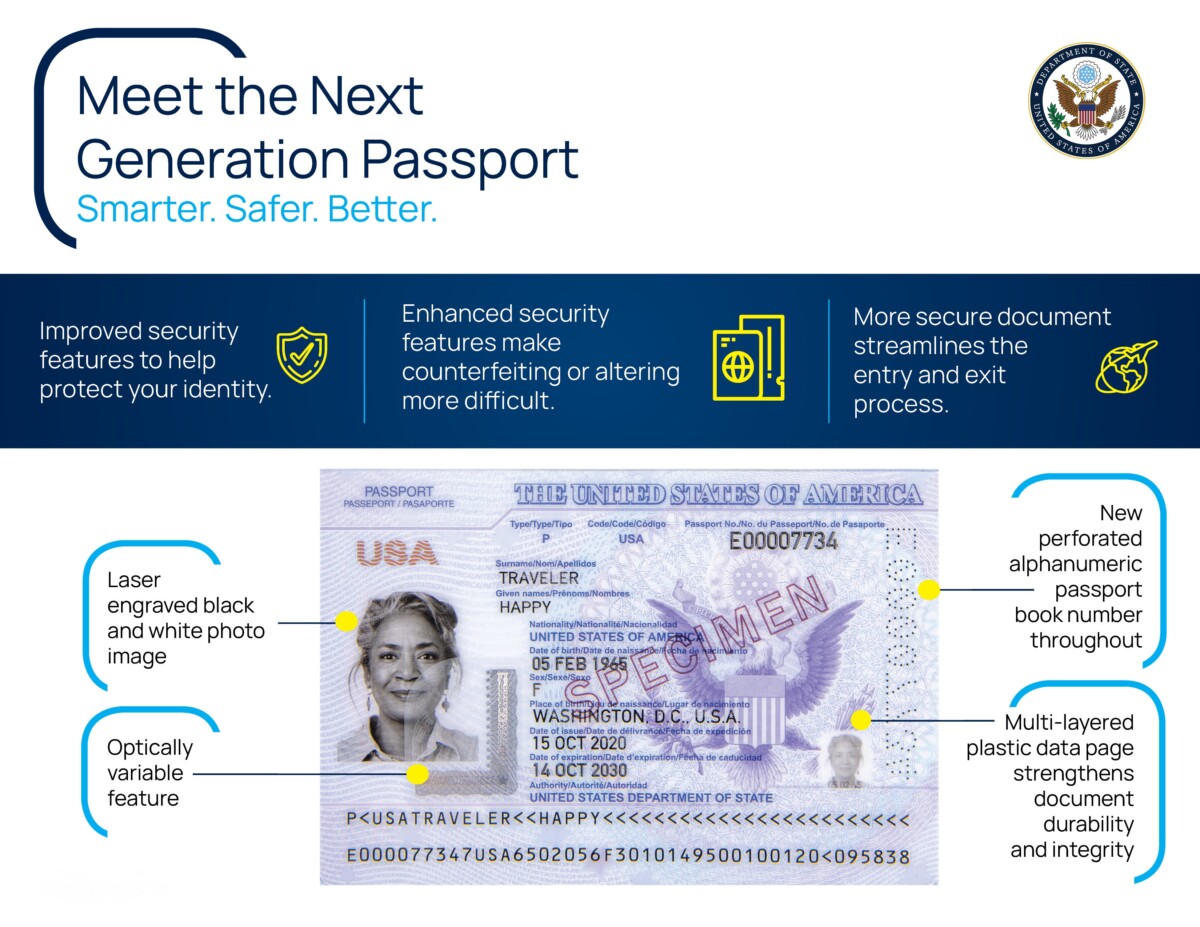
The United States started issuing a next-generation U.S. passport book in 2021. The book has new features, such as a polycarbonate data page, laser engraving, and updated artwork. This is an image that illustrates the features of a next-generation U.S. passport. Look at the issue date of any passport you are shown, if it was issued in 2021 or later and does not match the latest design then by definition it is a fake. Learn more here.
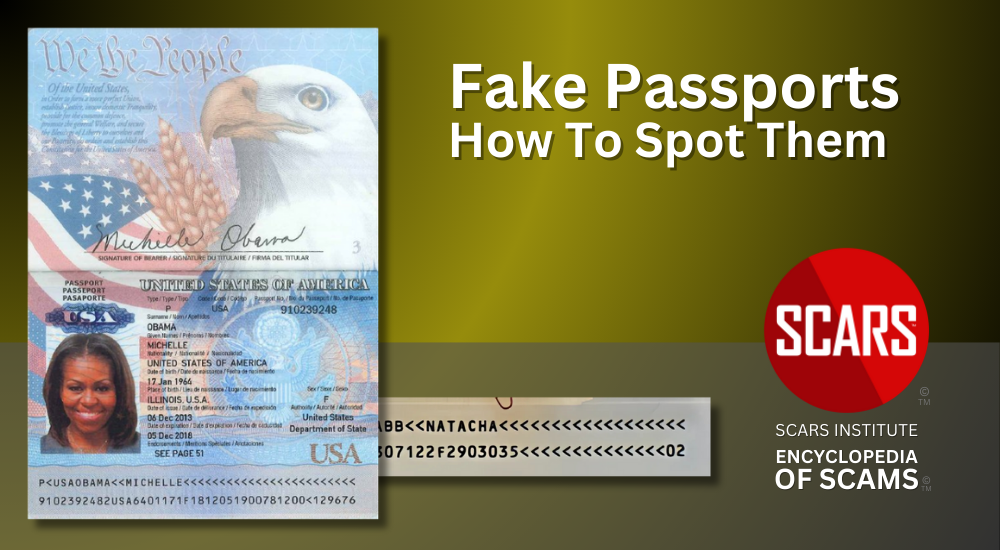
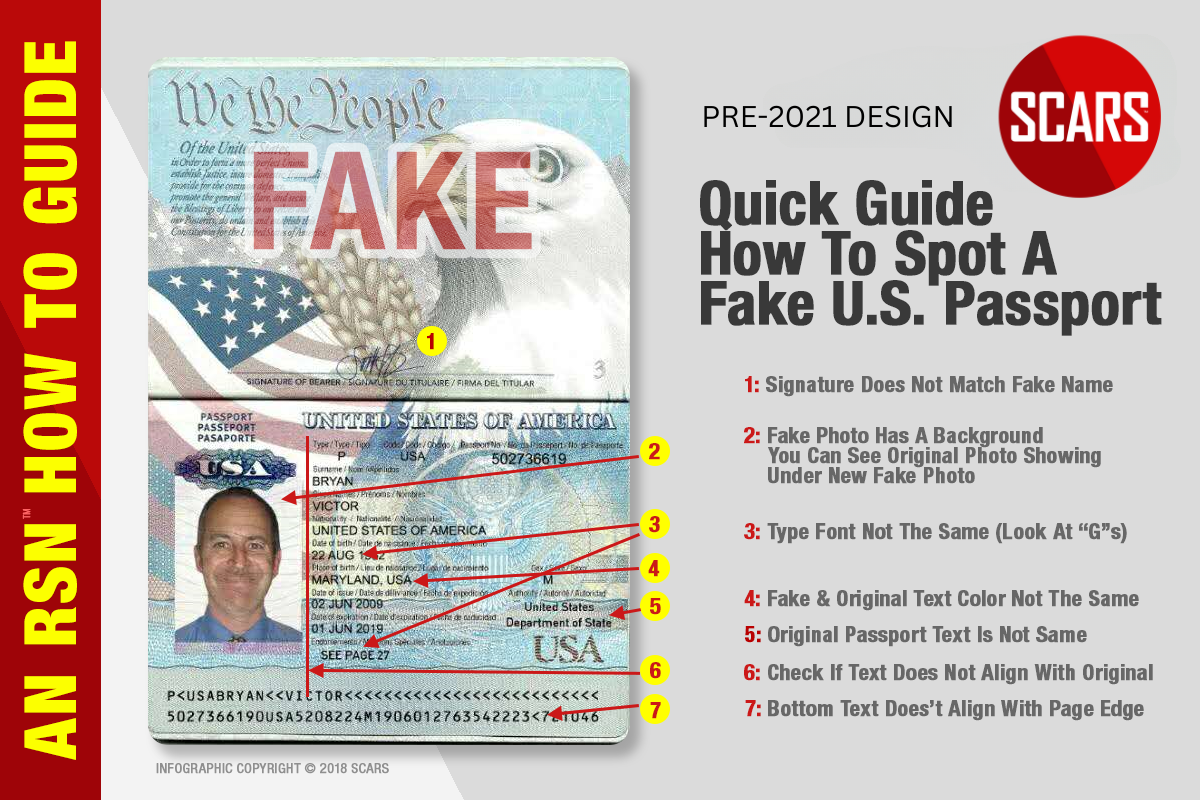
Here is How a Real U.S. Passport Should Look – Pre-2021 Design:

Michelle Obama U.S. Passport
Notice the following things:
- The photo has a portion that is transparent
- The USA logo/icon overlaps the photo and can see the photo background under it
- Note that the photo in this case would not be legal because it has to show an ear
- All the typed text is the same font and same size and aligns
- Typed text is a compressed sanserif font – black in color
- The signature name matches the typed name
- Everything in the passport is the same sharpness
Here is How a Real U.S. Passport Should Look – 2021 and After Design:
How to Identify Fake Passports – Pre-2021 Design
– –
Here’s a comprehensive guide for recognizing an authentic United States passport and identifying red flags that might indicate a fake one. U.S. passports have many security features that make them challenging to counterfeit, so knowing what to look for can help verify their authenticity.
Examine the Passport Cover (IF VISIBLE)
Genuine Indicators:
-
- Seal: The front cover of a U.S. passport has the Great Seal of the United States stamped in gold.
- Color: Standard U.S. passports for regular citizens are navy blue. Diplomatic and official passports are black and maroon, respectively.
- Texture: The cover should feel sturdy, durable, and high-quality.
Fake Red Flags:
-
- Incorrect color or lower-quality material.
- Poorly printed or blurry seal and lettering.
Inspect the Bio-data Page (Inside Front Page)
Genuine Indicators:
-
- Holographic Overlay: The bio-data page contains a holographic image that should shift or change when tilted under light. Look for images of the American eagle and other symbols within the hologram.
- Microprinting: Genuine passports have tiny text that’s difficult to replicate. You can find microprinted words like “USA” or “United States of America” along the edges of the bio-data page and under the photo.
- Fine Line Printing: The background of the bio-data page is printed with fine lines in complex patterns to prevent copying. The lines should be clear and crisp, not smudged or pixelated.
- Laser-perforated Serial Number: The passport number should be laser-perforated through multiple pages. The numbers are perfectly aligned and visible on each page.
Fake Red Flags:
-
- Blurry or uneven holographic effects.
- Absence of microprinting or fine line detailing, or if these details appear smudged or pixelated.
- Misaligned or missing perforated passport number.
Photo Quality and Security Features
Genuine Indicators:
-
- Embedded Photo: The holder’s photo on the bio-data page is digitally printed into the page rather than glued or laminated. The photo should appear seamless with the page.
- Ghost Image: There is often a smaller “ghost” image of the passport holder’s photo on the bio-data page. This secondary image is another layer of security.
- Optically Variable Ink: Some of the text on the bio-data page, such as “United States of America,” might be printed in optically variable ink, which changes color when viewed from different angles.
Fake Red Flags:
-
- If the photo appears glued on or does not blend seamlessly into the page.
- No ghost image, or if it appears as a faded copy rather than a professional reproduction.
- Text or images that do not shift in color as they should with optically variable ink.
SEE VIDEO BELOW
Check the Embedded Security Features
Genuine Indicators:
-
- Security Thread: The newer U.S. passports contain a security thread embedded in the pages, visible under UV light. It should contain microprinted text and symbols that align with government standards.
- UV Reactive Features: Under ultraviolet (UV) light, certain elements of the passport will fluoresce. For example, the bio-data page may reveal hidden designs, and each visa page contains UV-reactive ink that displays additional images and symbols.
- Watermark: Every page has a watermark of Benjamin Franklin or other patriotic symbols. This watermark should be visible when the page is held up to light.
Fake Red Flags:
-
- Lack of a security thread or a thread that does not contain authentic microprinting.
- No or poorly designed UV-reactive features.
- No watermark, or if the watermark appears as a printed design rather than an integrated feature.
Additional Security Elements
Genuine Indicators:
-
- Ink Colors and Patterns: U.S. passports use specialized inks for different patterns and colors, making them very hard to replicate. On visa pages, you should see intricate designs and color shifts when tilting the page.
- Intaglio Printing: The cover and some internal elements are printed with intaglio, a method that leaves a tactile feel and is hard to counterfeit. Run your fingers over the cover and bio-data page to feel for raised ink.
- Microchip: Newer passports are e-passports and contain an embedded RFID microchip symbol on the front cover. The chip contains a digital version of the passport holder’s bio-data page. The chip can be scanned to verify the passport’s authenticity.
Fake Red Flags:
-
- If the passport lacks intricate printing or if the designs appear simple and flat.
- No raised ink or tactile elements.
- Absence of the RFID chip symbol on newer passports, or if the chip fails to scan at appropriate checkpoints.
Cross-Check with Known Specifications
The U.S. Department of State has very specific standards for passport materials, design, and quality. Checking these details against a known authentic passport can be helpful.
Genuine Indicators:
-
- Matching details with other genuine passports you may have seen (if possible).
- Consistency in font, spacing, and alignment of all details on the bio-data page.
Fake Red Flags:
-
- Any inconsistencies in formatting or misspelled text.
- Lack of alignment or mismatched fonts.
Common Sense Red Flags
Sometimes, the context in which the passport is presented can be a clue.
- IF SENT AS A PHOTO IT IS 99% A FAKE – SINCE IT IS ILLEGAL TO DO THAT
- If someone is reluctant to allow a closer inspection.
- If the passport has visible alterations, such as smudges or erased areas.
- If the passport feels lightweight or uses low-quality materials.
Final Note
If you suspect a U.S. passport is fake, report it to the relevant authorities or consult with a passport verification professional. Familiarity with genuine security features, particularly holograms, watermarks, and microprinting, can aid in spotting a fake passport.
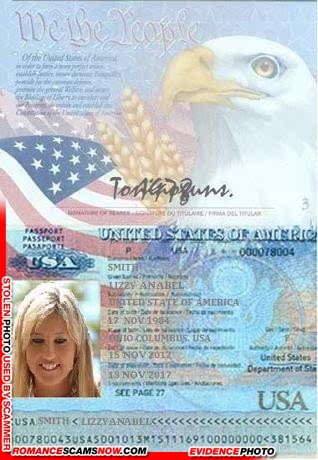
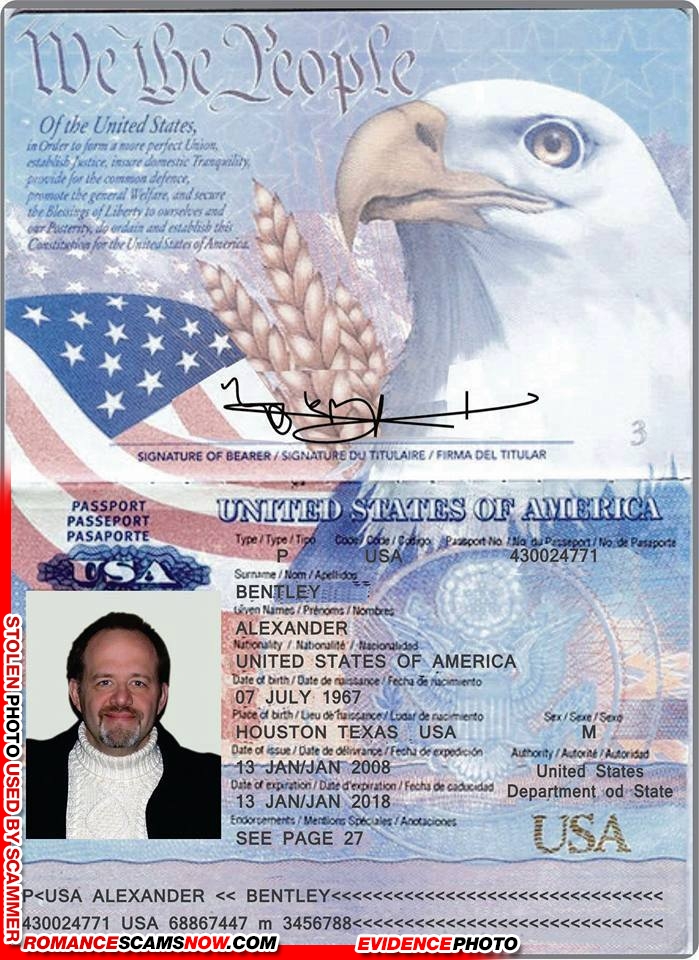
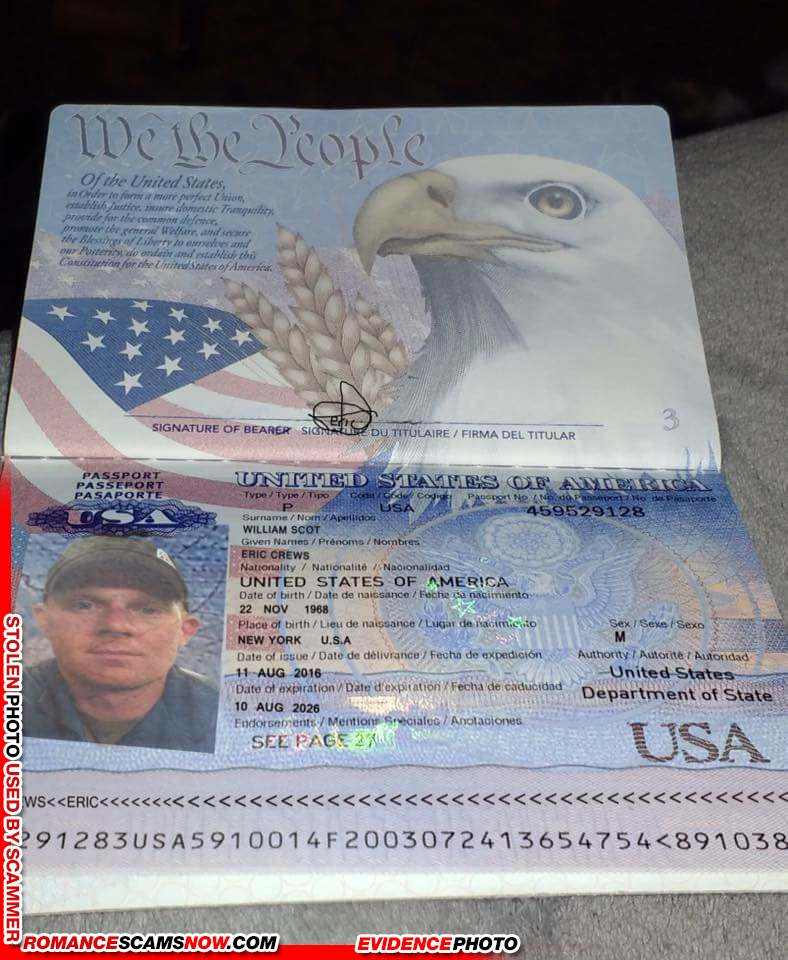
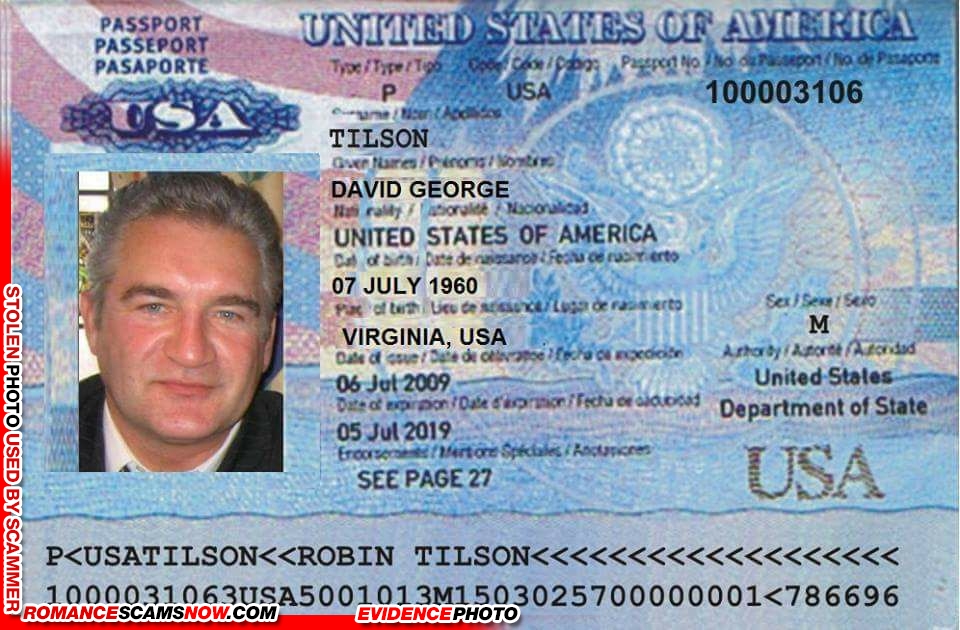
A Gallery of Fake U.S. Passports – Can You Spot the Defects?
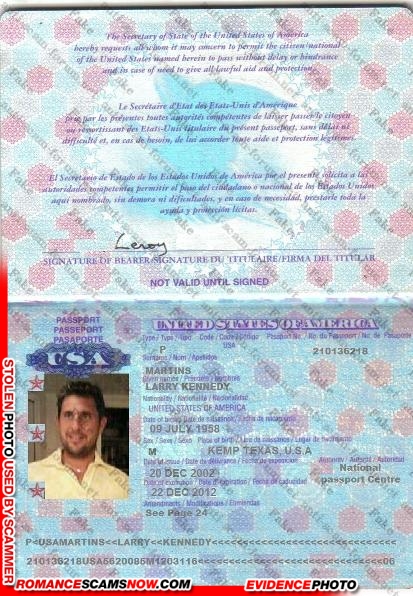
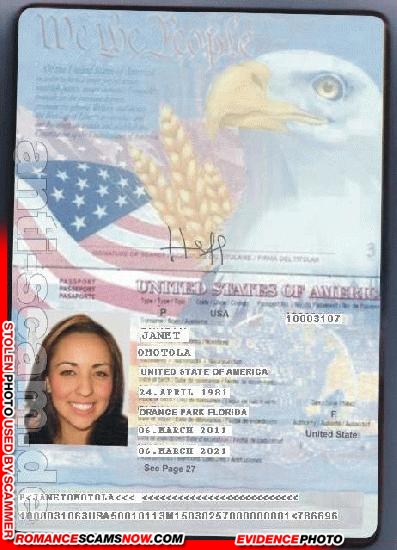

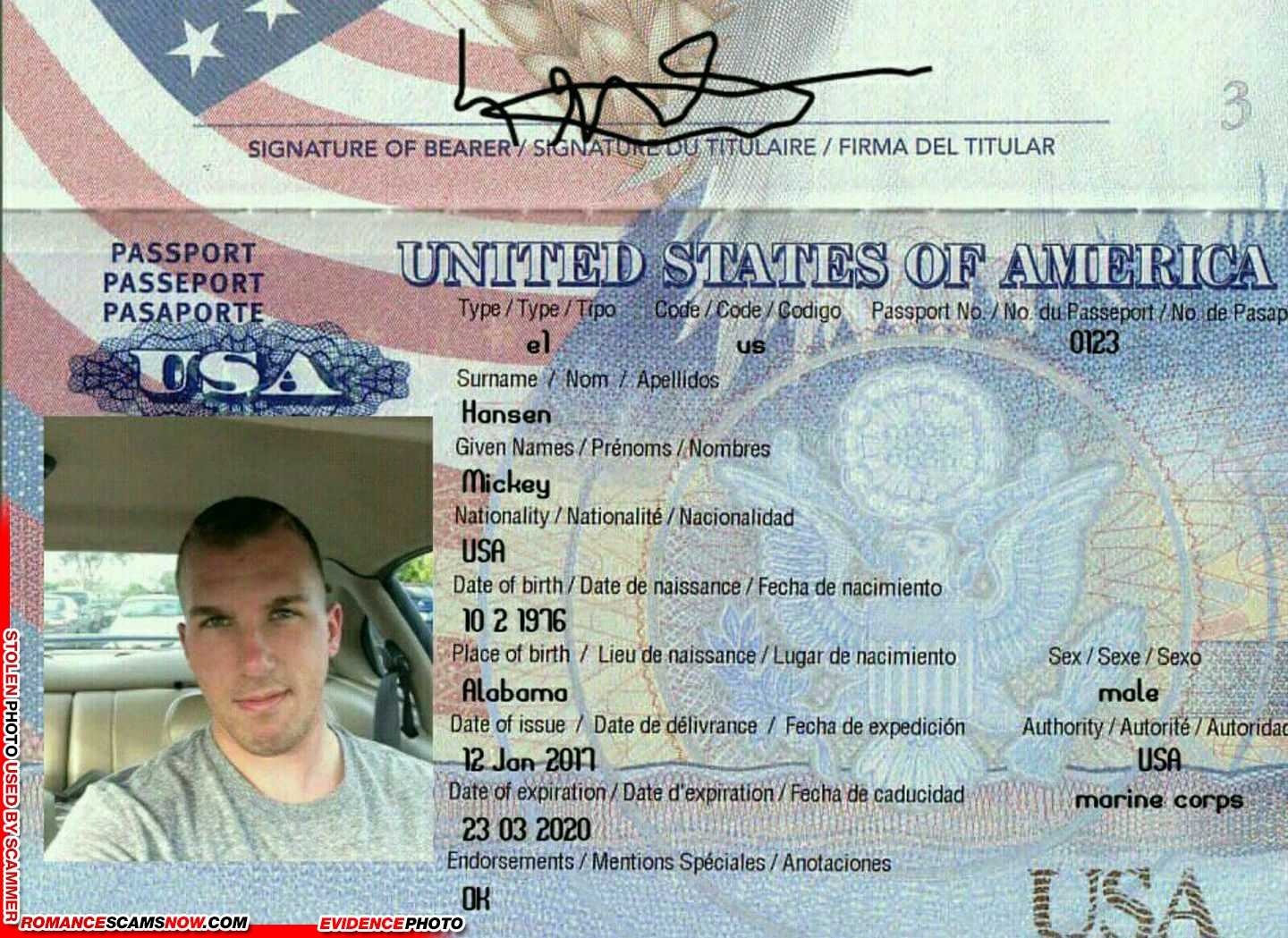

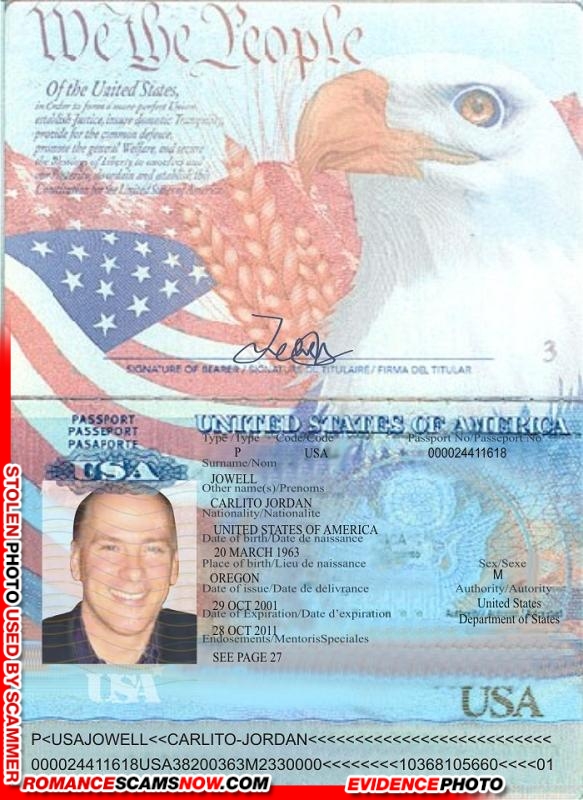

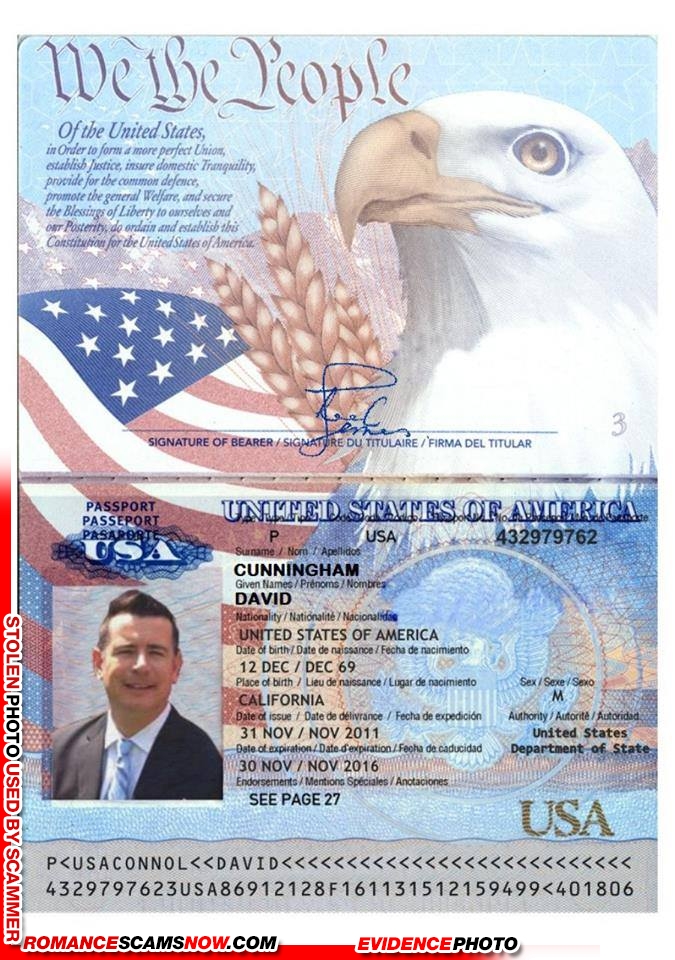
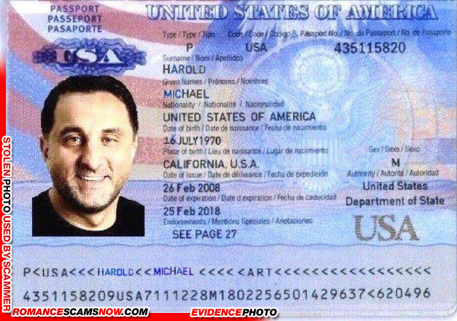
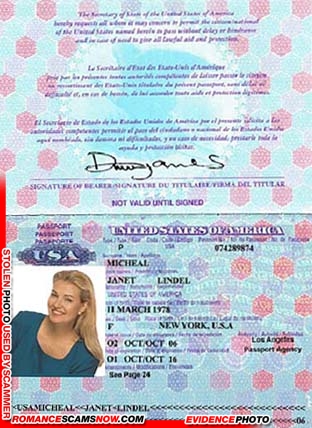

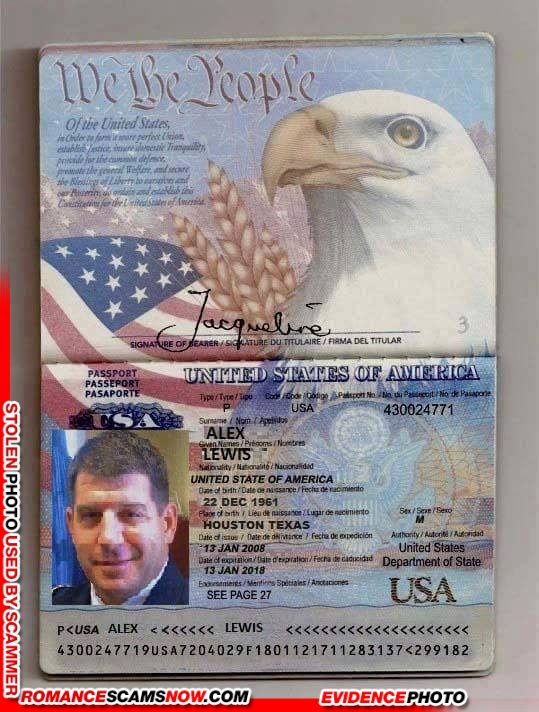
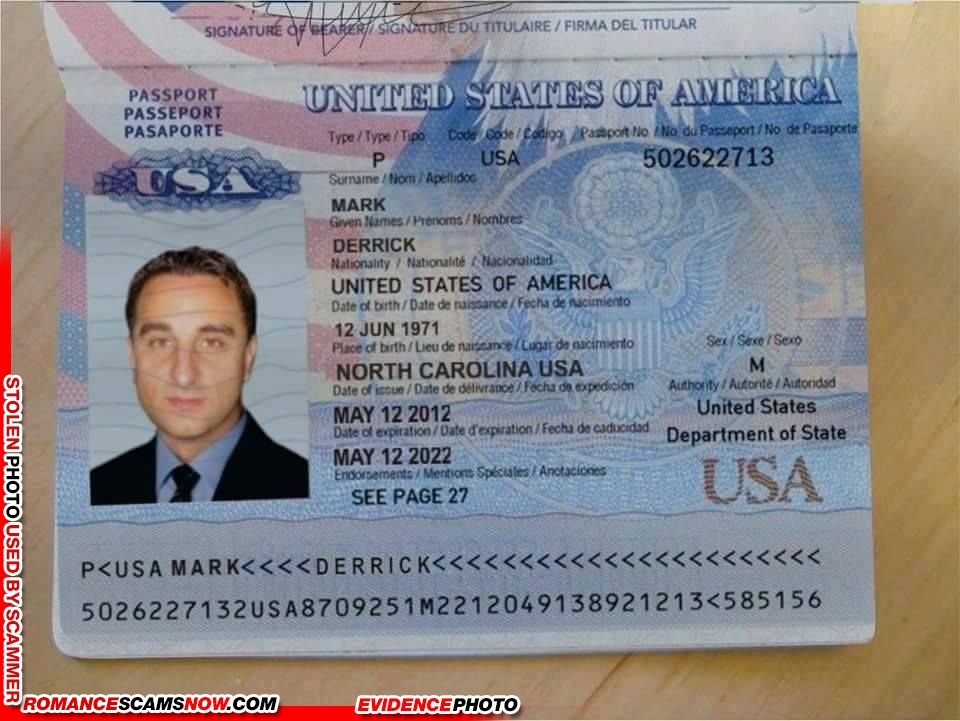
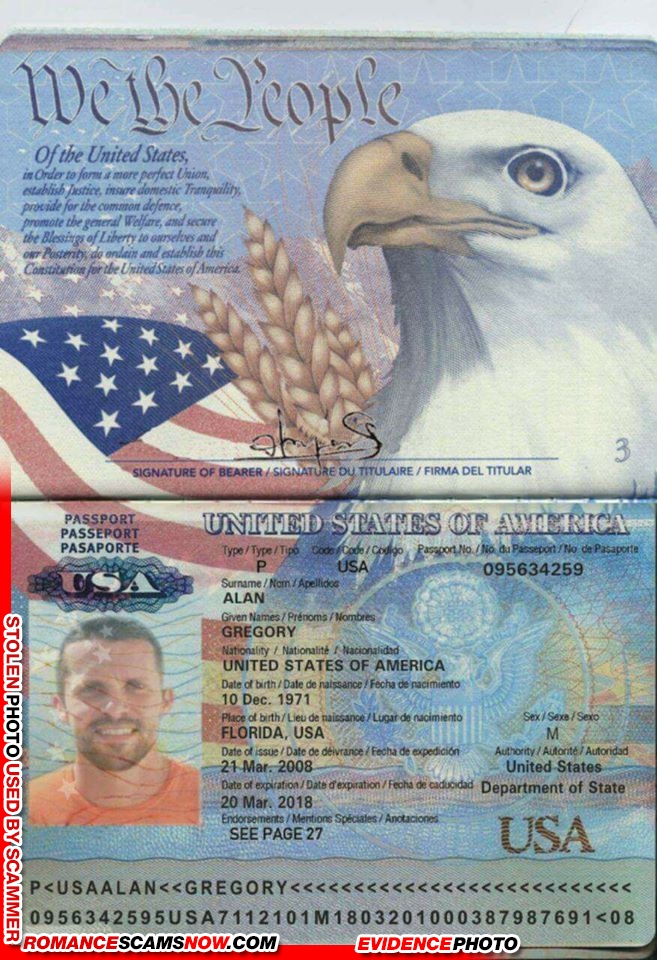
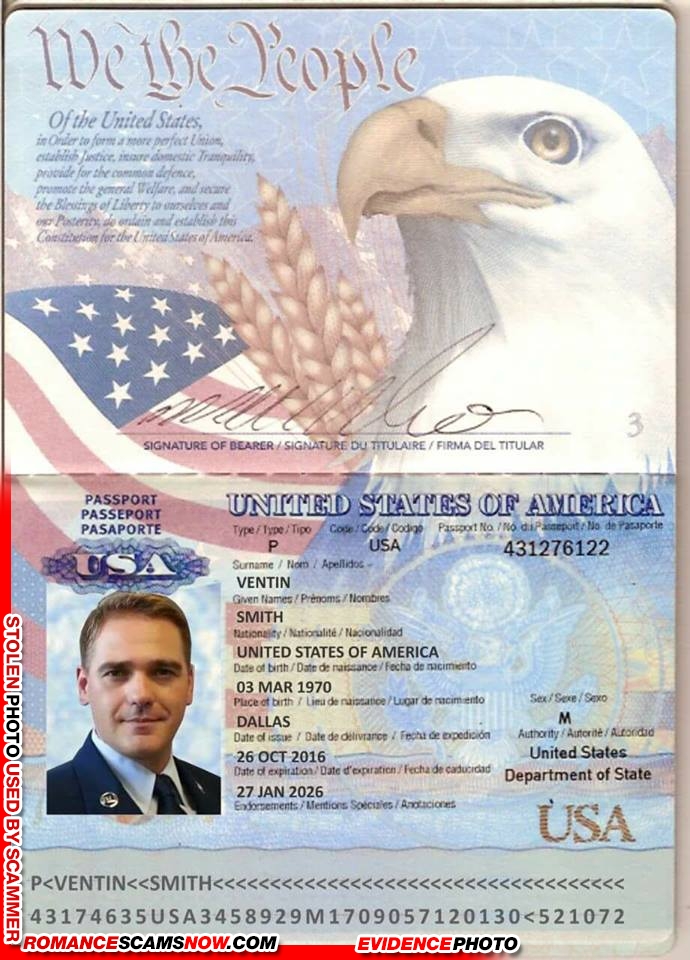


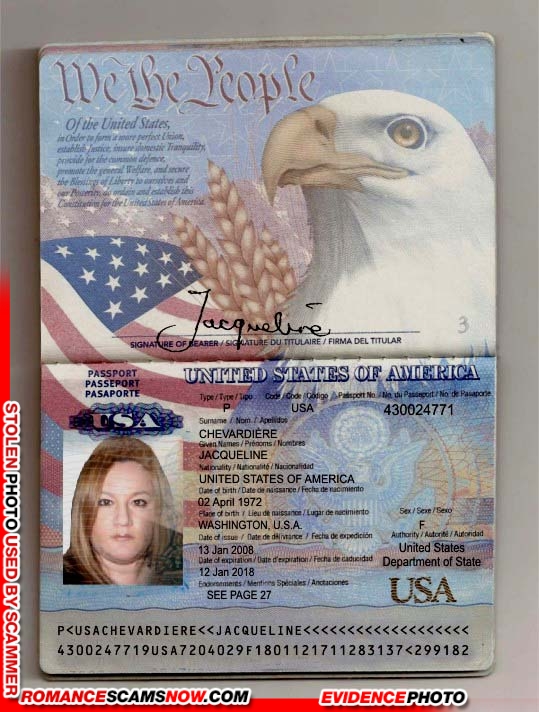
Always Check for Fake Passports
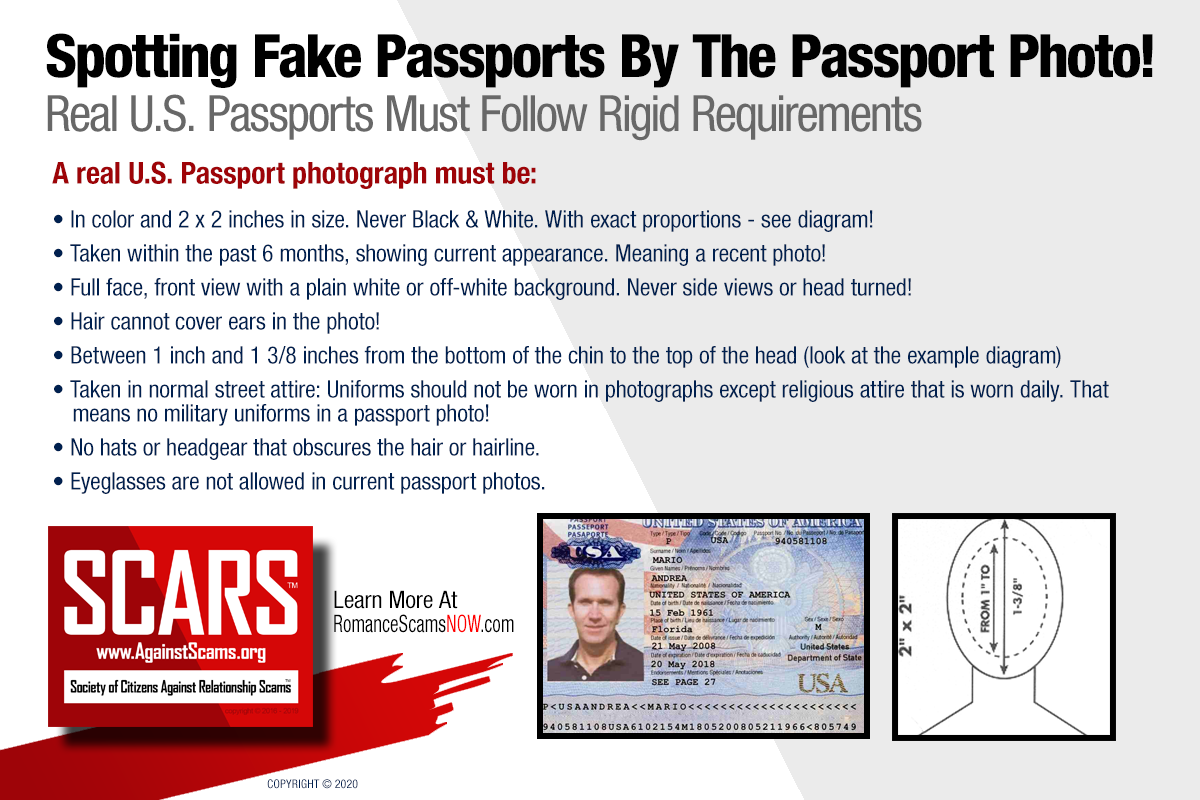
Using Passport Photos Standards To Spot Fakes
Remember
It can be difficult to spot fake passports from a photo, but there are that can help (see above.)
Here are some additional things to look for:
- Low-quality image. Fake passport images are often very small – low resolution to make it hard to see the details. This can make the photo look blurry or pixelated.
- Blurry or distorted text. The text on a genuine passport should be clear and easy to read. If the text is blurry or distorted, it could be a sign of a fake passport.
- Inconsistent colors. The colors on a genuine passport should be consistent throughout the document. If the colors look faded or inconsistent, it could be a sign of a fake passport.
- Missing or incorrect information. The passport should contain all of the necessary information, such as the bearer’s name, date of birth, and place of birth and they should match from section to section. If any of this information is missing or incorrect, it could be a sign of a fake passport.
- Security features. Genuine passports have a variety of security features, such as holograms, watermarks, and microprinting. If these features are missing or not clear, it could be a sign of a fake passport.
If you are suspicious that a passport may be fake, you should contact the issuing government or a passport expert to verify its authenticity.
Here are some additional tips for spotting fake passports from a photo:
- Compare the photo to a genuine passport. If you have access to a genuine passport, compare the two side-by-side.
- Look for inconsistencies in the photo. The photo should be consistent with the information in the passport. If there are any inconsistencies, it could be a sign of a fake passport.
- Use a magnifying glass. A magnifying glass can help you to see the security features on the passport more clearly.
- Trust your instincts. If you have any doubts about the authenticity of the passport, it is best to walk away.
It is important to remember that fake passports are becoming increasingly sophisticated, so it is not always easy to spot them. However, by being aware of the common signs of a fake passport and by following these tips, you can help to protect yourself from being scammed.
Additional Insights
More:
- Next Generation U.S. Passport (state.gov)
- Military Impersonation Scams – Article Catalog (romancescamsnow.com)
- For New Scam Victims (romancescamsnow.com)
- ScammerPhotos.com Scammer & Fake ID Photos
- Depositing Fake Checks You Get From A Scammer Can Be A Crime (romancescamsnow.com)
- Why Do Victims Believe Fake Scammer Videos Are Real? (romancescamsnow.com)
-/ 30 /-
What do you think about this?
Please share your thoughts in a comment below!
Table of Contents
Rapid Report Scammers

In the U.S. & Canada
U.S. & Canada Suicide Lifeline 988
LEAVE A COMMENT?
Recent Comments
On Other Articles
- Arwyn Lautenschlager on Love Bombing And How Romance Scam Victims Are Forced To Feel: “I was love bombed to the point that I would do just about anything for the scammer(s). I was told…” Feb 11, 14:24
- on Dani Daniels (Kira Lee Orsag): Another Scammer’s Favorite: “You provide a valuable service! I wish more people knew about it!” Feb 10, 15:05
- on Danielle Delaunay/Danielle Genevieve – Stolen Identity/Stolen Photos – Impersonation Victim UPDATED 2024: “We highly recommend that you simply turn away form the scam and scammers, and focus on the development of a…” Feb 4, 19:47
- on The Art Of Deception: The Fundamental Principals Of Successful Deceptions – 2024: “I experienced many of the deceptive tactics that romance scammers use. I was told various stories of hardship and why…” Feb 4, 15:27
- on Danielle Delaunay/Danielle Genevieve – Stolen Identity/Stolen Photos – Impersonation Victim UPDATED 2024: “Yes, I’m in that exact situation also. “Danielle” has seriously scammed me for 3 years now. “She” (he) doesn’t know…” Feb 4, 14:58
- on An Essay on Justice and Money Recovery – 2026: “you are so right I accidentally clicked on online justice I signed an agreement for 12k upfront but cd only…” Feb 3, 08:16
- on The SCARS Institute Top 50 Celebrity Impersonation Scams – 2025: “Quora has had visits from scammers pretending to be Keanu Reeves and Paul McCartney in 2025 and 2026.” Jan 27, 17:45
- on Scam Victims Should Limit Their Exposure To Scam News & Scammer Photos: “I used to look at scammers photos all the time; however, I don’t feel the need to do it anymore.…” Jan 26, 23:19
- on After A Scam, No One Can Tell You How You Will React: “This article was very informative, my scams happened 5 years ago; however, l do remember several of those emotions and/or…” Jan 23, 17:17
- on Situational Awareness and How Trauma Makes Scam Victims Less Safe – 2024: “I need to be more observant and I am practicing situational awareness. I’m saving this article to remind me of…” Jan 21, 22:55
ARTICLE META
Important Information for New Scam Victims
- Please visit www.ScamVictimsSupport.org – a SCARS Website for New Scam Victims & Sextortion Victims
- Enroll in FREE SCARS Scam Survivor’s School now at www.SCARSeducation.org
- Please visit www.ScamPsychology.org – to more fully understand the psychological concepts involved in scams and scam victim recovery
If you are looking for local trauma counselors please visit counseling.AgainstScams.org or join SCARS for our counseling/therapy benefit: membership.AgainstScams.org
If you need to speak with someone now, you can dial 988 or find phone numbers for crisis hotlines all around the world here: www.opencounseling.com/suicide-hotlines
A Note About Labeling!
We often use the term ‘scam victim’ in our articles, but this is a convenience to help those searching for information in search engines like Google. It is just a convenience and has no deeper meaning. If you have come through such an experience, YOU are a Survivor! It was not your fault. You are not alone! Axios!
A Question of Trust
At the SCARS Institute, we invite you to do your own research on the topics we speak about and publish, Our team investigates the subject being discussed, especially when it comes to understanding the scam victims-survivors experience. You can do Google searches but in many cases, you will have to wade through scientific papers and studies. However, remember that biases and perspectives matter and influence the outcome. Regardless, we encourage you to explore these topics as thoroughly as you can for your own awareness.
Statement About Victim Blaming
SCARS Institute articles examine different aspects of the scam victim experience, as well as those who may have been secondary victims. This work focuses on understanding victimization through the science of victimology, including common psychological and behavioral responses. The purpose is to help victims and survivors understand why these crimes occurred, reduce shame and self-blame, strengthen recovery programs and victim opportunities, and lower the risk of future victimization.
At times, these discussions may sound uncomfortable, overwhelming, or may be mistaken for blame. They are not. Scam victims are never blamed. Our goal is to explain the mechanisms of deception and the human responses that scammers exploit, and the processes that occur after the scam ends, so victims can better understand what happened to them and why it felt convincing at the time, and what the path looks like going forward.
Articles that address the psychology, neurology, physiology, and other characteristics of scams and the victim experience recognize that all people share cognitive and emotional traits that can be manipulated under the right conditions. These characteristics are not flaws. They are normal human functions that criminals deliberately exploit. Victims typically have little awareness of these mechanisms while a scam is unfolding and a very limited ability to control them. Awareness often comes only after the harm has occurred.
By explaining these processes, these articles help victims make sense of their experiences, understand common post-scam reactions, and identify ways to protect themselves moving forward. This knowledge supports recovery by replacing confusion and self-blame with clarity, context, and self-compassion.
Additional educational material on these topics is available at ScamPsychology.org – ScamsNOW.com and other SCARS Institute websites.
Psychology Disclaimer:
All articles about psychology and the human brain on this website are for information & education only
The information provided in this article is intended for educational and self-help purposes only and should not be construed as a substitute for professional therapy or counseling.
While any self-help techniques outlined herein may be beneficial for scam victims seeking to recover from their experience and move towards recovery, it is important to consult with a qualified mental health professional before initiating any course of action. Each individual’s experience and needs are unique, and what works for one person may not be suitable for another.
Additionally, any approach may not be appropriate for individuals with certain pre-existing mental health conditions or trauma histories. It is advisable to seek guidance from a licensed therapist or counselor who can provide personalized support, guidance, and treatment tailored to your specific needs.
If you are experiencing significant distress or emotional difficulties related to a scam or other traumatic event, please consult your doctor or mental health provider for appropriate care and support.
Also read our SCARS Institute Statement about Professional Care for Scam Victims – click here to go to our ScamsNOW.com website.

Thank you for your comment. You may receive an email to follow up. We never share your data with marketers.