



SCARS Institute’s Encyclopedia of Scams™ Published Continuously for 25 Years
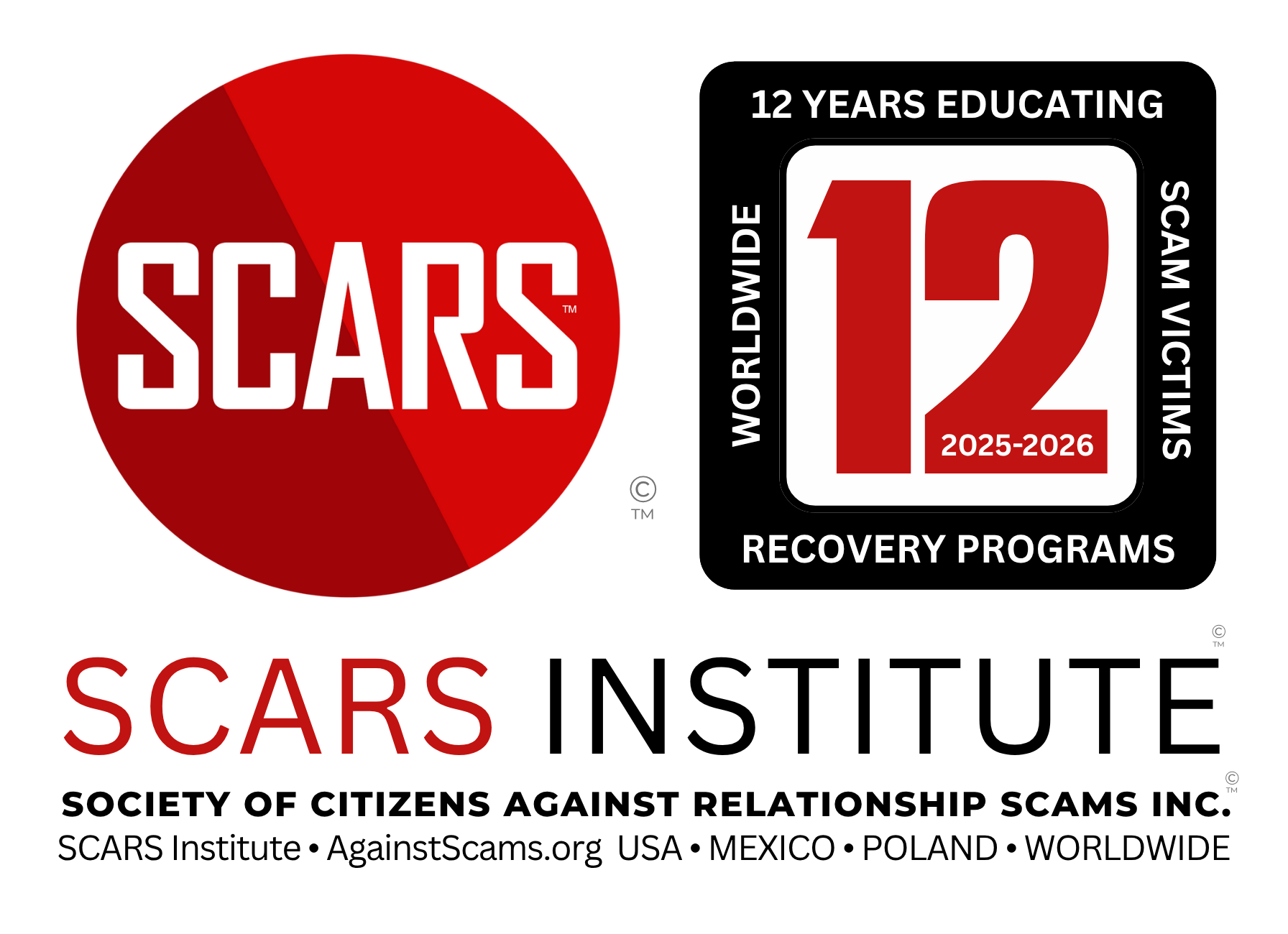

UK Proposed A New Cybercrime Fighting Force!
An Advocacy Spotlight
Presented by SCARS
UK Proposes Fraud/Scam Law Enforcement Shake-Up
Changes to the way in which fraud, cyber and online crime is monitored and enforced in England and Wales have been proposed by the UK government
The proposals include replacing Action Fraud with an improved national fraud and cybercrime reporting system within the National Crime Agency (NCA); strengthening the NCA and regional organized crime units with “additional officers and new capabilities”; and increasing arrests and speeding up the process for taking fraudsters to court. A new investigative function targeting “the most complex and serious fraudsters” will also be established within the NCA.
The government will also produce a new ‘action plan’ for tackling fraud, according to its recently-published ‘Beating Crime Plan’ – see below. Fraud makes up 42% of crimes against individuals in England and, together with cybercrimes, over 50% of all crimes in England and Wales, according to the document.
According to the report: Crime destroys lives. Victims are often left traumatised, injured or heartbroken. Crime can ruin neighbourhoods and does great economic damage to our country. It makes people feel unsafe on the street and in their homes. Criminal activity fuels and funds huge criminal enterprises. Involvement in crime can set someone on a path that brings enormous harm to themselves and others.
The proposals build on the government’s ‘Economic Crime Plan’ of July 2019, and reflect the anecdotal growth in fraud and cybercrime during the Covid-19 pandemic. Tackling fraud was also a significant focus of the Financial Conduct Authority (FCA) business plan for 2021-22, which explained how the regulator sees its future role and priorities.
The government had previously provided £25 million funding to support Action Fraud, creating the capacity to investigate fraud and improving the skills within the police to address it. However, in recent months Action Fraud has been plagued with criticism and, in autumn 2019, a Times investigation reportedly exposed serious failings within its call centres and in how it treated the victims of fraud. According to a UK Law Firm
Plans to establish a new fraud investigative function within the NCA to target the most complex and serious fraudsters meet the government’s manifesto commitment to create a new national cybercrime force focused on fraud. While the Serious Fraud Office (SFO) is the UK’s primary law enforcement agency responsible for the investigation of serious and complex fraud, it does not tackle instances of fraud or financially motivated internet crime – such as online scams, consumer fraud or identity fraud – instead of directing victims to ActionFraud. Details of the new function of the NCA remain scant; however, as the UK economy begins to recover from the impact of the coronavirus pandemic, the need for a robust and effective fraud reporting programme in the UK is clear.
For organizations and individuals, the hope would be that the replacement for Action Fraud “provides for greater success in not only investigating and gathering intelligence on the prevalence of fraud in the UK but also a system that utilizes these tools to successfully prosecute those committing offenses.
Fraud and computer misuse offenses increased by more than one-third in the year to March 2021, according to the latest annual crime survey for England and Wales – see below. At the same time, the number of alleged fraud cases heard in the UK courts almost doubled, with 151 such cases heard in the first six months of this year, according to KPMG’s annual fraud barometer survey. However, the total value of alleged fraud reaching the courts fell by 70% year-on-year to £139.1m, which the authors of the report said suggested that complex hearings are still being delayed by the disruption caused by the pandemic.
As matters presently stand, victims of fraud are more often than not giving up on the criminal route and choosing to recover their assets through the use of civil remedies available: these often come in the form of civil ‘weapons’ such as freezing injunctions, search orders and other tracing remedies which are shown to be extremely effective in recovering assets which have been dissipated globally. Most recently, the victims of crypto fraud have even found success in obtaining freezing injunctions against fraudsters in circumstances where the identities of the fraudsters may be unknown, at least at the outset of the proceedings.
The use of such remedies in the English courts is very popular and offers a much more effective route to recovery than reporting the crime to ActionFraud, which has failed to pay dividends to victims. Put simply, judges continue to flex the High Court’s muscles to ensure that victims recover what has been stolen.
Portions courtesy of Pinsent Masons
UK Government BEATING CRIME PLAN
Fewer victims, peaceful neighbourhoods, safe country
[pdf-embedder url=”https://romancescamsnow.com/wp-content/uploads/2021/08/Crime-Plan-accessible-version_2.pdf”]
Crime in England and Wales: Year ending March 2021
[pdf-embedder url=”https://romancescamsnow.com/wp-content/uploads/2021/08/Crime-in-England-and-Wales-year-ending-March-2021.pdf” title=”Crime in England and Wales year ending March 2021″]
-/ 30 /-
What do you think about this?
Please share your thoughts in a comment below!
Table of Contents
- An Advocacy Spotlight
- Changes to the way in which fraud, cyber and online crime is monitored and enforced in England and Wales have been proposed by the UK government
- UK Government BEATING CRIME PLAN
Fewer victims, peaceful neighbourhoods, safe country - Crime in England and Wales: Year ending March 2021



Rapid Report Scammers

In the U.S. & Canada
U.S. & Canada Suicide Lifeline 988
LEAVE A COMMENT?
Recent Comments
On Other Articles
- Wendy Guiher on 15 Things That Nearly Every Online and Phone Scams Have In Common – 2026: “Very concise, direct information. When I look back on the crime against me I now can see ALL of the…” Apr 1, 06:24
- on The Danger of Using AI in Law Enforcement – The Grandmother Wrongly Arrested as a Fraudster – 2026: “Excellent article – I can’t imagine the terror Angela most certainly experienced. Compound this with the lack of accountability by…” Mar 24, 09:20
- on The Crazy Gregor MacGregor and the Country of Poyais Scam – History of Scams – 2026: “interesting” Mar 23, 19:24
- on BEC Fraud Reaches $43 Billion Per Year: “oh my gosh so much of an increase in the fraud I pray the officials can continue tracking and make…” Mar 23, 15:09
- on Establishing The United States Task Force To Eliminate Fraud – 2026: “Make Online Safe Again!” Mar 17, 19:11
- on Establishing The United States Task Force To Eliminate Fraud – 2026: “Finally an administration takes the initiative to help solve the gigantic situation. Make America Safe Again, thank you!” Mar 17, 15:41
- on What Is The Difference Between A Scam Victim And A Scam Survivor? [Updated]: “Due to my scams I don’t fully trust anyone online and I shouldn’t even those people I knew in high…” Mar 7, 12:46
- on SCARS 3 Steps For New Scam Victims 2024: “I was very fearful “he” would come to my home because I was knew my address, I spoke to someone…” Mar 7, 09:50
- on Sadness & Scam Recovery: “Before my scam, my mom passed away and I got a divorce, so I was dealing with the loss of…” Mar 7, 09:37
- on The Story Of Kira Lee Orsag (aka Dani Daniels) [Updated]: “There is NO evidence and she is not, she is a victim too. Sebastian, stop letting your anger think for…” Mar 6, 23:18
ARTICLE META
Important Information for New Scam Victims
- Please visit www.ScamVictimsSupport.org – a SCARS Website for New Scam Victims & Sextortion Victims
- Enroll in FREE SCARS Scam Survivor’s School now at www.SCARSeducation.org
- Please visit www.ScamPsychology.org – to more fully understand the psychological concepts involved in scams and scam victim recovery
If you are looking for local trauma counselors please visit counseling.AgainstScams.org or join SCARS for our counseling/therapy benefit: membership.AgainstScams.org
If you need to speak with someone now, you can dial 988 or find phone numbers for crisis hotlines all around the world here: www.opencounseling.com/suicide-hotlines
A Note About Labeling!
We often use the term ‘scam victim’ in our articles, but this is a convenience to help those searching for information in search engines like Google. It is just a convenience and has no deeper meaning. If you have come through such an experience, YOU are a Survivor! It was not your fault. You are not alone! Axios!
A Question of Trust
At the SCARS Institute, we invite you to do your own research on the topics we speak about and publish, Our team investigates the subject being discussed, especially when it comes to understanding the scam victims-survivors experience. You can do Google searches but in many cases, you will have to wade through scientific papers and studies. However, remember that biases and perspectives matter and influence the outcome. Regardless, we encourage you to explore these topics as thoroughly as you can for your own awareness.
Statement About Victim Blaming
SCARS Institute articles examine different aspects of the scam victim experience, as well as those who may have been secondary victims. This work focuses on understanding victimization through the science of victimology, including common psychological and behavioral responses. The purpose is to help victims and survivors understand why these crimes occurred, reduce shame and self-blame, strengthen recovery programs and victim opportunities, and lower the risk of future victimization.
At times, these discussions may sound uncomfortable, overwhelming, or may be mistaken for blame. They are not. Scam victims are never blamed. Our goal is to explain the mechanisms of deception and the human responses that scammers exploit, and the processes that occur after the scam ends, so victims can better understand what happened to them and why it felt convincing at the time, and what the path looks like going forward.
Articles that address the psychology, neurology, physiology, and other characteristics of scams and the victim experience recognize that all people share cognitive and emotional traits that can be manipulated under the right conditions. These characteristics are not flaws. They are normal human functions that criminals deliberately exploit. Victims typically have little awareness of these mechanisms while a scam is unfolding and a very limited ability to control them. Awareness often comes only after the harm has occurred.
By explaining these processes, these articles help victims make sense of their experiences, understand common post-scam reactions, and identify ways to protect themselves moving forward. This knowledge supports recovery by replacing confusion and self-blame with clarity, context, and self-compassion.
Additional educational material on these topics is available at ScamPsychology.org – ScamsNOW.com and other SCARS Institute websites.
Psychology Disclaimer:
All articles about psychology and the human brain on this website are for information & education only
The information provided in this article is intended for educational and self-help purposes only and should not be construed as a substitute for professional therapy or counseling.
While any self-help techniques outlined herein may be beneficial for scam victims seeking to recover from their experience and move towards recovery, it is important to consult with a qualified mental health professional before initiating any course of action. Each individual’s experience and needs are unique, and what works for one person may not be suitable for another.
Additionally, any approach may not be appropriate for individuals with certain pre-existing mental health conditions or trauma histories. It is advisable to seek guidance from a licensed therapist or counselor who can provide personalized support, guidance, and treatment tailored to your specific needs.
If you are experiencing significant distress or emotional difficulties related to a scam or other traumatic event, please consult your doctor or mental health provider for appropriate care and support.
Also read our SCARS Institute Statement about Professional Care for Scam Victims – click here to go to our ScamsNOW.com website.


Thank you for your comment. You may receive an email to follow up. We never share your data with marketers.