


SCARS Institute’s Encyclopedia of Scams™ Published Continuously for 25 Years
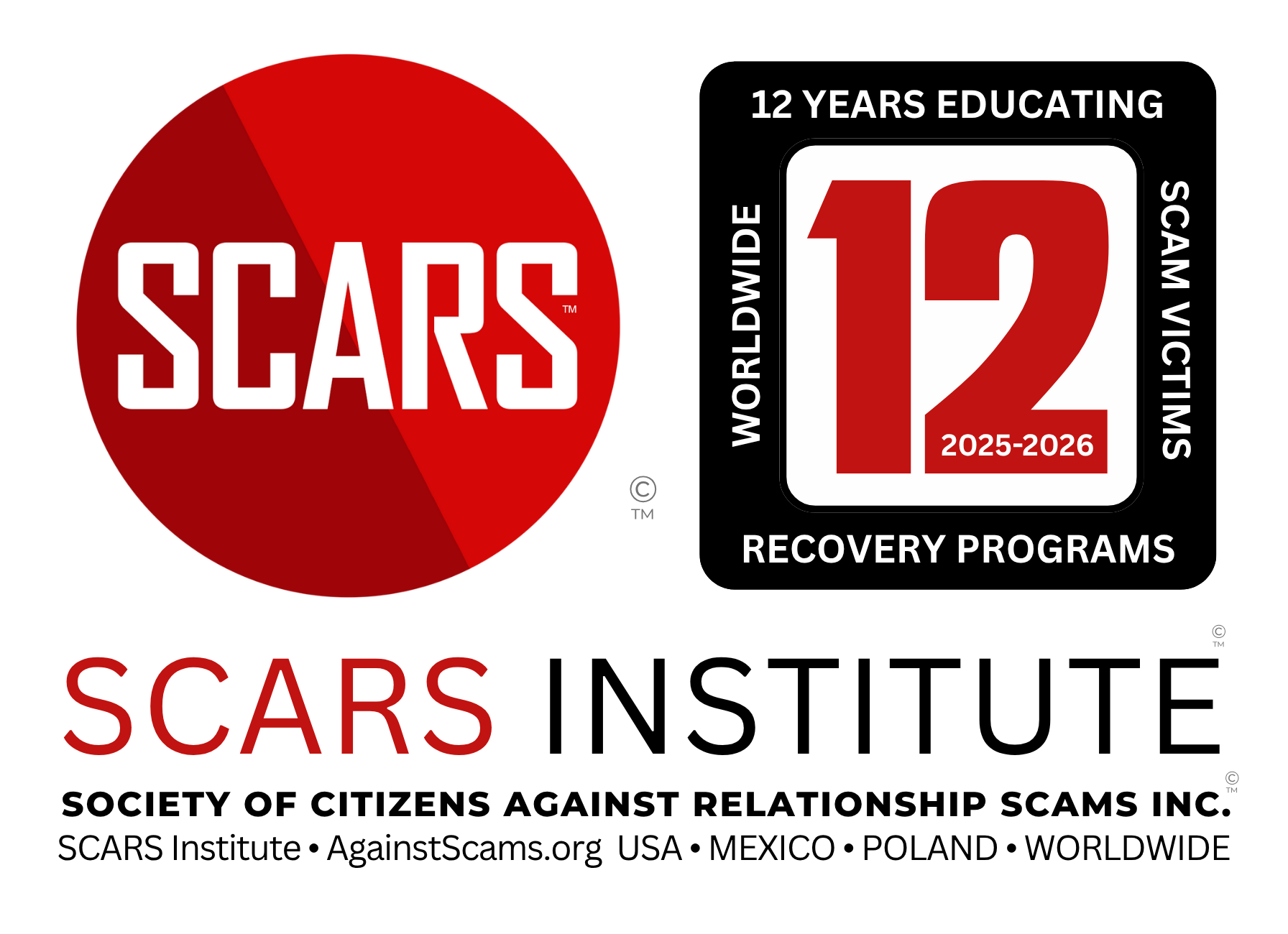


How Scam Survivors Can Survive Valentine’s Day
Valentine’s Day for Scam Survivors
A Quick Survival Guide
Scam Victim Recovery – A SCARS Institute Insight
Author:
• Tim McGuinness, Ph.D., DFin, MCPO, MAnth – Anthropologist, Scientist, Director of the Society of Citizens Against Relationship Scams Inc.
See Author Biographies Below
Article Abstract
Valentine’s Day often functions as a powerful psychological trigger for survivors of romance scams because it is built around cultural ideals of love, commitment, and visible affirmation. For those harmed by deception, the day can sharply intensify grief, internal conflict, and intrusive doubt as it collides with false promises, imagined futures, and emotional conditioning created through sustained manipulation and love bombing. These reactions are not irrational. They reflect how deeply the scam shaped attachment and expectation.
Effective coping on this day prioritizes self-preservation rather than emotional performance or social conformity. Protective strategies may include limiting exposure to romantic media, allowing emotions to surface without judgment, and creating non-romantic routines that restore a sense of control. Enforcing clear boundaries, grounding the nervous system through physical awareness, and connecting with trusted individuals or survivor communities can further reduce emotional overload. Safely enduring the day reinforces autonomy, weakens lingering patterns of control, and supports long-term psychological recovery. Moving through such milestones demonstrates resilience rooted in survival, not weakness.

Valentine’s Day for Scam Survivors
A Quick Survival Guide
For a romance scam victim, Valentine’s Day is not a day of love; it is a psychological minefield. Its significance is profoundly painful because it is a cultural monument to the very fantasy they were meticulously sold and that ultimately destroyed them. The day acts as a brutal amplifier of the scam’s core trauma, twisting the knife in several specific ways. Surviving it requires a deliberate, almost militant, focus on psychological self-preservation.
The Significance: A Day of Cruel Irony and Psychological Triggers
Valentine’s Day carries a powerful emotional charge that extends far beyond flowers, cards, and public displays of affection. For someone harmed by a relationship scam, the day can activate deep psychological wounds tied to betrayal, loss, and shattered expectations. Cultural narratives about love and commitment collide with memories of promises that were never meant to be kept, creating an emotional environment that feels inescapable and deeply personal.
The distress that emerges on this day is not accidental or exaggerated. It is shaped by how the scam leveraged attachment, anticipation, and imagined futures to create control and dependency. When those dynamics intersect with a globally celebrated symbol of romantic fulfillment, the result can be a sharp resurgence of grief, doubt, and internal conflict that feels sudden and overwhelming, even long after the deception has been exposed.
- The Ultimate Lie Manifested: Valentine’s Day is the global celebration of romantic love, grand gestures, and public declarations of affection. For the victim, this day represents the pinnacle of what their scammer promised: the day they would finally meet, the day a lavish gift would arrive, the day their “soulmate” would make their love real. When that day arrives with nothing but silence from the scammer and the painful reality of their situation, it serves as the ultimate, in-your-face proof that the entire relationship was a lie. It’s the day the fantasy officially dies on a public stage.
- Intensified Grief and Loss: The world is saturated with images of happy couples, making the victim’s loss feel acutely personal and isolating. They aren’t just grieving a person; they are grieving a future, an identity as a loved partner, and the immense emotional investment they made. The forced cheerfulness of the holiday can trigger profound sadness, loneliness, and a sense of being “othered” from a universal human experience they thought they were a part of.
- The Return of Cognitive Dissonance: Even after a victim knows intellectually that it was a scam, the emotional bond, often forged through intense, manipulative love bombing, can be incredibly persistent. Valentine’s Day can reignite the internal battle. The heart might remember the sweet words and manufactured intimacy, while the brain screams that it was all a performance. This conflict is exhausting and can make victims question their own reality, wondering if they made a mistake by ending it.
- The “What If” Trap: This is the day for intrusive thoughts. “What if they were telling the truth?” “What if they’re in trouble and couldn’t get to me?” “What if I was the one who wasn’t patient enough?” The scammer has often seeded these doubts as a control mechanism, and a day like Valentine’s Day provides the perfect emotional fertilizer for them to grow, pulling the victim back into a state of hope and confusion.
How to Survive It: A Tactical Guide for Self-Preservation
Valentine’s Day can feel like an emotional obstacle course when recovery is still underway. The combination of cultural pressure, sensory overload, and unresolved attachment can drain emotional reserves and increase vulnerability if the day is approached passively. Moving through it safely requires intention, structure, and a clear focus on protecting psychological and emotional stability rather than meeting external expectations.
Survival on this day is a matter of self-preservation, not performance. The goal is to reduce unnecessary exposure to triggers, regulate emotional intensity, and maintain agency in decisions and interactions. Practical, deliberate actions can limit harm, interrupt spirals of rumination, and reinforce the reality that control no longer belongs to the person who caused the harm.
Surviving Valentine’s Day as a romance scam victim is about reclaiming control. It’s not about pretending you’re happy; it’s about actively managing your environment and your mind to get through the day with minimal damage.
- Go Dark. Unplug and Disengage: This is the most critical step. Social media is your enemy on this day. It will be a firehose of romantic triggers. Log out of all platforms. Mute notifications. Do not watch romantic movies or listen to love songs. Create a “content bubble” of neutral or even empowering media, action movies, documentaries, stand-up comedy, true crime (anything that doesn’t involve romantic love). You are not hiding; you are creating a safe space.
- Radical Self-Permission to Feel Whatever You Feel: Do not pressure yourself to “be strong” or “get over it.” If you need to cry, then cry – it is ok. If you are angry, punch a pillow. If you feel numb, sit with the numbness. Acknowledge your emotions without judgment. Say it out loud: “Today is a hard day for me because I was scammed, and it’s okay that I feel this way.” Naming the feeling takes away some of its power.
- Create a New, Non-Romantic Ritual: The brain craves ritual. Instead of letting the day be a vacuum filled with painful memories, fill it with something that is purely for you. This is not about “self-love” in a fluffy, Instagram way; this is about strategic self-care.
- Physical Release: Go for a long, strenuous hike. Lift heavy weights at the gym. Take a kickboxing class. Physical exertion is a powerful way to process adrenaline and cortisol (stress hormones) and release endorphins.
- Creative Absorption: Tackle a complex, hands-on project. Build a piece of furniture. Paint. Cook a complicated meal you’ve never tried before. Anything that requires your full concentration and engages your hands and mind.
- Comfort and Safety: Order your absolute favorite comfort food. Put on your most comfortable clothes. Watch a marathon of a show you love that has zero romance. The goal is comfort and safety, not celebration.
- Enforce Your Boundaries Ruthlessly: Friends and family, with good intentions, may ask what you’re doing for Valentine’s Day. You do not owe anyone an explanation. Have a few simple, firm responses ready. “I’m laying low today.” “It’s just another day for me.” “I’m not really celebrating.” If they push, you can say, “I’d rather not talk about it, but I’d love to hear about your day.” Protect your peace. Do not let anyone force you into a conversation that triggers you.
- Connect with Your Real Support System: If you have one person who truly understands what you’ve been through, reach out to them. A single text to a trusted friend or a fellow survivor that says, “Hey, today’s rough. Thinking of you,” can be a lifeline. If you are part of a support group for scam victims, lean on it heavily. There is immense power in being seen and understood by people who don’t need you to explain the depth of your pain.
- Reframe the Narrative: This is an advanced step, but a powerful one. Instead of seeing yourself as a “victim,” try to see yourself as a “survivor.” You are not defined by the scam; you are defined by the fact that you are still here, fighting to reclaim your life and your finances. Valentine’s Day can be a marker of your resilience. You survived the lie, and you will survive the day that celebrates it. This is a testament to your strength, not your weakness.
Remember
Valentine’s Day will hurt. There is no shortcut, distraction, or positive-thinking technique that can erase the emotional impact of what was taken and what was promised. Expecting pain does not make it worse; it makes it manageable. When the day is approached realistically, it can be treated as a period to be endured rather than a test to be passed. The objective is not to feel better, but to remain intact.
When the emotions spike and the intensity feels overwhelming, grounding becomes essential. Grounding pulls attention out of spiraling thoughts and back into the present moment, where safety exists. Simple physical anchors are often the most effective. Place both bare feet firmly on the floor and notice the pressure beneath them. Name five things you can see, four you can feel, three you can hear, two you can smell, and one you can taste. Slow your breathing by inhaling through your nose for four seconds and exhaling through your mouth for six. These actions signal to the nervous system that the threat is not immediate, even if the pain is real.
Treat the day like a tactical operation focused on mental and emotional protection. Limit exposure, conserve energy, and respond deliberately rather than emotionally. You are not required to process everything at once. You are not required to reach insight, closure, or forgiveness. You are only required to get through the next hour, day, or a few days safely. Each hour endured is evidence of resilience, even if it feels hollow in the moment.
The day will end. That fact is not symbolic; it is biological and unavoidable. When you wake up the following morning, you will have crossed one of the most psychologically loaded days in recovery. The pain may not be gone, but it will not have destroyed you. Getting through this day is not a sign of weakness or endurance for its own sake. It is proof that the deception no longer controls your nervous system, your choices, or your future.
Conclusion
Valentine’s Day exposes how deeply romance scams injure the nervous system, identity, and sense of safety, not just the heart. The distress associated with this day does not arise from sentimentality or weakness. It reflects conditioning created through sustained manipulation, false attachment, and repeated future promises designed to override judgment and bind emotional loyalty. When those mechanisms collide with a cultural event centered on romantic validation, the psychological impact intensifies in predictable ways.
Survival through this day is not about courage or positivity. It is about containment, protection, and agency. Limiting exposure to triggers, allowing emotional responses without judgment, and prioritizing safety over explanation are not avoidant behaviors. They are corrective actions that counter the control once exerted by deception. Each deliberate choice reinforces autonomy and disrupts the learned patterns of emotional dependence installed by the scam.
Endurance matters. Progress during recovery is not measured by how little pain is felt, but by how effectively harm is prevented from expanding. The ability to move through a difficult day without reengaging with fantasy, self-blame, or isolation represents a meaningful shift in power. Valentine’s Day may remain painful for some time, but it no longer defines worth, truth, or future possibility.
What remains after the day ends is evidence of survival. The nervous system settles, the intensity fades, and the calendar moves forward. That movement matters. Each difficult milestone crossed without surrendering agency strengthens recovery and confirms that the deception no longer controls perception, decisions, or identity.

Glossary
- Agency Restoration — The process by which a scam victim gradually regains a sense of control over thoughts, choices, and actions after manipulation disrupted personal autonomy and decision making.
- Anticipatory Attachment — An emotional bond formed around future promises rather than lived experiences, often exploited in romance scams through imagined meetings, shared plans, and projected intimacy.
- Attachment Conditioning — A learned emotional response created through repeated reinforcement of affection, reassurance, and attention, designed to increase dependency on the scammer over time.
- Boundary Enforcement — The deliberate practice of setting and maintaining limits around conversations, exposure, and expectations to protect emotional stability during vulnerable periods.
- Cognitive Conflict — The mental strain that arises when emotional memories contradict factual knowledge, commonly resurfacing during symbolic dates associated with the scam narrative.
- Cognitive Dissonance — A psychological state in which conflicting beliefs or emotions coexist, such as knowing a relationship was fraudulent while still feeling emotionally attached.
- Comfort Anchoring — The use of familiar, safe sensory experiences to stabilize emotions during periods of heightened distress and emotional overload.
- Content Avoidance — The intentional reduction of exposure to media or messaging that reinforces romantic ideals or triggers emotional pain tied to scam experiences.
- Cortisol Activation — A stress response involving elevated stress hormones that can intensify anxiety, agitation, and emotional reactivity during triggering events.
- Creative Absorption — A focused activity that fully engages attention and hands, helping interrupt rumination and regulate emotional intensity through sustained concentration.
- Cultural Amplification — The way social norms and public celebrations intensify personal emotional responses by reinforcing idealized narratives that conflict with lived trauma.
- Emotional Flooding — A state in which emotions become overwhelming and difficult to regulate, often triggered by reminders of loss, betrayal, or broken promises.
- Emotional Regulation — The ability to manage emotional responses through intentional strategies that reduce intensity without suppressing or invalidating feelings.
- Emotional Residue — Lingering feelings from manipulation and loss that persist after intellectual understanding of the scam has been achieved.
- Endurance Framing — Viewing a difficult period as something to be safely endured rather than emotionally resolved, reducing pressure and unrealistic expectations.
- Environmental Control — Adjusting surroundings, routines, and inputs to minimize psychological triggers and protect emotional well-being.
- Future Identity Loss — Grief associated with the collapse of an imagined role or life narrative built around the promised relationship.
- Grounding Technique — A practical method that redirects attention to present physical sensations in order to calm the nervous system during emotional escalation.
- Grief Compression — The experience of multiple forms of loss converging at once, including emotional investment, identity, and anticipated future.
- Hypervigilance — Heightened alertness to emotional cues and threats that can increase exhaustion and sensitivity during stressful symbolic events.
- Intrusive Thought Cycle — Repetitive, unwanted thoughts that question reality or decision making, often seeded during manipulation and resurfacing under stress.
- Loss Validation — Recognition that grief following a scam is legitimate even when the relationship was not real in objective terms.
- Love Bombing — An early manipulation tactic involving excessive affection and attention to accelerate emotional bonding and reduce critical thinking.
- Milestone Sensitivity — Increased emotional reactivity tied to dates or events that were heavily emphasized by the scammer as meaningful.
- Narrative Reframing — A cognitive shift that replaces self-blame with a more accurate understanding of manipulation and survival.
- Nervous System Activation — A physiological response to perceived threat that can manifest as anxiety, panic, or emotional numbness.
- Non-Romantic Ritual — A purposeful activity created to replace painful associations with neutral or stabilizing experiences.
- Overexposure Risk — The increased vulnerability that occurs when emotional reserves are depleted through excessive stimulation or triggering input.
- Perceived Isolation — The sense of being disconnected from others due to shame, grief, or feeling different from socially celebrated norms.
- Psychological Minefield — A situation filled with unpredictable emotional triggers that can activate trauma responses without warning.
- Psychological Self-Preservation — Intentional actions taken to protect mental and emotional health during periods of heightened vulnerability.
- Reality Anchoring — Reinforcing factual understanding of the scam to counter emotional distortion and fantasy reactivation.
- Recovery Fatigue — Emotional exhaustion resulting from sustained effort to heal, often intensified by symbolic or triggering events.
- Regulated Disengagement — Temporarily stepping back from interactions or stimuli in a controlled way to maintain stability.
- Ritual Displacement — Replacing harmful or painful routines with intentional practices that support safety and emotional regulation.
- Rumination Spiral — A repetitive thought pattern focused on loss or regret that deepens distress without leading to resolution.
- Safety Prioritization — Choosing emotional and psychological protection over social expectations or external validation.
- Scam Conditioning — Behavioral and emotional patterns installed through manipulation that persist even after the deception is recognized.
- Sensory Anchoring — Using touch, sound, or physical awareness to ground attention in the present moment during emotional overwhelm.
- Survivor Identity Shift — The gradual movement from self-definition based on victimization toward one based on endurance and agency.
- Symbolic Triggering — Emotional activation caused by dates, objects, or rituals associated with the scam narrative.
- Tactical Coping — A structured, intentional approach to managing distress that emphasizes preparation and containment over emotional processing.
- Trigger Avoidance Window — A limited period during which reducing exposure to known triggers can prevent emotional escalation.
- Validation Through Witnessing — Emotional relief that comes from being understood by others who recognize the depth of scam-related harm.
- What If Thinking — A pattern of hypothetical questioning that undermines certainty and reopens emotional attachment to false narratives.
Author Biographies
-/ 30 /-
What do you think about this?
Please share your thoughts in a comment below!
Table of Contents



Rapid Report Scammers

In the U.S. & Canada
U.S. & Canada Suicide Lifeline 988
LEAVE A COMMENT?
Recent Comments
On Other Articles
- Debby Montgomery Johnson on The Danger of Using AI in Law Enforcement – The Grandmother Wrongly Arrested as a Fraudster – 2026: “Excellent article – I can’t imagine the terror Angela most certainly experienced. Compound this with the lack of accountability by…” Mar 24, 09:20
- on The Crazy Gregor MacGregor and the Country of Poyais Scam – History of Scams – 2026: “interesting” Mar 23, 19:24
- on BEC Fraud Reaches $43 Billion Per Year: “oh my gosh so much of an increase in the fraud I pray the officials can continue tracking and make…” Mar 23, 15:09
- on Establishing The United States Task Force To Eliminate Fraud – 2026: “Make Online Safe Again!” Mar 17, 19:11
- on Establishing The United States Task Force To Eliminate Fraud – 2026: “Finally an administration takes the initiative to help solve the gigantic situation. Make America Safe Again, thank you!” Mar 17, 15:41
- on What Is The Difference Between A Scam Victim And A Scam Survivor? [Updated]: “Due to my scams I don’t fully trust anyone online and I shouldn’t even those people I knew in high…” Mar 7, 12:46
- on SCARS 3 Steps For New Scam Victims 2024: “I was very fearful “he” would come to my home because I was knew my address, I spoke to someone…” Mar 7, 09:50
- on Sadness & Scam Recovery: “Before my scam, my mom passed away and I got a divorce, so I was dealing with the loss of…” Mar 7, 09:37
- on The Story Of Kira Lee Orsag (aka Dani Daniels) [Updated]: “There is NO evidence and she is not, she is a victim too. Sebastian, stop letting your anger think for…” Mar 6, 23:18
- on The Story Of Kira Lee Orsag (aka Dani Daniels) [Updated]: “There is real evidence that behind these two people there is something that not many people know. This woman is…” Mar 4, 03:58
ARTICLE META
Important Information for New Scam Victims
- Please visit www.ScamVictimsSupport.org – a SCARS Website for New Scam Victims & Sextortion Victims
- Enroll in FREE SCARS Scam Survivor’s School now at www.SCARSeducation.org
- Please visit www.ScamPsychology.org – to more fully understand the psychological concepts involved in scams and scam victim recovery
If you are looking for local trauma counselors please visit counseling.AgainstScams.org or join SCARS for our counseling/therapy benefit: membership.AgainstScams.org
If you need to speak with someone now, you can dial 988 or find phone numbers for crisis hotlines all around the world here: www.opencounseling.com/suicide-hotlines
A Note About Labeling!
We often use the term ‘scam victim’ in our articles, but this is a convenience to help those searching for information in search engines like Google. It is just a convenience and has no deeper meaning. If you have come through such an experience, YOU are a Survivor! It was not your fault. You are not alone! Axios!
A Question of Trust
At the SCARS Institute, we invite you to do your own research on the topics we speak about and publish, Our team investigates the subject being discussed, especially when it comes to understanding the scam victims-survivors experience. You can do Google searches but in many cases, you will have to wade through scientific papers and studies. However, remember that biases and perspectives matter and influence the outcome. Regardless, we encourage you to explore these topics as thoroughly as you can for your own awareness.
Statement About Victim Blaming
SCARS Institute articles examine different aspects of the scam victim experience, as well as those who may have been secondary victims. This work focuses on understanding victimization through the science of victimology, including common psychological and behavioral responses. The purpose is to help victims and survivors understand why these crimes occurred, reduce shame and self-blame, strengthen recovery programs and victim opportunities, and lower the risk of future victimization.
At times, these discussions may sound uncomfortable, overwhelming, or may be mistaken for blame. They are not. Scam victims are never blamed. Our goal is to explain the mechanisms of deception and the human responses that scammers exploit, and the processes that occur after the scam ends, so victims can better understand what happened to them and why it felt convincing at the time, and what the path looks like going forward.
Articles that address the psychology, neurology, physiology, and other characteristics of scams and the victim experience recognize that all people share cognitive and emotional traits that can be manipulated under the right conditions. These characteristics are not flaws. They are normal human functions that criminals deliberately exploit. Victims typically have little awareness of these mechanisms while a scam is unfolding and a very limited ability to control them. Awareness often comes only after the harm has occurred.
By explaining these processes, these articles help victims make sense of their experiences, understand common post-scam reactions, and identify ways to protect themselves moving forward. This knowledge supports recovery by replacing confusion and self-blame with clarity, context, and self-compassion.
Additional educational material on these topics is available at ScamPsychology.org – ScamsNOW.com and other SCARS Institute websites.
Psychology Disclaimer:
All articles about psychology and the human brain on this website are for information & education only
The information provided in this article is intended for educational and self-help purposes only and should not be construed as a substitute for professional therapy or counseling.
While any self-help techniques outlined herein may be beneficial for scam victims seeking to recover from their experience and move towards recovery, it is important to consult with a qualified mental health professional before initiating any course of action. Each individual’s experience and needs are unique, and what works for one person may not be suitable for another.
Additionally, any approach may not be appropriate for individuals with certain pre-existing mental health conditions or trauma histories. It is advisable to seek guidance from a licensed therapist or counselor who can provide personalized support, guidance, and treatment tailored to your specific needs.
If you are experiencing significant distress or emotional difficulties related to a scam or other traumatic event, please consult your doctor or mental health provider for appropriate care and support.
Also read our SCARS Institute Statement about Professional Care for Scam Victims – click here to go to our ScamsNOW.com website.

Thank you for your comment. You may receive an email to follow up. We never share your data with marketers.