



SCARS Institute’s Encyclopedia of Scams™ Published Continuously for 25 Years



New United Nations UNODC Report on Corruption and Cybercrime
Corruption – Cybercrime Feedback Loop: How Bribery, Complicity, and Digital Tools Supercharge Transnational Fraud
Criminology – A SCARS Institute Insight
Authors:
• SCARS Institute Encyclopedia of Scams Editorial Team – Society of Citizens Against Relationship Scams Inc.
• Portions by the UNODC
Article Abstract
Corruption and cybercrime form a mutually reinforcing system that lowers risk, boosts profits, and shields transnational fraud at scale. Bribery, compromised insiders, and official complicity enable “scam centers,” illicit gambling hubs, and human trafficking networks to run industrialized online fraud, while crime-as-a-service, AI, and virtual assets accelerate operations and obfuscate proceeds. The UNODC report argues that a unified legal architecture, jointly implementing the UN Convention against Corruption (UNCAC), the UN Convention against Transnational Organized Crime (UNTOC), and the new UN Convention against Cybercrime, can supply rapid cross-border evidence preservation, extradition, and asset recovery that match the tempo of digital crime. Targeting infrastructure and professional enablers, hardening high-risk public roles, and embedding victim identification for those coerced into scam work are essential. With strong public-private partnerships and data-driven integrity controls, technology can also become part of the solution, making illicit flows traceable and corrupt decision-making auditable, if institutions invest in lawful access, safeguards, and accountability.

UNODC Report on the Corruption – Cybercrime Feedback Loop: How Bribery, Complicity, and Digital Tools Supercharge Transnational Fraud
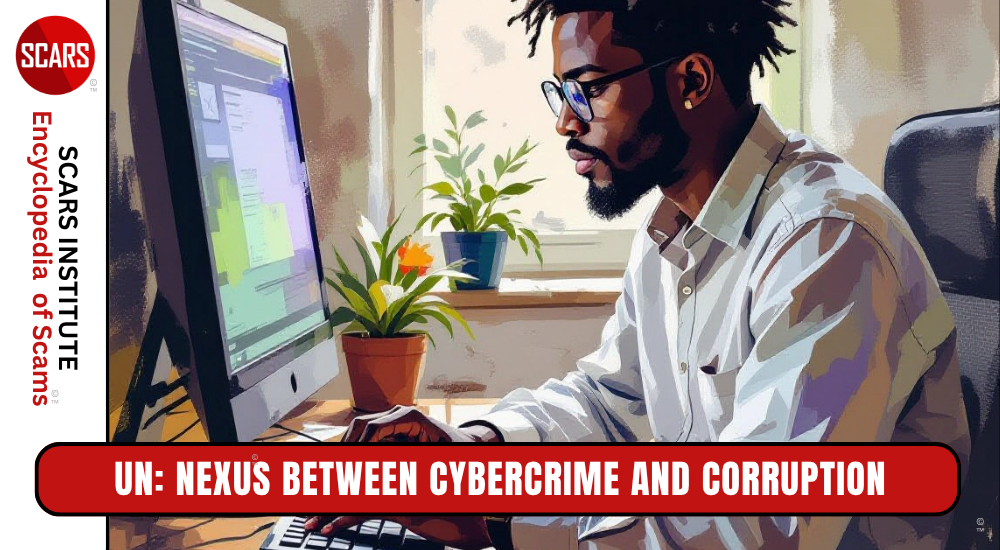
The UNDOC report on the nexus between corruption and cybercrime is no longer an abstract policy concern but a lived reality for victims, governments, and companies across continents. A new UN Office on Drugs and Crime (UNODC) information paper frames that convergence with unusual clarity: corruption does not merely accompany cybercrime, it often causes, enables, and shields it. In the worst cases, both phenomena braid together with organized criminal groups to form durable, border-straddling enterprises that are hard to penetrate and harder to dismantle.
At the heart of the analysis is a simple observation with far-reaching implications: corruption lowers risk and raises returns for digital offenders. It creates permissive zones where fraudulent platforms, money-laundering pipelines, and human trafficking operations can operate with official complicity, while procedural obstacles prevent evidence from being preserved and shared in time to matter. The paper’s call to action is correspondingly broad. It urges States to implement, in concert, three complementary UN conventions, on corruption (UNCAC), transnational organized crime (UNTOC), and the newly adopted UN Convention against Cybercrime (UNCC), because only a unified legal architecture can reliably generate electronic evidence, pierce safe havens, and recover stolen assets at scale.
What the Conventions Change in Practice
The UNCC, open for signature in late 2025, is the catalytic piece. By design, it modernizes investigative powers, expedited preservation, rapid production orders, and 24/7 points of contact, so that volatile electronic data can be safeguarded before deletion or tampering. It also broadens cooperation: States must assist not only on cybercrime charges but, crucially, in collecting electronic evidence for any “serious crime,” including corruption and organized crime, typically those punishable by at least four years’ imprisonment. In other words, UNCC lets authorities use twenty-first-century tools to prove twentieth-century crimes.
The complementarity is deliberate. UNCAC’s robust asset-recovery chapter meets UNTOC’s extradition and anti-laundering provisions, while UNCC supplies the digital plumbing, how to locate, freeze, and transport electronic evidence across borders on timelines that match the tempo of online crime. Together, they narrow dual-criminality gaps and strengthen extradition in cases where the offense category is novel or technologically mediated.
The point is not theoretical. Investigations into high-value embezzlement have already demonstrated that tracing, preserving, and analyzing electronic records across multiple jurisdictions can unlock landmark recoveries, work that will be faster and more routine once the UNCC’s cooperation channels are fully in place.
The Operating System of Modern Fraud: Scam Centers, Trafficking, and Laundering
UNODC’s paper is most vivid when it follows the money and the people. It shows how “scam centers” have become the kinetic hubs where corruption, cybercrime, and organized crime converge. These operations, often styled to resemble legitimate business parks, rely on large workforces organized into marketing, technical support, and payment-processing cells; they also rent specialized crime-as-a-service tools to extend reach and speed.
Here, the corruption link is direct. In parts of Southeast Asia, casinos and hotels have been repurposed into scam compounds where trafficking victims are forced to conduct cyber-enabled fraud under guard and surveillance. Observers report officials facilitating border crossings, alerting operators to planned raids, or stalling prosecutions, behavior that turns the rule of law into a protection racket. Even where enforcement actions occur, they are undercut if officials implicated in the trafficking-to-fraud pipeline are neither investigated nor prosecuted.
The human consequences are not abstract. Analysts and humanitarian agencies have documented tens of thousands of trafficking victims coerced into scam work in Cambodia, Myanmar, the United Arab Emirates, and beyond, an abusive labor model that scales cyber-fraud far faster than traditional recruitment ever could. That scale is precisely the product of state complicity and criminal supply chains.
Illicit online gambling platforms add another layer. In the Philippines, for instance, political scrutiny of offshore gambling operators (POGOs) has intensified amid allegations of crime, corruption, and social harm. The paper treats such hubs as dual-use infrastructure: they generate proceeds and launder them by commingling illicit transfers with gambling flows, often while cultivating political patrons to keep regulators at bay.
The Quiet Threat: Corrupt Insiders
While transnational syndicates draw attention, the paper warns against underestimating the single compromised official or employee inside a revenue agency, IT contractor, or law-enforcement unit. Key-logger implants on finance systems, illicit reactivation of dormant payee profiles, and unauthorized banking-detail switches have yielded direct thefts and opened back doors for external crime groups. The risk is systemic: one insider can burn years of trust, expose sensitive data, and sabotage critical infrastructure.
Insider corruption in policing is especially corrosive. Case reporting cited by the paper includes a senior investigator alleged to have accepted a cryptocurrency bribe from a cybercrime syndicate in exchange for protecting its assets, a reminder that virtual payments can make bribery faster, larger, and harder to detect if controls are weak.
The Technology Accelerator: AI, Crypto, and Crime-as-a-Service
Technology is the accelerant on this fire. AI tools now generate convincing deepfakes, imitate official documents, craft spear-phishing scripts at scale, and help criminals test and evade fraud controls. Virtual assets provide pseudo-anonymous rails for bribe payments and laundering, while smart contracts and decentralized finance, if poorly engineered, can be exploited for rapid thefts and price manipulation. These are not speculative risks; law-enforcement bulletins and industry research continue to document real-world exploits.
At the same time, the paper emphasizes that criminals do not need cutting-edge zero-days to succeed. Crime-as-a-service marketplaces sell turnkey phishing kits, botnet frameworks, key-loggers, and bulletproof hosting that reduce the technical threshold for entry. A 2025 joint operation shutting down a Pakistan-based toolkit marketplace illustrates both the breadth of the supply chain and the importance of cross-border action against the infrastructure layer of cybercrime.
The Case Study: Black Axe and the Culture of Impunity
The paper’s case study on Nigeria’s Black Axe traces a familiar arc: from small “419” advance-fee scams to a structured, multinational enterprise engaged in business-email compromise, romance fraud, identity theft, and other lucrative schemes, while also intersecting with drug trafficking and political violence. The through-line is institutional weakness. Systemic corruption breeds unemployment and distrust, hollows out justice institutions, and creates the impunity in which global cells can incubate and expand. Enforcement and integrity reforms have achieved progress, but the residual space for high-level organizers and professional enablers remains the strategic challenge.
Follow the Money, Then Seize It
Money-laundering is the circulatory system that keeps the nexus alive. National risk assessments across regions increasingly flag cyber-enabled fraud as a significant or major laundering threat, with virtual assets playing a larger role in placement and layering. The paper synthesizes trends: compromised credentials now dominate initial intrusion methods; average breach costs continue to rise; and post-pandemic digitization expanded victim surfaces while increasing economic desperation, conditions ripe for fraud and laundering networks to scale.
Here again, the legal system matters. UNCAC’s asset-recovery architecture and UNTOC’s confiscation provisions are strengthened by UNCC’s procedural powers to trace, preserve, and seize digital assets, from exchange accounts to wallets, so that laundered proceeds linked to corruption or organized crime can be recovered before they dissipate.
Technology Can Help Fix What It Broke, If Governed Well
For all the risk, the paper argues that technology also furnishes powerful tools for integrity and enforcement. Distributed ledgers create tamper-resistant records that investigators already leverage to “follow the money” in ransomware and exchange-hack cases; in the public sector, blockchain-anchored procurement, land registries, and digital identity systems can harden records against insider manipulation and make graft more auditable. AI and analytics can mine procurement and payments data for collusion patterns that manual audits would miss. The warning label is clear: none of these solutions substitute for ethics, accountability, and institutional capacity; poorly designed smart contracts and oracle feeds can themselves be subverted for corrupt outcomes.
Because most critical compute, platforms, and data are owned by private firms, the report places heavy emphasis on public-private partnerships, and rising expectations for proactive corporate duty of care. The UN Guiding Principles on Business and Human Rights supply a baseline “protect, respect, and remedy” framework; regionally, regulatory instruments such as the EU’s Digital Services Act push platforms toward risk assessments and design controls that reduce misuse. Operationally, major cybercrime takedowns increasingly hinge on provider telemetry, hosting actions, and intelligence sharing, the raw materials needed to link pseudonymous accounts to real-world actors.
What an Integrated Response Looks Like
Taken together, the paper sketches a whole-of-system response that treats corruption and cybercrime as mutually reinforcing problems:
- Adopt and jointly implement UNCAC, UNTOC, and UNCC. Use UNCC’s expedited preservation and 24/7 contacts to secure evidence; lean on UNCAC for asset return and UNTOC for extradition and anti-laundering scaffolding.
- Target the infrastructure and the enablers. Scam centers, illicit gambling hubs, and underground banks thrive where officials look away. Enforcement must be paired with anti-corruption reforms that remove the protections these enterprises purchase.
- Protect and empower the victims. Forced criminality in fraud factories is a trafficking-in-persons crisis as well as a cybercrime problem; responses must include victim identification, safe exit pathways, and accountability for complicit officials.
- Harden the inside. Vetting, rotation, and monitoring of high-risk roles, treasury, revenue, identity issuance, and criminal-justice IT, are non-negotiable. A single compromised insider can devastate trust and finances.
- Invest in lawful access and digital forensics. The “going dark” problem will not solve itself; technical capacity, legal safeguards, and cross-border workflows must mature together.
The report’s conclusion is unsentimental: cybercrime has technical dimensions, but its growth is governed by human institutions, by whether leaders curb bribery, resource investigators, and align legal frameworks to the digital era. Approached piecemeal, the nexus multiplies harm. Tackled holistically, it becomes a tractable public-safety and governance problem. The choice is policy, not fate.
UNODC Report – The Nexus Between Cybercrime and Corruption – 2025

Glossary
- 24/7 point of contact — This term refers to a designated authority that remains reachable around the clock for cross-border requests in urgent cyber investigations. It helps investigators preserve data and coordinate rapid actions before evidence is altered or erased.
- Advance-fee scheme — This scheme promises large rewards if a victim pays upfront costs such as taxes or processing fees. It often uses forged documents and official-sounding titles to build trust and extract repeated payments.
- Asset recovery — This process seeks to locate, freeze, and return property or funds derived from crime. It relies on court orders, international cooperation, and clear proof that the assets came from unlawful conduct.
- Black Axe — This group operates as a transnational network engaged in online fraud, identity theft, and related crime. It leverages diaspora links and corrupt protection to expand operations across borders.
- Botnet — This network consists of many infected devices controlled by a criminal operator. It enables large-scale phishing, credential theft, and denial-of-service attacks that support fraud.
- Bulletproof hosting — This hosting service ignores or resists lawful takedown requests. It provides criminals with stable infrastructure for phishing pages, command-and-control servers, and data drops.
- Business email compromise — This method hijacks or spoofs corporate email to redirect payments or harvest sensitive information. It targets invoicing, payroll, and vendor updates to mislead finance staff.
- Casino-based scam compound — This facility disguises a fraud operation inside a resort or gaming complex. It houses captive workforces, call rooms, and payment nodes while masking illicit activity as tourism.
- Complicit official — This person in public service accepts bribes or favors to obstruct investigations or tip off criminals. Their actions weaken deterrence and allow fraud operations to persist.
- Cross-border evidence sharing — This cooperation enables authorities in different countries to exchange electronic records lawfully. It depends on standardized requests, secure channels, and timely preservation orders.
- Decentralized finance (DeFi) — This ecosystem uses smart contracts to run financial services without traditional intermediaries. Criminals exploit weak governance to move or disguise stolen funds through rapid, automated transactions.
- Deepfake — This synthetic media uses artificial intelligence to mimic a voice or face. It assists scammers in impersonating executives, officials, or loved ones to push urgent fraudulent requests.
- Digital asset seizure — This action lawfully restrains cryptocurrency or token holdings linked to crime. It requires wallet attribution, exchange cooperation, and precise chain-of-custody procedures.
- Dual criminality — This legal principle requires that the conduct be a crime in both the requesting and requested states. It affects extradition and mutual legal assistance for cyber-enabled offenses.
- Electronic evidence — This category includes logs, emails, chat records, metadata, and account histories. It is volatile and must be preserved quickly to maintain authenticity and admissibility.
- Embezzlement — This offense involves a trusted insider misappropriating funds or property. It often relies on altered payee details, dormant account reactivations, or forged approvals.
- Extradition — This process transfers a suspect from one country to another for prosecution or sentencing. It relies on treaties, matching offenses, and assurances about fair treatment.
- Expedited preservation order — This order directs a provider to retain specific digital data for a set period. It buys time to obtain further legal authority while preventing deletion or alteration.
- Forced criminality — This abuse coerces people to commit scams under threat, confinement, or debt bondage. It requires trauma-informed identification and safe exit pathways during enforcement actions.
- Illicit online gambling hub — This platform processes bets while facilitating fraud proceeds through commingled transactions. It builds political protection to delay audits and disrupt investigations.
- Insider threat — This risk arises when an employee or contractor abuses trusted access to aid criminals. It undermines security controls and can open lasting back doors into systems.
- Key-logger — This tool records keystrokes on an infected device to capture passwords and financial data. It fuels unauthorized transfers and identity theft used by fraud groups.
- Oracle manipulation — This tactic tampers with external data feeds that smart contracts rely on. It enables price misreports, rapid theft, or unfair liquidations within decentralized systems.
- Organized criminal group — This structure coordinates people and resources for sustained illicit profit. It combines online tools, corruption, and cross-border movement to scale fraud.
- Protection racket — This arrangement extracts payments or favors in exchange for avoiding harassment or prosecution. When officials participate, it converts law enforcement into a shield for crime.
- Rapid production order — This directive compels a service provider to quickly disclose specified records. It supports time-sensitive steps such as freezing assets or identifying account controllers.
- Romance fraud — This deception builds emotional intimacy to request money, investment, or account access. It exploits isolation and uses scripted conversations to escalate demands.
- Safe haven jurisdiction — This location offers weak enforcement or friendly intermediaries that shield criminal proceeds. It complicates investigations and delays asset recovery.
- Scam compound — This site organizes mass fraud workforces into sales, tech support, and payment cells. It purchases crime-as-a-service tools to expand reach and speed.
- Serious-crime threshold — This standard sets a minimum penalty level that unlocks international cooperation tools. It ensures cyber evidence can be shared for complex offenses such as large-scale fraud or corruption.
- Spear-phishing — This targeted message impersonates a trusted sender to steal credentials or push harmful links. It prepares the ground for account takeovers and payment diversions.
- Trafficking-to-fraud pipeline — This pattern moves trafficking victims into call rooms and chat floors to run scams. It blends forced labor with cybercrime and requires coordinated victim support.
- Turnkey fraud kit — This package provides templates, scripts, and automation for immediate scam deployment. It lowers the technical barrier and allows rapid replication across platforms.
- Underground banking — This informal value system moves funds outside regulated channels. It conceals the origin and destination of criminal proceeds and frustrates tracing efforts.
- Virtual asset bribery — This practice delivers corrupt payments through cryptocurrencies or tokens. It increases transfer speed and anonymity, demanding stronger tracing and compliance.
- Zero-day exploit — This vulnerability is unknown to the software vendor and lacks a security patch. Criminals use it to gain covert access before defenses can adapt.
-/ 30 /-
What do you think about this?
Please share your thoughts in a comment below!
Table of Contents
- Corruption – Cybercrime Feedback Loop: How Bribery, Complicity, and Digital Tools Supercharge Transnational Fraud
- UNODC Report on the Corruption – Cybercrime Feedback Loop: How Bribery, Complicity, and Digital Tools Supercharge Transnational Fraud
- What the Conventions Change in Practice
- The Operating System of Modern Fraud: Scam Centers, Trafficking, and Laundering
- The Quiet Threat: Corrupt Insiders
- The Technology Accelerator: AI, Crypto, and Crime-as-a-Service
- The Case Study: Black Axe and the Culture of Impunity
- Follow the Money, Then Seize It
- Technology Can Help Fix What It Broke, If Governed Well
- What an Integrated Response Looks Like
- Glossary




Rapid Report Scammers

In the U.S. & Canada

U.S. & Canada Suicide Lifeline 988
LEAVE A COMMENT?
Recent Comments
On Other Articles
- Debby Montgomery Johnson on The Danger of Using AI in Law Enforcement – The Grandmother Wrongly Arrested as a Fraudster – 2026: “Excellent article – I can’t imagine the terror Angela most certainly experienced. Compound this with the lack of accountability by…” Mar 24, 09:20
- on The Crazy Gregor MacGregor and the Country of Poyais Scam – History of Scams – 2026: “interesting” Mar 23, 19:24
- on BEC Fraud Reaches $43 Billion Per Year: “oh my gosh so much of an increase in the fraud I pray the officials can continue tracking and make…” Mar 23, 15:09
- on Establishing The United States Task Force To Eliminate Fraud – 2026: “Make Online Safe Again!” Mar 17, 19:11
- on Establishing The United States Task Force To Eliminate Fraud – 2026: “Finally an administration takes the initiative to help solve the gigantic situation. Make America Safe Again, thank you!” Mar 17, 15:41
- on What Is The Difference Between A Scam Victim And A Scam Survivor? [Updated]: “Due to my scams I don’t fully trust anyone online and I shouldn’t even those people I knew in high…” Mar 7, 12:46
- on SCARS 3 Steps For New Scam Victims 2024: “I was very fearful “he” would come to my home because I was knew my address, I spoke to someone…” Mar 7, 09:50
- on Sadness & Scam Recovery: “Before my scam, my mom passed away and I got a divorce, so I was dealing with the loss of…” Mar 7, 09:37
- on The Story Of Kira Lee Orsag (aka Dani Daniels) [Updated]: “There is NO evidence and she is not, she is a victim too. Sebastian, stop letting your anger think for…” Mar 6, 23:18
- on The Story Of Kira Lee Orsag (aka Dani Daniels) [Updated]: “There is real evidence that behind these two people there is something that not many people know. This woman is…” Mar 4, 03:58
ARTICLE META
Important Information for New Scam Victims
- Please visit www.ScamVictimsSupport.org – a SCARS Website for New Scam Victims & Sextortion Victims
- Enroll in FREE SCARS Scam Survivor’s School now at www.SCARSeducation.org
- Please visit www.ScamPsychology.org – to more fully understand the psychological concepts involved in scams and scam victim recovery
If you are looking for local trauma counselors please visit counseling.AgainstScams.org or join SCARS for our counseling/therapy benefit: membership.AgainstScams.org
If you need to speak with someone now, you can dial 988 or find phone numbers for crisis hotlines all around the world here: www.opencounseling.com/suicide-hotlines
A Note About Labeling!
We often use the term ‘scam victim’ in our articles, but this is a convenience to help those searching for information in search engines like Google. It is just a convenience and has no deeper meaning. If you have come through such an experience, YOU are a Survivor! It was not your fault. You are not alone! Axios!
A Question of Trust
At the SCARS Institute, we invite you to do your own research on the topics we speak about and publish, Our team investigates the subject being discussed, especially when it comes to understanding the scam victims-survivors experience. You can do Google searches but in many cases, you will have to wade through scientific papers and studies. However, remember that biases and perspectives matter and influence the outcome. Regardless, we encourage you to explore these topics as thoroughly as you can for your own awareness.
Statement About Victim Blaming
SCARS Institute articles examine different aspects of the scam victim experience, as well as those who may have been secondary victims. This work focuses on understanding victimization through the science of victimology, including common psychological and behavioral responses. The purpose is to help victims and survivors understand why these crimes occurred, reduce shame and self-blame, strengthen recovery programs and victim opportunities, and lower the risk of future victimization.
At times, these discussions may sound uncomfortable, overwhelming, or may be mistaken for blame. They are not. Scam victims are never blamed. Our goal is to explain the mechanisms of deception and the human responses that scammers exploit, and the processes that occur after the scam ends, so victims can better understand what happened to them and why it felt convincing at the time, and what the path looks like going forward.
Articles that address the psychology, neurology, physiology, and other characteristics of scams and the victim experience recognize that all people share cognitive and emotional traits that can be manipulated under the right conditions. These characteristics are not flaws. They are normal human functions that criminals deliberately exploit. Victims typically have little awareness of these mechanisms while a scam is unfolding and a very limited ability to control them. Awareness often comes only after the harm has occurred.
By explaining these processes, these articles help victims make sense of their experiences, understand common post-scam reactions, and identify ways to protect themselves moving forward. This knowledge supports recovery by replacing confusion and self-blame with clarity, context, and self-compassion.
Additional educational material on these topics is available at ScamPsychology.org – ScamsNOW.com and other SCARS Institute websites.
Psychology Disclaimer:
All articles about psychology and the human brain on this website are for information & education only
The information provided in this article is intended for educational and self-help purposes only and should not be construed as a substitute for professional therapy or counseling.
While any self-help techniques outlined herein may be beneficial for scam victims seeking to recover from their experience and move towards recovery, it is important to consult with a qualified mental health professional before initiating any course of action. Each individual’s experience and needs are unique, and what works for one person may not be suitable for another.
Additionally, any approach may not be appropriate for individuals with certain pre-existing mental health conditions or trauma histories. It is advisable to seek guidance from a licensed therapist or counselor who can provide personalized support, guidance, and treatment tailored to your specific needs.
If you are experiencing significant distress or emotional difficulties related to a scam or other traumatic event, please consult your doctor or mental health provider for appropriate care and support.
Also read our SCARS Institute Statement about Professional Care for Scam Victims – click here to go to our ScamsNOW.com website.


Thank you for your comment. You may receive an email to follow up. We never share your data with marketers.