


SCARS Institute’s Encyclopedia of Scams™ Published Continuously for 25 Years


Logistics and Cargo Theft Scams & Fraud
The Evolving Threat of Logistics & Cargo Theft Scams: Strategies and Solutions
Catalog of Scams / How Scams Work – A SCARS Institute Insight
Author:
• Tim McGuinness, Ph.D., DFin, MCPO, MAnth – Anthropologist, Scientist, Director of the Society of Citizens Against Relationship Scams Inc.
See Author Biographies Below
Article Abstract
Cargo theft has evolved into a sophisticated and growing threat to the trucking industry, employing digital tactics such as manipulated GPS and fake route changes to divert high-value goods. This form of “strategic” theft is part of a broader problem that affects the industry significantly. Beyond cyber methods, other threats include “grab and run” thefts, burglaries at logistics yards, and “fictitious pickup” scams, where fake drivers claim legitimate shipments. The impact of these thefts extends beyond financial losses, affecting supply chain stability and safety. To combat this issue, the industry is implementing enhanced security measures, digitalization, and collaborating with law enforcement. Additionally, the involvement of illegal aliens and cartels adds complexity, as these groups exploit vulnerabilities and use sophisticated tactics to move stolen goods across borders. Addressing these challenges requires a comprehensive approach that includes legislative support and industry-wide cooperation to ensure a more secure and resilient supply chain.
The Evolving Threat of Logistics & Cargo Theft Scams: Strategies and Solutions
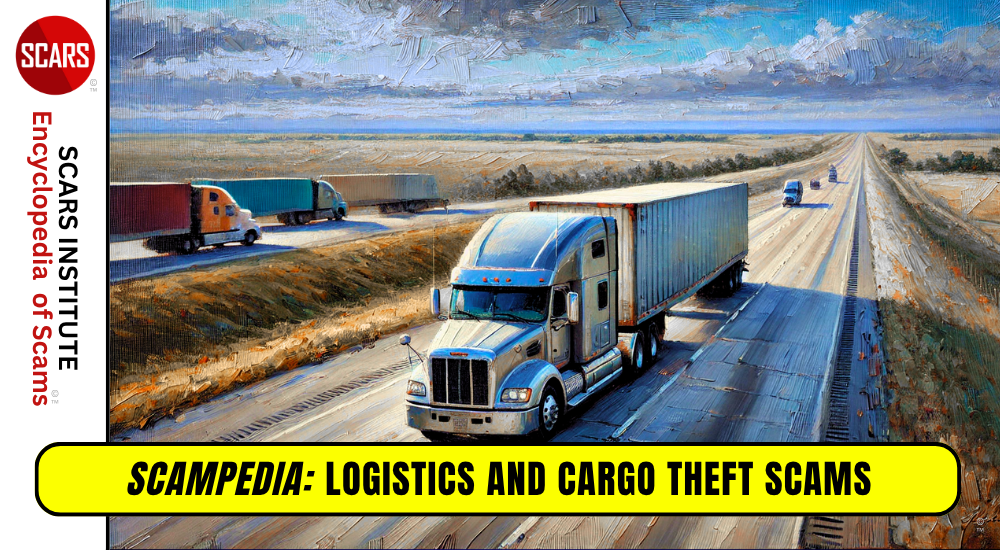
The recent 60 Minutes report on cargo theft highlighted a sophisticated and growing threat to the trucking industry, where digital tactics are used to steal high-value goods, such as a 1 million load of tequila diverted through manipulated GPS and fake route changes. This form of “strategic” theft is part of a larger problem that costs the U.S. trucking industry an estimated 7 billion annually. Beyond cyber methods, other threats include “grab and run” thefts, burglaries at logistics yards, and “fictitious pickup” scams where fake drivers claim a legitimate shipment.
The Evolution of Cargo Theft Scams
Cyber and Digital Theft
Cyber and digital theft tactics have become increasingly sophisticated, posing a significant threat to the trucking industry. Thieves exploit vulnerabilities in digital systems, manipulating GPS signals and using social engineering to deceive drivers into taking incorrect routes where they can steal the cargo. For instance, the 60 Minutes report detailed how a load of tequila worth $1 million was diverted through manipulated GPS and fake route changes, illustrating the precision and planning involved in these operations. This method, often referred to as “strategic theft,” involves using fraud to trick carriers and shippers into handing over loads to thieves instead of the legitimate carrier.
Strategic Theft
Strategic theft is a growing concern, where criminals use deceptive tactics to intercept cargo. This can involve creating fake identities, cloning carrier information, or using identity fraud to gain access to shipments. According to CNBC, criminals are exploiting technology intended to improve supply chain efficiency and using it to steal truckloads of valuable products. Armed with doctored invoices, fraudsters impersonate the staff of legitimate companies to divert cargo into the hands of criminals, making it a “low risk and a very high reward” scheme.
Fictitious Pickups
Fictitious pickups occur when a fake driver arrives at a shipment and claims to be from the assigned carrier. Using social engineering and insider information, these thieves can convince shippers to hand over the cargo. This method often involves creating convincing fake documentation and using stolen or cloned identities to avoid detection. The rise of fictitious pickups has been facilitated by the increasing reliance on digital communication and the vulnerability of email systems to phishing and spoofing attacks.
Grab and Run
Grab and run thefts are more opportunistic, where thieves follow a truck, wait for it to stop, and then quickly steal as much merchandise as they can before the driver is aware. These thefts often occur at truck stops, rest areas, or during traffic stops. The thieves may use vehicles to block the truck, providing a cover for the theft. Grab-and-run thefts can result in significant losses, especially when high-value items are involved, and are often carried out by organized crime groups.
Burglaries
Burglaries at logistics yards and truck stops involve thieves breaking into unattended trailers or containers to steal goods. These thefts can occur at any time, but are more common during off-peak hours when security is minimal. Thieves may use tools to force entry or exploit weak points in the trailer’s security. Burglaries can result in the loss of entire shipments or partial thefts, depending on the value and accessibility of the goods.
The Scale of the Problem
High Cost
Cargo theft is a costly problem for the trucking industry, with estimates suggesting that it costs the U.S. industry an estimated $19 million dollars per day, highlighting the significant financial impact on businesses and consumers alike. The financial toll extends beyond the direct loss of goods to include increased insurance premiums, additional security measures, and the operational disruptions caused by thefts.
Increasing Incidents
The frequency of cargo theft incidents has been increasing, with Verisk CargoNet recording 3,798 incidents in 2024, representing a 26% increase over 2023. The total reported losses topped nearly $455 million dollars, but industry experts suggest that this number is likely lower than the true toll because many cases go unreported. The rise in incidents is attributed to the sophistication of organized crime groups and the increasing use of digital tactics to exploit vulnerabilities in the supply chain.
Geographic Hotspots
Certain regions have emerged as hotspots for cargo theft, with California (the leader), Texas, and Illinois being particularly vulnerable. These states account for a significant portion of cargo theft incidents, driven by their high volume of shipments and strategic locations in the supply chain. For example, Southern California accounts for 32% of cargo theft cases, followed by Texas at 19%, according to Overhaul reports.
Targeted Goods
Electronics and high-value consumer goods are among the most targeted items in cargo theft. Electronics accounted for 24% of all thefts in the U.S. in 2024, making it the most targeted product type. Other high-value items, such as pharmaceuticals, food and beverage products, and automotive parts, are also frequently targeted due to their resale value and ease of movement.
The Impact on the Industry
Economic Impact
The economic impact of cargo theft extends beyond the direct losses to businesses. The increased costs are often passed on to consumers in the form of higher prices for goods and services. Additionally, the disruption to supply chains can lead to shortages and delays, further affecting businesses and consumers. The trucking industry faces increased insurance premiums and operational costs as a result of the rising theft incidents, straining smaller carriers and increasing the risk of fraud and crime within the industry.
Safety and Security
The rise in cargo theft has also raised concerns about safety and security within the trucking industry. Violent incidents, including armed hijackings and assaults on drivers, have been on the rise. These incidents not only endanger the lives of drivers but also create a climate of fear and insecurity, affecting the overall stability and safety of the supply chain. The use of violent tactics by organized crime groups has become more prevalent, with incidents reported in major hubs like Long Beach and Toronto.
Regulatory and Legislative Responses
In response to the growing threat of cargo theft, regulatory and legislative efforts are underway to address the issue. The Safeguarding Our Supply Chains Act and the Supply Chain Fraud and Theft Task Force are federal efforts to allocate resources toward combating organized theft and ensuring more effective collaboration between businesses and law enforcement. Additionally, the Federal Motor Carrier Safety Administration (FMCSA) is working on improvements to its online registration system, with a focus on eliminating fraud and enhancing security protocols.
The Role of Illegal Aliens and Cartels in Cargo Theft
The sophisticated and evolving tactics used in cargo theft are not only the work of domestic criminal organizations but also involve the significant participation of illegal aliens and transnational cartels operating within the United States. These groups have become increasingly involved in cargo theft, leveraging their extensive networks, resources, and expertise in organized crime to exploit vulnerabilities in the supply chain.
Cartel Involvement in Cargo Theft
Organized Crime Networks
Transnational cartels, such as the Sinaloa Cartel and the Jalisco New Generation Cartel, have expanded their operations beyond drug trafficking to include cargo theft. These cartels have established sophisticated networks that facilitate the movement of stolen goods across state and international borders. By exploiting their extensive knowledge of smuggling routes and corruption within law enforcement, cartels can move high-value cargo with relative impunity. For instance, the Sinaloa Cartel has been linked to several high-profile cargo thefts, including the diversion of truckloads of electronics and pharmaceuticals, which are then sold on the black market or smuggled back to Mexico.
Strategic Planning and Execution
Cartels are known for their strategic planning and execution of cargo theft operations. They often target high-value shipments, using intelligence gathered from insiders or through surveillance. The 60 Minutes report highlighted how cartels use manipulated GPS signals and fake route changes to divert trucks to isolated locations, where the cargo can be quickly unloaded and transported to safe houses. This level of coordination and resource allocation is indicative of the cartels’ significant investment in cargo theft as a lucrative criminal enterprise.
Collaboration with Local Criminal Groups
Cartels frequently collaborate with local criminal groups and illegal aliens to carry out cargo theft operations. These partnerships provide cartels with additional manpower, local knowledge, and reduced risk of detection. Local gangs, often composed of illegal aliens, act as intermediaries or foot soldiers, executing the thefts and transporting the stolen goods to pre-arranged locations. This collaboration has led to an increase in violent incidents, as local groups compete for territory and control over lucrative theft routes.
The Role of Illegal Aliens in Cargo Theft
Labor and Logistics Support
Illegal aliens play a crucial role in cargo theft operations, often serving as laborers and logistics support. Their presence in the U.S. without legal documentation makes them attractive to criminal organizations, as they are less likely to be reported to authorities and can be easily exploited. Illegal aliens are frequently employed to load and unload stolen cargo, drive trucks, and perform surveillance. Their involvement allows cartels and local gangs to maintain a low profile and reduce the risk of detection by law enforcement.
Exploitation and Coercion
Many illegal aliens involved in cargo theft are victims of exploitation and coercion. Cartels and local gangs often prey on vulnerable individuals, offering them employment and a means to support themselves and their families. However, this employment often comes with the expectation of participating in criminal activities. Those who refuse or attempt to leave are subject to threats, violence, and even death. This cycle of exploitation ensures a steady supply of labor for cargo theft operations while keeping the illegal aliens compliant and silent.
Cross-Border Operations
The porous nature of the U.S.-Mexico border facilitates cross-border cargo theft operations involving illegal aliens and cartels. Stolen goods are often transported across the border, where they can be sold in black markets or smuggled further into Central and South America. The ease with which illegal aliens can cross the border, combined with the cartels’ control over smuggling routes, makes it challenging for law enforcement to intercept stolen cargo. This cross-border dynamic has led to an increase in cargo theft incidents in states along the U.S.-Mexico border, such as California, Texas, and Arizona.
The Impact on Law Enforcement and Security
Challenges for Law Enforcement
The involvement of illegal aliens and cartels in cargo theft presents significant challenges for law enforcement. The transnational nature of these operations requires coordination between federal, state, and local agencies, as well as international cooperation. However, jurisdictional issues, limited resources, and the cartels’ ability to corrupt law enforcement officials hinder effective enforcement. Additionally, the use of advanced technology and tactics by cartels, such as encrypted communication and GPS manipulation, makes it difficult for authorities to gather intelligence and disrupt theft operations.
Enhanced Security Measures
In response to the growing threat of cargo theft by cartels and illegal aliens, enhanced security measures are being implemented. This includes increased surveillance at border crossings, the use of advanced tracking technologies, and stronger collaboration between law enforcement agencies and the private sector. Companies are also investing in secure facilities and armed guards to protect their cargo. However, these measures alone may not be sufficient to combat the sophisticated and well-resourced operations of transnational cartels.
Legislative and Policy Responses
Legislative and policy responses are essential to address the role of illegal aliens and cartels in cargo theft. Proposals such as the Secure the Border Act aim to strengthen border security and enhance penalties for human trafficking and smuggling. Additionally, efforts to reform immigration policies and provide a pathway to legal status for undocumented workers could reduce their vulnerability to exploitation by criminal organizations. By addressing the root causes of illegal immigration and cartel activity, policymakers can work towards creating a more secure environment for the trucking industry and the broader economy.
The involvement of illegal aliens and cartels in cargo theft has significantly contributed to the growing problem of supply chain disruptions and financial losses in the U.S. trucking industry. Their sophisticated tactics, extensive networks, and exploitation of vulnerable individuals have made cargo theft a lucrative and low-risk criminal enterprise. To combat this threat, a comprehensive approach involving enhanced security measures, law enforcement coordination, and legislative reforms is necessary. By addressing the complex interplay between illegal immigration, organized crime, and cargo theft, the industry can work towards creating a more secure and resilient supply chain, protecting both businesses and consumers from the far-reaching impacts of these criminal activities.
Strategies to Combat Cargo Theft
Enhanced Security Measures
Implementing enhanced security measures is crucial in combating cargo theft. This includes the use of real-time tracking technologies, security cameras, and security-trained personnel at warehouses and along key trucking routes. Companies are also investing in advanced locking systems and GPS monitoring to deter and detect thefts. The use of AI-powered rail security and smart-lock incentives can further enhance security and reduce exposure to theft 7.
Digitalization and Cybersecurity
Digitalization has introduced new entryways for fraudulent actors to intercept and falsify data, making cyber and social engineering attacks common. To counter this, companies are investing in robust cybersecurity measures, including encrypted communication channels, secure email protocols, and regular training for employees on identifying and responding to social engineering attacks. The increased reliance on digital systems requires a corresponding increase in cybersecurity measures to protect against strategic theft tactics 8.
Industry Collaboration and Information Sharing
Collaboration between industry stakeholders, law enforcement, and security experts is essential in the fight against cargo theft. Sharing information on theft trends, tactics, and best practices can help companies stay ahead of evolving threats. The FBI and other law enforcement agencies are collaborating with industry leaders to gather critical intelligence and develop proactive tactics to combat cargo theft. This collaborative approach involves opening strategic cases, training agents, and developing partnerships to enhance the industry’s response to theft 9.
Legislative and Regulatory Support
Legislative and regulatory support is crucial in addressing the root causes of cargo theft. This includes modernizing the FMCSA vetting process to include better authentication methods and more controls around the sale or transfer of data. Additionally, stiffer penalties for cargo theft perpetrators and direct funding to dedicated federal prosecutors can act as a deterrent and enhance the prosecution of theft cases. Industry advocates are also pushing for increased resources and support to combat the rise in cargo theft and its impact on the supply chain 3.
Conclusion
Cargo theft has evolved into a sophisticated and growing threat to the trucking industry, with significant financial and operational impacts. From cyber and digital theft to strategic and fictitious pickups, the methods employed by thieves are diverse and increasingly complex. The high cost and rising incidents of cargo theft underscore the need for enhanced security measures, digitalization, industry collaboration, and legislative support. By addressing these challenges proactively, the industry can work towards reducing the impact of cargo theft and ensuring the safety and security of the supply chain. As the threat landscape continues to evolve, so too must the strategies and solutions employed to combat it, ensuring a resilient and secure future for the trucking industry.

Glossary
- AI-powered surveillance — This term describes security systems that apply machine learning to camera feeds and sensors to detect suspicious patterns. It assists carriers and shippers by flagging unusual behavior, such as tailing vehicles or late-night yard movement, so that prevention steps can follow quickly.
- Authentication controls — This refers to tools that confirm identity before system access, such as multi-factor authentication and hardware keys. Strong controls lower fraud by blocking impostors who try to edit loads, routes, or release orders inside portals.
- Bill of lading — This document records shipment details, ownership, and handling instructions from pickup to delivery. Clear entries and verified signatures reduce disputes, discourage falsified paperwork, and support insurance claims when theft occurs.
- Burglaries (yard and trailer) — These are break-ins at logistics yards, truck stops, or parking areas where unattended trailers are forced open. Consistent locks, alarms, lighting, and patrols reduce opportunity and shorten a thief’s window.
- Carrier cloning — This tactic copies a legitimate motor carrier’s identity, including DOT numbers and logos, to obtain loads. Careful verification of contact details and platform credentials helps prevent fraudulent tendering.
- Chain of custody — This is the documented trail showing who had control of cargo at each step. Accurate records provide accountability, strengthen claims, and help law enforcement trace stolen goods.
- Cyber and digital theft — This category covers crimes that exploit online systems, transportation portals, and communications to redirect freight. Strong passwords, access limits, and training reduce successful intrusions.
- Encrypted communication — Encrypted email, messaging, and EDI protect route plans, load data, and release codes from interception. Secure channels limit the value of stolen credentials and forged instructions.
- Fictitious pickup — This scheme sends an impostor driver to collect freight using stolen or forged documents. Photo-ID match, real-time dispatch callbacks, and pickup code systems reduce the risk.
- Geofencing — This tool sets digital boundaries for routes and yards, triggering alerts when a truck deviates. Practical use includes immediate check-in calls and location locks when a vehicle exits a safe corridor.
- GPS manipulation (spoofing) — This tactic feeds false coordinates to navigation or tracking systems to divert a truck. Cross-checking with cellular pings and driver confirmation helps detect false position data early.
- Grab-and-run theft — This opportunistic method targets brief stops and congested areas to strip pallets or cartons. Secure parking, team-driver protocols, and short-stop plans lower exposure.
- Hotspot regions — These are areas with elevated theft rates due to volume, infrastructure, or resale networks. Route planning, higher-security parking, and local law enforcement contacts improve protection in these zones.
- Identity cloning — This involves using stolen company profiles, driver licenses, or MC numbers to pass routine checks. Independent callbacks to known numbers and document watermarks expose altered credentials.
- Impersonation documents — These are fake rate confirmations, invoices, or certificates crafted to look legitimate. Reference-number validation and platform-to-platform verification catch mismatches.
- Industry information sharing — This practice circulates alerts on tactics, targets, and suspect profiles among carriers, brokers, and law enforcement. Shared intelligence shortens a thief’s advantage period and improves recovery odds.
- Insider threat — This risk arises when employees, contractors, or vendors leak routes or schedules. Role-based access and anomaly audits limit internal exposure without halting operations.
- Legislative and regulatory support — These are public measures that increase penalties, strengthen vetting, and fund dedicated investigations. Policy alignment with industry practices helps close common gaps exploited by organized groups.
- Load-board hygiene — This means keeping marketplace profiles accurate, secure, and minimal. Clear posting rules and strict contact protocols reduce social-engineering gains.
- Multi-factor authentication (MFA) — MFA requires at least two proofs of identity to access systems, such as a password plus a code. It reduces account takeovers that enable route edits and fake dispatches.
- Organized crime involvement — This describes coordinated groups that blend cyber skills, logistics knowledge, and resale channels. Their planning makes due diligence, layered security, and rapid reporting essential.
- Perimeter security — This includes fencing, controlled gates, cameras, and lighting that deter yard intrusions. Reliable barriers and monitored entries lower burglary and tampering risks.
- Phishing and spoofing — These are email or message tricks that mimic trusted senders to secure logins or route changes. Staff who confirm requests by phone using known numbers stop many attempts.
- Proof of delivery (POD) — This record, with names, time-stamps, and condition notes, confirms successful receipt. Accurate PODs deter fraudulent shortage claims and help trace diversions.
- Real-time tracking — This provides continuous vehicle and cargo location data to dispatch and clients. Alerts on route drift, long stops, or door opens help teams act before losses escalate.
- Secure parking — This means choosing well-lit, monitored locations or reserved, access-controlled lots. Planned stops reduce the chance of ambush and facilitate driver safety checks.
- Security-trained personnel — These are staff members who receive instruction on theft indicators and response steps. Informed teams recognize staged distractions, forged badges, and unusual yard movement.
- Smart-lock systems — These locks can be opened by digital codes, logs all access, and alert on tamper events. They add accountability in transit and reduce forced-entry time.
- Social engineering — This tactic manipulates people, not systems, to gain load details, codes, or access. Clear scripts, callback rules, and refusal of ad-hoc changes limit human-factor attacks.
- Strategic theft — This method blends fraud, planning, and technology to redirect entire loads without confrontation. Defense improves with verified dispatch, locked route plans, and documented exceptions.
- Supply chain vetting — This process screens carriers, brokers, warehouse partners, and drivers before engagement. Independent references and periodic rechecks keep networks clean.
- Targeted commodities — These are products with high resale value or easy liquidation, such as electronics, pharmaceuticals, or alcohol. Extra layers, including escorts or seal checks, are applied based on product risk.
- Task forces and partnerships — These collaborations link companies, insurers, and law enforcement to pursue theft rings. Shared case-building improves recovery and prosecution rates.
- Telematics auditing — This review compares tracking, engine data, and stop logs for inconsistencies. Regular audits reveal device tampering and off-route detours that warrant investigation.
- Violent hijacking — This rare but severe crime uses threats or force to seize vehicles or cargo. Driver safety plans, panic alerts, and immediate reporting protect life and aid response.
- Yard management practices — These routines govern trailer placement, key control, and check-in procedures. Consistent rules reduce confusion, prevent tailgating, and keep assets visible and accountable.
References
- Lewis’s organization, which tracks cargo theft and works to prevent it, found cargo crimes increased 27 percent to an all-time high in 2024, with losses projected to rise another 22 percent in 2025. https://www.wmar2news.com/matterformallory/digital-highway-robbery-cargo-theft-expected-to-hit-record-highs-in-2025
- S. cargo theft crisis is surging—costing the supply chain $35 billion a year. See 2025 data, hot‑spot maps, new laws, and eight proven fixes insiders are using now. https://tanktransport.com/2025/07/us-cargo-theft-crisis-2025/
- The cash harvested from the billions in stolen goods is underwriting the distribution of drugs, weapons, even terrorism, experts say. https://thefederalist.com/2025/07/17/illegal-aliens-helping-fuel-explosive-growth-in-transnational-retail-theft-rings/
- The report also warns of an alarming rise in “strategic theft” schemes in the U.S., where criminals are using fake carrier placards to impersonate trucking companies. https://www.freightwaves.com/news/borderlands-mexico-cargo-theft-surges-in-q3-as-criminals-adopt-new-tactics
- Mexico-based drug trafficking cartels such as CJNG have turned to fuel theft and crude oil smuggling in recent years, resulting in billions of dollars in lost revenue for the Mexican government. https://home.treasury.gov/news/press-releases/sb0125
- They can also easily discover the identities of informants who may be providing law enforcement with information on couriers or drug shipments. The cartels use a technique called “shotgunning” to send hundreds of cars or trucks with illicit cargo hidden among legitimate goods across the border at peak times. https://apbweb.com/2025/06/cartel-intelligence-operations-streamline-cross-border-drug-smuggling/
- The charges allege the Gladiator was intended to be exported to Mexico for the Gulf Cartel. Law enforcement was also able to recover two additional stolen vehicles that were allegedly intended for the same purpose. https://www.justice.gov/usao-sdtx/pr/illegal-alien-caught-attempting-export-stolen-vehicles-cartel
- CargoNet, a Verisk Analytics (Nasdaq: VRSK) product, recorded 884 supply chain theft events across the United States and Canada in the second quarter of 2025, representing a 13 percent increase compared to the same period in 2024 and a 10 percent increase from the first quarter of 2025. https://www.verisk.com/company/newsroom/cargo-theft-surges-13-year-over-year-in-second-quarter-2025-as-organized-crime-groups-target-high-value-commodities/
- An indictment unsealed today in the Western District of Texas is the first in the nation to charge a Mexican national with providing material support to a designated foreign terrorist organization based on her involvement with the Cartel de Jalisco Nueva Generación (CJNG), including providing the cartel with grenades and engaging in alien smuggling, firearms trafficking, bulk cash smuggling, and narcotics trafficking on its behalf. https://www.justice.gov/opa/pr/mexican-national-and-alleged-alien-smuggler-indicted-first-material-support-terrorism
- Since the start of 2025, border security measures have cost the cartels an estimated $1 billion-plus, according to the Border Patrol. https://www.dailysignal.com/2025/08/31/border-crackdown-has-cost-cartels-1-billion/
- Infostealer malware is powering a new cybercrime economy, evolving into franchised cartels that stay one step ahead of defenders. https://publicsectornetwork.com/insight/infostealer-malware-and-the-cartelisation-of-cybercrime
Author Biographies
-/ 30 /-
What do you think about this?
Please share your thoughts in a comment below!
Table of Contents


Rapid Report Scammers

In the U.S. & Canada

U.S. & Canada Suicide Lifeline 988
LEAVE A COMMENT?
Recent Comments
On Other Articles
- SCARS Institute Editorial Team on Dr. Bradley Schaeffer – Another Stolen Identity Used To Scam Women: “Eliza, do you understand that you are not in a relationship with him? You are being scammed by a fake…” Jul 19, 19:40
- on Dr. Bradley Schaeffer – Another Stolen Identity Used To Scam Women: “IK MIS JE MIJN AANSTAANE BEL ME” Jul 13, 08:22
- on SPOT THE SCAMMERS GAME • AVOID GETTING SCAMMED AGAIN – 2026: “This was quite fun, strangely haha. I really enjoyed playing it and only missed 2 red flags. Next time I…” Jul 2, 00:49
- on Briana Lee – Impersonation Victim – Stolen Photos Used By Scammers – [UPDATED 2024]: “Sadly, Mr. Stranger, the path you are on can lead to significant mental dysfunction and disorders. Hate only destroys you…” Jun 23, 02:42
- on Scam Victims Still Do Not Report: “You are, sadly, speaking with a scammer. An impersonator. Stephen Murphy does not have an accent. Block the accounts you…” Jun 23, 02:41
- on Scam Victims Still Do Not Report: “Hi have been speaking to Stephen Murphy USA Navy, Military, since September 2018. He has a Spanish Accent by birth,…” Jun 16, 05:54
- on Briana Lee – Impersonation Victim – Stolen Photos Used By Scammers – [UPDATED 2024]: “I’m gonna find Miss xxx Acra in Ghana. And whoever it is will PAY! Justice system does nothing.” Jun 12, 15:17
- on The Persistence of Danielle Delaunay as a Fake Identity – 2026: “That was the woman they used with me!! They were able to send a video of her talking on one…” Jun 2, 16:02
- on The Persistence of Danielle Delaunay as a Fake Identity – 2026: “That’s sad but they do a lot” Jun 2, 14:39
- on Major General William Burke Garrett III – Another Stolen Identity Used To Scam Women: “I am from Guatemala. I was contacted by William Barret two weeks ago, who mentioned that he was a widower…” May 21, 17:13
ARTICLE META
Important Information for New Scam Victims
- Please visit www.ScamVictimsSupport.org – a SCARS Website for New Scam Victims & Sextortion Victims
- Enroll in FREE SCARS Scam Survivor’s School now at www.SCARSeducation.org
- Please visit www.ScamPsychology.org – to more fully understand the psychological concepts involved in scams and scam victim recovery
If you are looking for local trauma counselors please visit counseling.AgainstScams.org or join SCARS for our counseling/therapy benefit: membership.AgainstScams.org
If you need to speak with someone now, you can dial 988 or find phone numbers for crisis hotlines all around the world here: www.opencounseling.com/suicide-hotlines
A Note About Labeling!
We often use the term ‘scam victim’ in our articles, but this is a convenience to help those searching for information in search engines like Google. It is just a convenience and has no deeper meaning. If you have come through such an experience, YOU are a Survivor! It was not your fault. You are not alone! Axios!
A Question of Trust
At the SCARS Institute, we invite you to do your own research on the topics we speak about and publish, Our team investigates the subject being discussed, especially when it comes to understanding the scam victims-survivors experience. You can do Google searches but in many cases, you will have to wade through scientific papers and studies. However, remember that biases and perspectives matter and influence the outcome. Regardless, we encourage you to explore these topics as thoroughly as you can for your own awareness.
Statement About Victim Blaming
SCARS Institute articles examine different aspects of the scam victim experience, as well as those who may have been secondary victims. This work focuses on understanding victimization through the science of victimology, including common psychological and behavioral responses. The purpose is to help victims and survivors understand why these crimes occurred, reduce shame and self-blame, strengthen recovery programs and victim opportunities, and lower the risk of future victimization.
At times, these discussions may sound uncomfortable, overwhelming, or may be mistaken for blame. They are not. Scam victims are never blamed. Our goal is to explain the mechanisms of deception and the human responses that scammers exploit, and the processes that occur after the scam ends, so victims can better understand what happened to them and why it felt convincing at the time, and what the path looks like going forward.
Articles that address the psychology, neurology, physiology, and other characteristics of scams and the victim experience recognize that all people share cognitive and emotional traits that can be manipulated under the right conditions. These characteristics are not flaws. They are normal human functions that criminals deliberately exploit. Victims typically have little awareness of these mechanisms while a scam is unfolding and a very limited ability to control them. Awareness often comes only after the harm has occurred.
By explaining these processes, these articles help victims make sense of their experiences, understand common post-scam reactions, and identify ways to protect themselves moving forward. This knowledge supports recovery by replacing confusion and self-blame with clarity, context, and self-compassion.
Additional educational material on these topics is available at ScamPsychology.org – ScamsNOW.com and other SCARS Institute websites.
Psychology Disclaimer:
All articles about psychology and the human brain on this website are for information & education only
The information provided in this article is intended for educational and self-help purposes only and should not be construed as a substitute for professional therapy or counseling.
While any self-help techniques outlined herein may be beneficial for scam victims seeking to recover from their experience and move towards recovery, it is important to consult with a qualified mental health professional before initiating any course of action. Each individual’s experience and needs are unique, and what works for one person may not be suitable for another.
Additionally, any approach may not be appropriate for individuals with certain pre-existing mental health conditions or trauma histories. It is advisable to seek guidance from a licensed therapist or counselor who can provide personalized support, guidance, and treatment tailored to your specific needs.
If you are experiencing significant distress or emotional difficulties related to a scam or other traumatic event, please consult your doctor or mental health provider for appropriate care and support.
Also read our SCARS Institute Statement about Professional Care for Scam Victims – click here to go to our ScamsNOW.com website.


Thank you for your comment. You may receive an email to follow up. We never share your data with marketers.