


SCARS Institute’s Encyclopedia of Scams™ Published Continuously for 25 Years
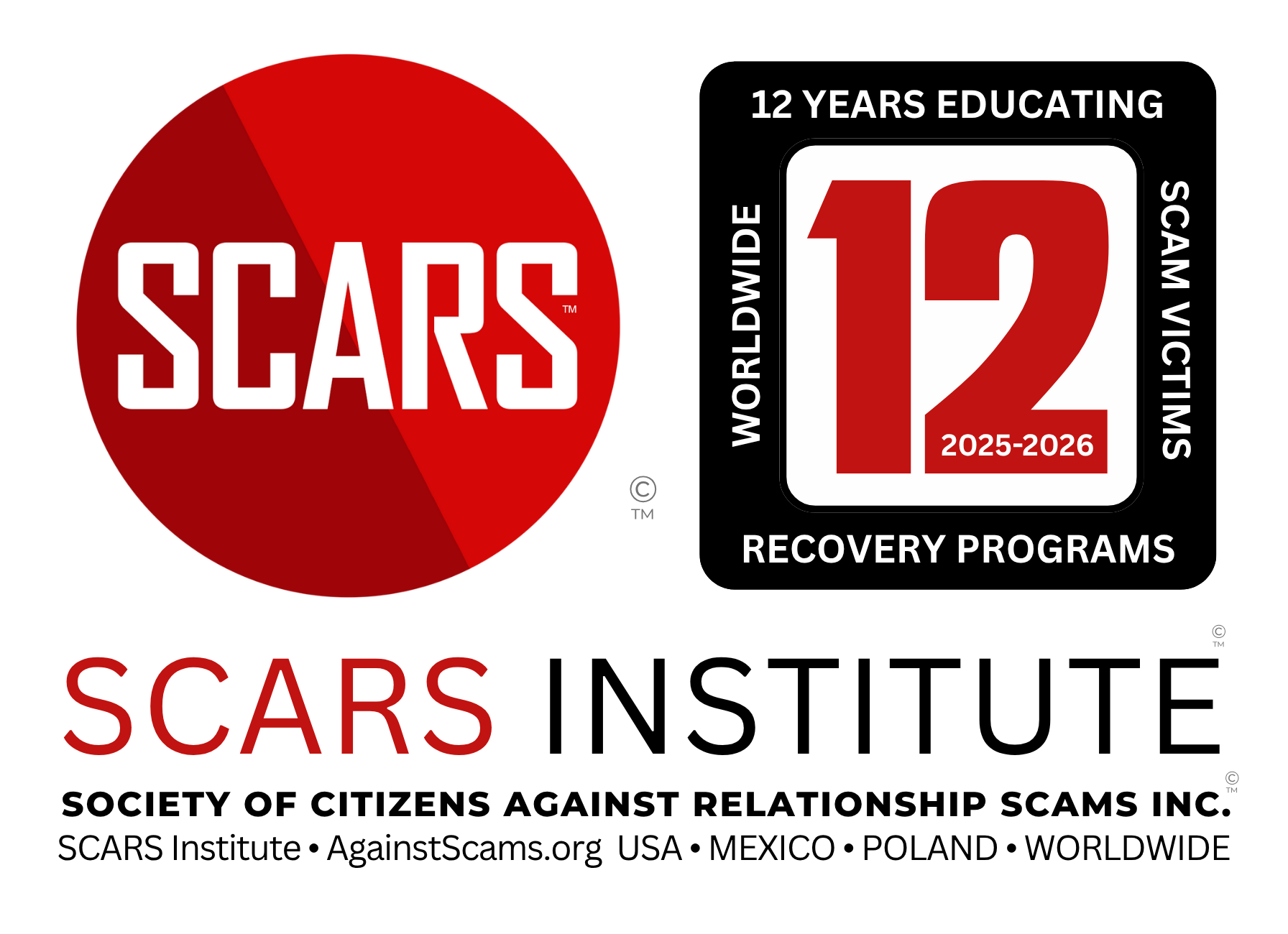


Fake Money Recovery Law Firms
Fake “Money Recovery Law Firms” in the U.S.: How Recovery Scams Work, Why They Spread, and How Victims Can Protect Themselves
Catalog of Scams / How Scams Work – A SCARS Institute Insight
NOTE: While this is mostly about U.S.-based fake law firms, they can be found in Australia, Canada, and the UK
Article Abstract
Fake “money recovery law firms” are fraud operations that target recent scam victims by posing as legal professionals who can recover stolen funds. They often appear through social media ads, search ads, or direct outreach and then move victims into messaging apps such as WhatsApp or Telegram. These schemes use credibility signals such as legal terminology, professional branding, and sometimes impersonation of real attorneys, while pressuring victims to pay upfront retainers or fees tied to release, taxes, escrow, or compliance. Scammers may cite detailed loss information to appear legitimate and may use fake banking portals to sustain the belief that funds are waiting. The most reliable protection is independent license verification through state bar directories, refusal of guaranteed recovery claims, and reporting suspicious activity to the FTC, IC3, and relevant state bars.
Fake “Money Recovery Law Firms” in the U.S.: How Recovery Scams Work, Why They Spread, and How Victims Can Protect Themselves
Fake “Money Recovery Law Firms” are a dangerous lure for recent scam victims!
The moment a person realizes they have been scammed, the brain often enters a crisis state. Fear, shame, urgency, and hope collide. In that emotional storm, many people do what any reasonable person would do. They search for help. They look for a professional who can “get the money back,” reverse the transaction, or “recover assets,” especially when the loss involves cryptocurrency, wire transfers, or payment apps.
That is exactly where a second wave of criminals enters. Money Recovery scams target people who have already been defrauded. The Federal Trade Commission describes these as refund and recovery scams, in which someone claims they can help recover money or a promised prize, but first demands payment or sensitive financial information. The FTC also notes that scammers often buy and trade lists of prior scam victims, sometimes called “sucker lists,” because criminals expect these victims to be contacted again.
In recent years, one of the most damaging variations has been the rise of fake “fraud and asset recovery” law firms advertising to U.S. consumers. These operations mimic legal services, borrow legal language, and often impersonate real attorneys or real firms. They present themselves as legitimate professionals, then re-victimize people who are already financially and emotionally depleted.
What “Money Recovery Law Firm” Scams Look Like
These fake recovery law firms are typically not law firms at all. It is a fraud operation using legal branding to create credibility. These scams often appear as sponsored ads on social media platforms, as search ads, or as direct outreach to victims through email, text, social messaging apps, and online forums. The offer is usually framed around “asset recovery,” “fraud recovery,” “crypto recovery,” “chargeback services,” “forensic tracing,” or “investigation units.”
The core pitch is simple. The victim is told that recovery is possible, sometimes even likely, and that the victim has been “identified” as eligible for help. The victim is then moved quickly into private communication channels, asked to share documentation from the prior scam, and pressured into paying fees before any meaningful verification occurs.
This pattern matches what the FTC warns about broadly: scammers pretend to be from legitimate organizations, including law firms, and then ask for upfront money or personal and financial information.
Why Fake Recovery Law Firms Are Spreading Now
Several forces are feeding this trend.
- First, online scam volume has increased, which expands the pool of people searching for help.
- Second, platforms make it easy to target users based on browsing behavior, self-disclosure in comments, or participation in scam support groups.
- Third, many victims do not know what legitimate legal recovery can and cannot do, particularly in crypto cases. That gap creates a perfect environment for a “recovery” pitch that sounds plausible but is not grounded in reality.
- Fourth, the modern fraud economy is organized. Lists of victims and their loss details can be bought and sold. The FTC explicitly describes this as a known mechanism behind recovery scams.
- Finally, criminals have learned that legal branding lowers skepticism. The word “law” implies licensing, ethics, and accountability. It suggests oversight by courts and state bar associations. Scammers exploit that assumption.
How These Scams Operate Behind the Scenes
Many fake recovery “law firms” use a multi-layer deception structure.
- Step one is credibility packaging. The scam operation builds a website with professional language, legal imagery, and vague claims of “global investigations.” It often includes a “team” page filled with stock photos or stolen attorney headshots. Contact information may look formal at a glance, but it frequently includes consumer email services, inconsistent phone numbers, or addresses that do not match the firm’s name.
- Step two is lead capture. Victims are asked to submit a case form, send a message, or “schedule a consultation.” The moment contact is made, the victim is often pushed into messaging apps such as WhatsApp or Telegram. The FBI has specifically flagged group chats on WhatsApp and other messaging applications as a red flag in fictitious law firm recovery schemes, especially when the chat is framed as being for secrecy and safety.
- Step three is personalization. The scammer may reference exact loss amounts, dates, and the prior platform or exchange used. The FBI has noted that fictitious law firms sometimes have knowledge of exact amounts and dates of previous wire transfers and where victims previously sent funds. This is one reason these scams feel convincing. The scammers are not guessing. They may have purchased data, scraped it from online posts, or obtained it through prior breaches.
- Step four is authority stacking. The victim may be told the “firm” is working with government agencies or is an “authorized partner.” The FBI explicitly states there are no law firms that are officially authorized partners of U.S. government agencies for this purpose, and it lists false claims of affiliation with government entities as a key red flag.
- Step five is the money ask. The ask is often framed as normal legal procedure, such as a “retainer,” “administrative fee,” “court filing,” “verification fee,” “tax,” or “bank release fee.” The FTC warns that scammers often use exactly this kind of language for upfront charges. The FBI similarly warns that these schemes may demand payments in ways that are clear indicators of fraud.
Common Payment Tricks Used by Fake Recovery Firms
Fake recovery “law firms” commonly request payment methods that are hard to reverse and hard to trace. The FBI has specifically flagged requests for payment in cryptocurrency or prepaid gift cards as red flags for fictitious law firm activity. The FTC likewise notes that legitimate organizations will not demand payment in gift cards, cryptocurrency, wire transfers, or similar methods for recovery help.
Another pattern is staged fees. The victim pays an initial fee, then is told recovery is “almost complete,” but another fee is needed for release, taxes, escrow, compliance, or transfer. The scheme continues until the victim stops paying or runs out of funds.
A particularly cruel variation involves fake banking portals. The FBI warns that victims may be told their funds are held at a foreign bank and instructed to register an account at that bank, but the bank website is fraudulent and exists to facilitate ongoing theft. This tactic keeps the victim psychologically invested because it creates the illusion that the money is sitting there waiting.
Why These Scams Work on Smart, Capable People
Recovery scams do not rely on low intelligence. They rely on predictable human reactions to loss and betrayal.
Victims often experience urgency, a drive to undo the harm, and a desire to restore control. They may also experience shame and fear of judgment. Those feelings can make a private “legal solution” feel safer than involving law enforcement or family. Scammers exploit that emotional logic.
Recovery scammers also exploit a cognitive pattern known as loss chasing. When someone has lost money, the brain may prioritize actions that promise reversal, even if the risk is high. The offer of recovery creates a sense of relief and a renewed sense of hope. That hope can override skepticism.
Finally, victims are often cognitively fatigued after the original scam. They may have spent weeks or months in high emotional arousal. That state reduces attention to detail. It increases reliance on authority cues, polished websites, and confident language.
Red Flags That Strongly Suggest a Fake Recovery Law Firm
No single red flag proves fraud, but patterns matter. Several indicators are repeatedly documented by government and professional sources.
- Unexpected outreach to the victim: The FBI encourages caution when a law firm contacts someone unexpectedly, especially when the person has not hired them or reported the crime through official channels.
- Claims of government authorization or partnership: The FBI states there are no law firms that are officially authorized partners of U.S. government agencies for this kind of recovery.
- Use of messaging apps and group chats for “secure legal work”: The FBI flags WhatsApp group chats and similar messaging arrangements as a red flag in fictitious law firm schemes.
- Requests for payment in cryptocurrency, gift cards, or other unusual methods: Both the FBI and FTC identify these payment demands as strong indicators of fraud.
- Promises of fast or guaranteed recovery: The FTC emphasizes that anyone asking for upfront fees or guaranteeing a refund is operating like a scammer, not a legitimate recovery process.
- Refusal to prove licensing and identity: The FBI lists unwillingness or inability to provide credentials or a license, refusal to appear on camera, and avoidance of video meetings as red flags.
- Demands for sensitive data to “verify identity” or “release funds”: The Florida Bar, citing an FBI alert, describes how fake lawyers may request personal identifying information or banking information as part of the recovery scam.
What Legitimate Legal Help Looks Like
It is important to be precise. Not every professional offering recovery-related legal help is a scam. Some attorneys and investigators work on civil fraud matters, judgment enforcement, or asset tracing, especially for complex cases and higher-dollar losses. However, legitimate work has constraints.
Legitimate attorneys do not promise guaranteed recovery. They typically explain uncertainty, timelines, jurisdiction limits, and the difference between tracing and recovery.
Legitimate law firms can verify licensure. In the U.S., attorneys are licensed by states, and their status can be checked through state bar directories. A real firm will have consistent branding, a real office presence, and professional contact channels.
Legitimate firms also use standard engagement practices. They provide written engagement letters, clear fee agreements, and identifiable contacts. They do not rely on secrecy narratives or demand that clients move to WhatsApp group chats with “bank processors.”
Perhaps most importantly, legitimate legal services do not require victims to pay “release fees” to access money that is supposedly already recovered and waiting. That is a hallmark of ongoing fraud.
What Victims Can Do to Verify a “Recovery Law Firm” Before Engaging
A cautious verification process can prevent a second victimization. These steps can be completed without contacting the firm at all.
- Confirm the attorney’s license independently: Victims can search the attorney’s name through the state bar’s official “find a lawyer” directory for the state where the attorney claims to be licensed. A real license entry should match the attorney’s full name, location, and status.
- Verify the firm’s identity through official records: Legitimate firms have consistent naming. A mismatch between the ad name, the website, and the “investigation unit” is not normal branding. It may be deliberate obfuscation.
- Check contact methods and domain credibility: A consumer email address, such as a free webmail account, does not automatically mean fraud, but it should raise concern if the operation claims to be a sophisticated law practice. Many scams rely on superficial polish while using low-accountability contact channels.
- Look for impersonation clues: The FBI warns that scammers may impersonate actual lawyers and legitimate firms and produce fictitious documents with real letterhead or insignia. Victims should assume that logos, documents, and signatures can be fabricated and should verify identities through independent channels.
- Treat claims of government lists or special eligibility as suspicious: The FBI lists claims that a victim was on a government-affiliated list of scam victims as a red flag. This pitch is designed to create urgency and legitimacy.
Why Social Media Ads Are a High-Risk Entry Point
Many victims first encounter these scams through social media advertising. Ads can be targeted precisely to audiences likely to be vulnerable, including people discussing scam losses or following fraud awareness content. Some ads also claim to be “investigative units,” “forensic recovery,” or “legal specialists,” blending technical and legal authority signals.
The Florida Bar article summarizing the FBI alert emphasizes that fraudsters use social media or messaging platforms while posing as lawyers representing fictitious law firms. It also notes that some victims reach out through fake websites that appear legitimate, hoping to recover funds. This pattern matters because it shows that contact can be initiated by the victim or by the scammer. Either pathway can lead to harm.
The Emotional Mechanics of the Second Scam
Recovery scammers often weaponize the emotions that follow the first crime.
- Shame is a major driver. Many victims feel embarrassed and want a private remedy rather than public reporting. Recovery scammers amplify that by offering “confidential” help and discouraging outside verification.
- Urgency is another driver. Victims are told funds will disappear if they do not act quickly, or that a court deadline is approaching, or that a “bank hold” will expire. The goal is to stop the victim from checking licensing and identity.
- Hope is the most powerful driver. The promise of reversing the loss restores emotional oxygen. It can make even implausible claims feel acceptable.
Reporting and Next Steps When a Fake Recovery Firm Appears
When someone suspects a recovery scam, reporting matters. It creates data that helps law enforcement identify patterns and disrupt operations.
See our reporting section for more information: reporting.AgainstScams.org
The FTC encourages reporting refund and recovery scams through its reporting portal and advises consumers to also report to their state attorney general. The FBI similarly urges reporting of fraudulent law firm scams to local FBI field offices and the Internet Crime Complaint Center www.IC3.gov.
Victims should also consider reporting fake legal services to the state bar association in the state being impersonated, especially if a real lawyer’s identity is being used. That reporting can help protect other victims and can assist real attorneys who are being impersonated.
What to Remember
Fake “money recovery” law firms are not a rare edge case. They are an organized, repeatable scam pattern that targets people at a moment of maximum vulnerability. Government warnings emphasize the same central truth. Anyone who claims they can recover money but first demands upfront fees, requests sensitive financial information, pushes victims into messaging apps, or claims special government authorization is operating in a high-risk scam pattern. Internet Crime Complaint Center+2Consumer Advice+2
Victims deserve clear, practical guidance that does not blame them for wanting help. The goal is not to shame people out of recovery attempts. The goal is to prevent re-victimization by teaching what real professional accountability looks like and what fraud patterns look like when they wear legal clothing.
When a person is already hurting, the safest approach is slow verification. A legitimate professional will tolerate verification and will support it. A scammer will resist it, rush it, or punish it with pressure. That difference, more than any single red flag, is often the clearest signal of all.
Conclusion
Fake “money recovery law firms” exploit a predictable window of vulnerability that follows scam discovery, when fear, shame, urgency, and hope can overwhelm careful judgment. These operations use legal language, professional-looking websites, and impersonation tactics to create credibility, then push victims into private communication channels where pressure and staged fees can escalate quickly. The most consistent pattern is the demand for upfront payment, sensitive personal information, or unconventional payment methods, paired with promises of fast or guaranteed recovery. Legitimate legal assistance does exist in limited contexts, but it cannot bypass the realities of tracing funds, jurisdiction, and enforcement timelines, and it will never punish verification or rush consent. Prevention depends on slowing down, independently confirming licensing, refusing secrecy-based onboarding, and reporting suspected schemes so fewer victims are targeted twice.

Glossary
- Administrative Fee — An upfront charge presented as routine paperwork or processing. In recovery scams, this fee is often the first payment used to test compliance and create a sense of progress, even though no legitimate recovery work is underway.
- Ad Targeting — The use of platform tools to show advertisements to specific audiences. Recovery scammers exploit ad targeting by aiming messages at people who have searched for scam help, commented on fraud posts, or joined scam-related communities.
- Asset Recovery — The process of locating and attempting to reclaim money or property after wrongdoing. Legitimate asset recovery can involve legal action and cooperation with financial institutions, but outcomes are uncertain, and timelines are often slow.
- Authority Stacking — A persuasion technique that layers credibility signals such as legal language, official-sounding titles, and implied institutional connections. Scammers use authority stacking to discourage verification and make demands feel legitimate.
- Bank Release Fee — A payment demanded to “unlock” or “release” recovered funds. This fee is a common hallmark of recovery scams because it relies on the false idea that money is waiting but cannot be transferred without additional payment.
- Brand Mismatch — Inconsistent names between an advertisement, website, and claimed organization. Brand mismatch often indicates intentional obfuscation designed to reduce traceability and complicate reporting.
- Case Intake Form — A form used to collect details about a person’s situation. Scam operations use intake forms to gather identifying information and documents that can be exploited for further fraud.
- Chargeback Services — Assistance purportedly offered to reverse card payments. Legitimate chargebacks are handled through banks and card networks under specific rules, so third parties that promise easy reversal often signal a scam.
- Client Onboarding — The process of formally starting a professional relationship. Real law firms use written agreements and verified identities, while scammers often push victims into informal messaging channels and payment demands.
- Confidentiality Pressure — A tactic that frames secrecy as necessary for success or safety. Scammers use confidentiality pressure to isolate victims from advice and to prevent independent verification.
- Consumer Email Address — An email account using free services rather than a professional domain. While not definitive by itself, consumer email addresses can be a warning sign when paired with high-pressure recovery promises and inconsistent firm identity.
- Court Filing Fee — A charge claimed to cover filings or legal submissions. Scammers use this term to make payments seem routine, even when no real case exists or no jurisdiction is identified.
- Credential Verification — The process of confirming an attorney’s license and identity through independent sources. Victims can use state bar directories for credential verification rather than relying on websites or documents provided by the alleged firm.
- Crisis State — The acute psychological state after realizing a scam has occurred. Fear, shame, urgency, and hope can narrow attention and reduce skepticism, which increases vulnerability to recovery scams.
- Crypto Recovery — Claims that stolen cryptocurrency can be retrieved through specialized methods. Legitimate tracing may identify movements on a blockchain, but recovery usually requires legal leverage and cooperation, and scammers exploit the misunderstanding of these limits.
- Data Breach Spillover — The secondary use of leaked personal data from breaches. Recovery scammers may use breach spillover to personalize contact and appear informed about prior victim losses.
- Direct Outreach — Contact initiated by the alleged recovery provider through email, text, or messaging. Unsolicited direct outreach is a frequent feature of recovery scams, especially when the victim never requested assistance.
- Domain Credibility — The trustworthiness of a website’s domain and ownership signals. Scam sites often use recently created domains, inconsistent branding, and limited verifiable business information.
- Emotional Leverage — The use of a victim’s feelings to influence decisions. Recovery scammers leverage desperation and hope to make payment requests feel urgent and necessary.
- Escalating Fees — A pattern of repeated payments demanded in sequence. Recovery scams often start with a smaller fee and then introduce new charges to keep the victim invested.
- Evidence Package — A collection of screenshots, transaction records, and communications. Victims may be asked for an evidence package for legitimate reporting, but scammers use it to deepen personalization and fabricate credibility.
- Fake Banking Portal — A fraudulent website designed to look like a bank interface where funds supposedly sit. These portals keep victims engaged by creating a visible illusion of recoverable money.
- Fake Law Firm — A fraudulent entity presenting itself as a licensed legal practice. Fake law firms imitate legal branding, borrow professional language, and sometimes impersonate real attorneys to steal more money.
- Fee Framing — The use of professional-sounding labels to normalize payment. Scammers frame demands as retainers, taxes, compliance costs, or filings to reduce suspicion and increase compliance.
- Forensic Tracing — The analysis of transaction paths to identify where money moved. Tracing can sometimes support investigative work, but scammers misuse the term to imply guaranteed recovery.
- Gift Card Payment — A payment method that is difficult to reverse and easy to launder. Requests for gift card payment are a strong sign of fraud in a supposed professional service context.
- Global Investigations Claim — A vague assertion of international capability without verifiable details. Scammers use global investigations language to sound powerful while avoiding specifics that could be checked.
- Government Affiliation Claim — A statement that the firm works with or is endorsed by law enforcement or regulators. Such claims are commonly used to create urgency and suppress skepticism.
- Guaranteed Recovery Language — Promises that money will be recovered quickly or certainly. Legitimate recovery professionals cannot guarantee outcomes because fraud losses often move rapidly across jurisdictions and systems.
- Identity Impersonation — The use of a real attorney’s name, photos, or credentials without permission. Impersonation is used to borrow credibility and can mislead victims who do not verify licensure through independent sources.
- Intake Personalization — The practice of referencing specific loss amounts, dates, or platforms to appear legitimate. This personalization can be based on stolen data, scraped posts, or prior disclosures and is designed to reduce doubt.
- Investigation Unit — A label used to imply specialized authority. Fake “units” are often invented branding elements that make the operation sound official.
- Jurisdiction Limits — The boundaries of legal authority based on location and court power. Recovery scammers typically avoid clear jurisdiction details because real legal constraints would weaken their pitch.
- Lead Capture — The process of collecting contact information from interested individuals. Scammers capture leads through ads, forms, and messages, then move victims into private channels for pressure-based selling.
- Legitimacy Signals — Features that create an appearance of trust, such as legal terms, seals, professional design, and formal wording. Scammers rely on legitimacy signals because many victims equate polish with accountability.
- License Verification — Checking an attorney’s status through official state bar directories. License verification is one of the most reliable ways to distinguish legitimate legal services from impersonation.
- Loss Chasing — A psychological drive to reverse a loss quickly, often by taking new risks. Recovery scammers exploit loss chasing by offering fast solutions that feel emotionally relieving.
- Messaging App Onboarding — The shift from email or web contact to WhatsApp, Telegram, or similar apps. This shift often reduces accountability and makes it harder to trace, report, or verify identities.
- Obfuscation — The deliberate use of confusing or inconsistent information to prevent tracking. Recovery scammers use obfuscation through name changes, mismatched branding, and vague business details.
- Payment Irreversibility — The difficulty of reversing certain payments once sent. Scammers prefer irreversible methods such as crypto, gift cards, and wire transfers because victims cannot easily recover funds.
- Phishing for Documents — The collection of sensitive documents under the pretense of helping. Recovery scammers may request identification, bank statements, or transaction proofs that can be used for identity theft or further fraud.
- Polished Website Effect — The tendency to trust professional-looking sites. Scam operations exploit this effect by using templates, legal imagery, and persuasive copy that mimics real firms.
- Pressure Escalation — Increasing urgency through deadlines, threats, or emotional prompts. Escalation discourages verification and pushes victims toward quick payment decisions.
- Private Remedy Appeal — The promise of a quiet solution without public reporting. This appeal targets victims who fear embarrassment or judgment and prefer secrecy.
- Professional Engagement Letter — A written agreement that defines scope, fees, and responsibilities. Legitimate law firms use engagement letters to protect both client and attorney, and scammers typically avoid them or provide generic versions.
- Recovery Scam — A secondary fraud targeting victims of prior scams by promising to retrieve money. Recovery scams often demand upfront fees and use false authority signals to prolong payment.
- Red Flag Pattern — A cluster of warning signs that together indicate high risk. The most reliable approach is evaluating patterns rather than arguing over any single indicator.
- Retainer — A fee paid to secure legal representation and define the scope. In scams, a “retainer” is often a pretext for stealing money without delivering legitimate services.
- Search Ads — Paid advertisements that appear in search results. Recovery scammers use search ads to capture victims who are actively looking for help after a loss.
- Secrecy Narrative — A storyline that discourages consultation with family, banks, or authorities. Scammers use secrecy narratives to isolate victims from reality checks and professional guidance.
- Sensitive Information Request — Demands for Social Security numbers, bank logins, identity documents, or detailed financial records. These requests can enable identity theft and further exploitation, especially when presented as “verification.”
- Shame Trigger — An emotional response that makes a person feel foolish or exposed. Recovery scammers exploit shame triggers by offering reassurance, confidentiality, and fast solutions that avoid public scrutiny.
- Social Proof — The use of reviews, testimonials, or “success stories” to appear legitimate. Scam operations often fabricate social proof, including fake review pages and copied testimonials.
- Sponsored Ad — A paid promotion on social platforms. Sponsored ads can appear credible because they are displayed alongside real businesses, even though approval processes may not reliably block fraud.
- State Bar Directory — An official public resource for verifying attorney licensure and status. State bar directories provide a practical way to check claims without contacting the alleged firm.
- Staged Fee — A payment demanded at one stage and followed by additional fees after the victim pays. Staged fees are designed to keep the victim invested through sunk cost and incremental commitment.
- Sucker List — A list of people previously victimized by scams. Criminal networks may buy and sell these lists because prior victims are considered easier to target again.
- Synthetic Credibility — A manufactured appearance of legitimacy created through branding, language, and visual design. Synthetic credibility is common in recovery scams because it substitutes for real licensing and accountability.
- Unsolicited Eligibility Claim — A statement that the victim was “identified” or “selected” for recovery assistance. This tactic creates urgency and authority while bypassing normal professional engagement processes.
- Verification Resistance — Behavioral signs that the alleged firm discourages or punishes checking credentials. Legitimate professionals tolerate verification, while scammers often respond with pressure, anger, or urgency.
- Victim Re-Victimization — The process of harming a victim again after an initial scam. Recovery scams are re-victimization because they exploit the same emotional vulnerability and deepen financial loss.
- Wire Transfer — A fast bank-to-bank transfer commonly used for large sums. Wire transfers are difficult to reverse once completed, which is why scammers push victims toward them during recovery schemes.
-/ 30 /-
What do you think about this?
Please share your thoughts in a comment below!
Table of Contents




Rapid Report Scammers

In the U.S. & Canada
U.S. & Canada Suicide Lifeline 988
LEAVE A COMMENT?
Recent Comments
On Other Articles
- Debby Montgomery Johnson on The Danger of Using AI in Law Enforcement – The Grandmother Wrongly Arrested as a Fraudster – 2026: “Excellent article – I can’t imagine the terror Angela most certainly experienced. Compound this with the lack of accountability by…” Mar 24, 09:20
- on The Crazy Gregor MacGregor and the Country of Poyais Scam – History of Scams – 2026: “interesting” Mar 23, 19:24
- on BEC Fraud Reaches $43 Billion Per Year: “oh my gosh so much of an increase in the fraud I pray the officials can continue tracking and make…” Mar 23, 15:09
- on Establishing The United States Task Force To Eliminate Fraud – 2026: “Make Online Safe Again!” Mar 17, 19:11
- on Establishing The United States Task Force To Eliminate Fraud – 2026: “Finally an administration takes the initiative to help solve the gigantic situation. Make America Safe Again, thank you!” Mar 17, 15:41
- on What Is The Difference Between A Scam Victim And A Scam Survivor? [Updated]: “Due to my scams I don’t fully trust anyone online and I shouldn’t even those people I knew in high…” Mar 7, 12:46
- on SCARS 3 Steps For New Scam Victims 2024: “I was very fearful “he” would come to my home because I was knew my address, I spoke to someone…” Mar 7, 09:50
- on Sadness & Scam Recovery: “Before my scam, my mom passed away and I got a divorce, so I was dealing with the loss of…” Mar 7, 09:37
- on The Story Of Kira Lee Orsag (aka Dani Daniels) [Updated]: “There is NO evidence and she is not, she is a victim too. Sebastian, stop letting your anger think for…” Mar 6, 23:18
- on The Story Of Kira Lee Orsag (aka Dani Daniels) [Updated]: “There is real evidence that behind these two people there is something that not many people know. This woman is…” Mar 4, 03:58
ARTICLE META
Important Information for New Scam Victims
- Please visit www.ScamVictimsSupport.org – a SCARS Website for New Scam Victims & Sextortion Victims
- Enroll in FREE SCARS Scam Survivor’s School now at www.SCARSeducation.org
- Please visit www.ScamPsychology.org – to more fully understand the psychological concepts involved in scams and scam victim recovery
If you are looking for local trauma counselors please visit counseling.AgainstScams.org or join SCARS for our counseling/therapy benefit: membership.AgainstScams.org
If you need to speak with someone now, you can dial 988 or find phone numbers for crisis hotlines all around the world here: www.opencounseling.com/suicide-hotlines
A Note About Labeling!
We often use the term ‘scam victim’ in our articles, but this is a convenience to help those searching for information in search engines like Google. It is just a convenience and has no deeper meaning. If you have come through such an experience, YOU are a Survivor! It was not your fault. You are not alone! Axios!
A Question of Trust
At the SCARS Institute, we invite you to do your own research on the topics we speak about and publish, Our team investigates the subject being discussed, especially when it comes to understanding the scam victims-survivors experience. You can do Google searches but in many cases, you will have to wade through scientific papers and studies. However, remember that biases and perspectives matter and influence the outcome. Regardless, we encourage you to explore these topics as thoroughly as you can for your own awareness.
Statement About Victim Blaming
SCARS Institute articles examine different aspects of the scam victim experience, as well as those who may have been secondary victims. This work focuses on understanding victimization through the science of victimology, including common psychological and behavioral responses. The purpose is to help victims and survivors understand why these crimes occurred, reduce shame and self-blame, strengthen recovery programs and victim opportunities, and lower the risk of future victimization.
At times, these discussions may sound uncomfortable, overwhelming, or may be mistaken for blame. They are not. Scam victims are never blamed. Our goal is to explain the mechanisms of deception and the human responses that scammers exploit, and the processes that occur after the scam ends, so victims can better understand what happened to them and why it felt convincing at the time, and what the path looks like going forward.
Articles that address the psychology, neurology, physiology, and other characteristics of scams and the victim experience recognize that all people share cognitive and emotional traits that can be manipulated under the right conditions. These characteristics are not flaws. They are normal human functions that criminals deliberately exploit. Victims typically have little awareness of these mechanisms while a scam is unfolding and a very limited ability to control them. Awareness often comes only after the harm has occurred.
By explaining these processes, these articles help victims make sense of their experiences, understand common post-scam reactions, and identify ways to protect themselves moving forward. This knowledge supports recovery by replacing confusion and self-blame with clarity, context, and self-compassion.
Additional educational material on these topics is available at ScamPsychology.org – ScamsNOW.com and other SCARS Institute websites.
Psychology Disclaimer:
All articles about psychology and the human brain on this website are for information & education only
The information provided in this article is intended for educational and self-help purposes only and should not be construed as a substitute for professional therapy or counseling.
While any self-help techniques outlined herein may be beneficial for scam victims seeking to recover from their experience and move towards recovery, it is important to consult with a qualified mental health professional before initiating any course of action. Each individual’s experience and needs are unique, and what works for one person may not be suitable for another.
Additionally, any approach may not be appropriate for individuals with certain pre-existing mental health conditions or trauma histories. It is advisable to seek guidance from a licensed therapist or counselor who can provide personalized support, guidance, and treatment tailored to your specific needs.
If you are experiencing significant distress or emotional difficulties related to a scam or other traumatic event, please consult your doctor or mental health provider for appropriate care and support.
Also read our SCARS Institute Statement about Professional Care for Scam Victims – click here to go to our ScamsNOW.com website.


Thank you for your comment. You may receive an email to follow up. We never share your data with marketers.