


SCARS Institute’s Encyclopedia of Scams™ Published Continuously for 25 Years


Bitcoin ATMs – A Scammers’ Favorite Tool & Public Menace
Are Bitcoin ATMs Doing More Harm Than Good?
How Scams Work – A SCARS Institute Insight
Article Abstract
Bitcoin ATMs began as a tool for financial inclusion but now serve as a key instrument in a wide range of scams that exploit the vulnerable. From romance fraud to government impersonation, scammers rely on these machines because they offer speed, anonymity, and no built-in protections. Seniors and low-income individuals suffer the most harm, often pressured into sending thousands of dollars through kiosks they do not understand. Despite efforts from law enforcement and regulators, the machines continue to operate with minimal oversight, high fees, and no refund process. While the crypto industry argues for improved compliance, the growing number of victims and rising financial losses reveal a pattern of systemic abuse. Regulatory bans, strict user verification, and mandatory warnings may help reduce the damage, but many jurisdictions have already concluded that Bitcoin ATMs are more predatory than protective. Without decisive action, they will continue to serve as silent accomplices in financial crimes across the country.

Are Bitcoin ATMs Doing More Harm Than Good? They are a Scammer’s Favorite Tool!
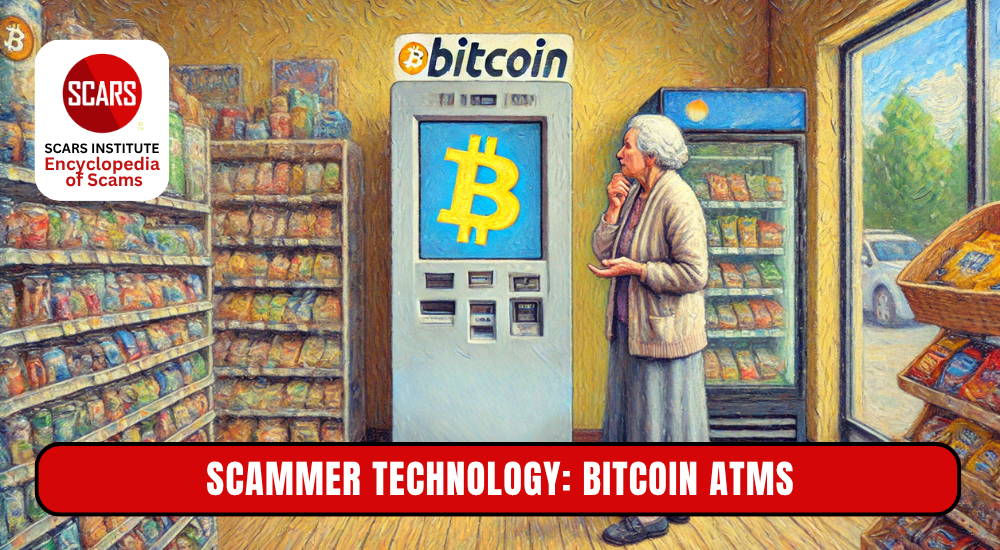
Bitcoin ATMs first appeared with a promise to revolutionize financial access. They were marketed as a solution for the unbanked and underbanked, those without traditional banking relationships. Developers and promoters framed them as a technological leap forward, offering anyone the ability to convert cash into cryptocurrency instantly. In theory, this would grant underserved populations access to global digital finance, free from the bureaucracy and limitations of centralized banking. The machines required no credit checks, no government identification in some jurisdictions, and no appointment with a teller. Their appeal spread quickly, and Bitcoin ATM installations surged across urban centers and small towns alike, especially in the United States.
As the machines became more visible in gas stations, convenience stores, and shopping centers, their original intent faded into the background. While some early adopters used them to explore the crypto market or transfer funds quickly, it did not take long for the darker implications to surface. Scam operators, always alert to new tools for coercion and control, saw in Bitcoin ATMs the perfect opportunity. These machines offered privacy, speed, and limited oversight. For scammers, they provided a clean handoff. For victims, they became sites of coercion, shame, and irreversible financial loss.
In 2024, victims lost more than $246 million through scams involving Bitcoin ATMs. Recent estimates suggest the number has already crossed $250 million.
These losses do not happen in isolation. Each case involves manipulation, psychological pressure, and targeted deceit. Most of the victims believe they are sending money to the police, to a lover, to a bank representative, or to fix a problem. What they are really doing is transferring funds through a machine that offers no refund, no human intervention, and no safety net. As losses rise and criminal use escalates, lawmakers and cities are beginning to ban these machines entirely. The question is no longer how these devices operate, but why they continue to exist.
The Scam Mechanics
Bitcoin ATMs operate in a way that serves scammers more efficiently than almost any other tool. Unlike traditional financial transactions, which involve banks, fraud departments, or identity verification protocols, these machines allow for quick, anonymous money transfers without oversight. Criminals have seized on this vulnerability, using Bitcoin ATMs to extract money from victims in multiple types of fraud. Understanding how these scams work is the first step toward prevention.
How Scammers Use Bitcoin ATMs
The process begins with a phone call, email, or text message that triggers fear or urgency. A victim hears from someone claiming to be a government agent, law enforcement officer, bank official, or computer technician. The message often involves dire consequences: unpaid taxes, criminal charges, frozen bank accounts, or hacked devices. In romance scams, the scammer pleads for help in an emergency, using emotional appeals instead of threats. The result is the same. The victim feels forced to act quickly and secretly.
Scammers instruct victims to go to their bank or a nearby ATM and withdraw cash. In many cases, they stay on the phone throughout the process, guiding every step. Victims then locate a Bitcoin ATM, usually at a gas station or convenience store. Once there, they scan a QR code provided by the scammer. This QR code links directly to a cryptocurrency wallet controlled by the criminal.
The victim inserts the cash, confirms the transaction, and the machine converts the cash into Bitcoin or another cryptocurrency. It then sends the funds directly to the scammer’s digital wallet. The transaction takes only minutes. Once completed, it becomes irreversible. Unlike traditional banking, there is no fraud hotline to call and no dispute process. The moment the machine sends the crypto, the money is gone.
Scammers exploit the fact that these machines do not verify whether a transaction is voluntary or coerced. They use QR codes to avoid errors and to keep their wallets anonymous. The machines do not ask questions, do not alert authorities, and do not flag large or suspicious deposits. This hands-off design, while appealing to privacy advocates, serves scam operations perfectly.
Scam Types Involving Bitcoin ATMs
Bitcoin ATMs appear across a wide spectrum of fraud types. Bank impersonation scams rank among the most common. A scammer calls pretending to be from a bank fraud department. They tell the victim their accounts have been compromised and that immediate action is required. Victims believe they are moving funds to a safe location. The scammer directs them to a Bitcoin ATM, disguising the transfer as a security protocol.
Government impersonation scams follow the same blueprint. Victims receive threats of arrest, deportation, or license suspension. The fraudster claims to represent the IRS, Social Security Administration, or local police. They demand payment via Bitcoin ATM to resolve fabricated legal issues. Victims act out of fear, not reason.
Tech support scams also use this tactic. Victims receive calls claiming their computer has been hacked or infected. The fraudster impersonates a technician from Microsoft, Apple, or another well-known company. They convince the victim to pay for supposed repairs using Bitcoin. The criminal provides a QR code, then instructs the victim to deposit money through an ATM.
Romance scams often use emotional appeals instead of threats. The scammer builds a fake relationship online. Over time, they introduce financial stress. They claim to be stranded, robbed, or in danger. They ask the victim to send help immediately through Bitcoin. In many cases, they say this is the only way to receive money due to foreign travel or restricted bank access. The ATM becomes the final link in the manipulation chain.
Scammers benefit from the fact that Bitcoin ATMs operate outside of mainstream finance. Unlike wire transfers, they do not require the name of a recipient. Unlike credit cards, they offer no fraud protection. Unlike checks or direct deposits, they leave no clear path for tracing or reversing a transaction. This makes them ideal for criminal use.
Reports from consumer protection agencies, law enforcement, and independent investigations confirm that Bitcoin ATMs are involved in a large and growing number of fraud cases. These scams do not follow a single format. They adapt to the victim’s fears, desires, and confusion. The common factor is the machine itself, which quietly converts money into irreversible digital currency with no safeguards.
In every version of these frauds, the Bitcoin ATM functions as the enabler. It allows the scammer to operate without meeting the victim, without proving identity, and without leaving useful trails. For victims, it creates a false sense of legitimacy. The machine looks official. It sits inside trusted locations. It follows a clean and fast process. Victims often believe they are doing the right thing until it is too late.
Understanding the mechanics of these scams is essential for reducing harm. Education must begin with how these machines work, who uses them, and why. Until meaningful oversight or restrictions exist, Bitcoin ATMs will remain a preferred method for scammers looking to extract fast, anonymous payments from unwitting victims.
Who Is Losing Money?
The impact of cryptocurrency ATM scams continues to grow, and the numbers reveal a grim reality. In 2024 alone, Americans lost more than $246 million through these machines, with the trend showing no sign of slowing. According to data from multiple sources, including Decrypt, MediaRoom, and social media platforms, criminals have used Bitcoin ATMs to siphon money from unsuspecting victims with alarming efficiency.
The victims come from every age group, but seniors suffer the most harm. Individuals aged 60 and older account for nearly two-thirds of the total losses reported. These older victims tend to trust authority figures and often feel confused by fast-paced digital instructions. When a scammer impersonates a bank official, law enforcement officer, or government agent, these individuals frequently comply out of fear or duty. That trust is weaponized through a machine that processes their entire life savings in minutes.
Federal data confirms these losses. The FBI estimates that Americans lost more than $247 million to Bitcoin ATM-related scams in the past year alone. This figure includes all major categories of fraud: government impersonation, tech support scams, fake romantic relationships, and bank security hoaxes. The common factor across all cases is that scammers directed victims to transfer money using cryptocurrency ATMs.
One example involves an Oklahoma pensioner who lost $20,000. The scammer convinced him he faced arrest for unpaid taxes. Under pressure, he drove hundreds of miles across state lines, using multiple Bitcoin ATMs to complete the transfers. The criminal stayed on the phone the entire time, guiding the victim through each step. By the time the man realized he had been tricked, the money was gone.
This story is not unusual. It reflects a broader pattern across the country. Victims often withdraw large sums of cash from their personal accounts. They receive exact instructions from the scammer, including when to go, which machine to use, and how to scan the QR code. The design of the ATM makes the transaction feel official. The result is swift, and mostly, irreversible loss.
As the number of machines increases, so does the number of victims. Law enforcement agencies, including the FBI and local police departments, report that these scams remain one of the fastest-growing fraud categories in the United States. Families, seniors, and vulnerable individuals continue to suffer financial ruin as criminals exploit this unregulated payment channel.
Law Enforcement Response
Law enforcement agencies have started to push back against the wave of cryptocurrency ATM scams. In a high-impact initiative, the FBI launched Operation Level Up, recovering or preventing more than $285 million in cryptocurrency fraud cases. This multi-jurisdictional effort targeted scammers who rely on crypto ATMs to launder funds from victims across the country.
Some responses have taken dramatic form. In Jasper County, Texas, local deputies used a saw to access a Bitcoin ATM and retrieve $31,900 that a scam victim had deposited just moments before. Officers arrived quickly after the victim reported the fraud in real time, and their swift action stopped the funds from reaching the scammer’s wallet.
Municipal agencies also report growing losses. In Springfield, Massachusetts, police confirmed that $624,000 has been stolen through crypto-related scams since January 2024. Most cases involved direct instructions to victims from impersonators posing as government agents, tech support, or romantic partners. Victims believed they were following legitimate instructions to protect their accounts or loved ones.
These examples show that while law enforcement does act, the pace of abuse exceeds their current capacity. Criminals continue to exploit crypto ATM infrastructure faster than authorities can shut it down. The damage remains widespread, and the scams show no sign of slowing.
Regulatory Action
Legislators and regulators across the United States and abroad have started to impose strict controls on cryptocurrency ATMs. The growing connection between these machines and scam-related losses has forced local governments to act decisively. While some measures focus on transparency and user safety, others aim to eliminate the devices altogether.
Several cities and states have already moved to ban or restrict Bitcoin ATMs. Spokane, Washington, passed a full ban in 2024. Operators were given just sixty days to remove the machines. City officials cited rising fraud complaints and a complete lack of consumer protections. In New Jersey, a proposed bill seeks to ban all Bitcoin ATMs statewide. Lawmakers there have called out these devices as “open doors to criminal behavior disguised as innovation.”
Minnesota cities, including Stillwater and St. Paul, have also begun evaluating their own limits. Local officials in those areas report that residents continue to lose large sums to ATM scams. Meetings with law enforcement and fraud experts have prompted serious consideration of bans or usage restrictions. These town-level efforts show that even smaller jurisdictions have recognized the urgent need for control.
Some states have chosen regulation instead of full bans. Illinois and Vermont both introduced rules capping transaction amounts and requiring Know Your Customer (KYC) verification. These measures aim to slow down scam attempts by forcing ATM providers to gather and verify user identities. Lawmakers in both states said their goal is to “make crypto ATMs behave more like legitimate financial tools and less like cash-dumping machines for criminals.”
Outside the United States, regulatory pressure has gone even further. In 2022, the United Kingdom’s Financial Conduct Authority declared all crypto ATMs illegal. The FCA determined that none of the machines met the country’s anti-money laundering or KYC standards. As a result, all operators were ordered to shut down or face legal consequences.
From local city councils to federal agencies and international regulators, the message is growing clearer. Crypto ATMs, in their current form, do not serve the public safely. Unless significant changes occur, more bans will follow.
Are Bitcoin ATMs Effective?
Bitcoin ATMs began with a promising goal. They offered easy access to cryptocurrency for people who lacked traditional banking services. Many early supporters described them as a financial bridge for the unbanked. With nothing more than cash and a smartphone, users could buy crypto in minutes. For a while, it looked like these machines would democratize digital finance.
The reality has shifted. Although the machines remain widespread, their use increasingly favors profit over public benefit. One of the most pressing concerns is cost. Bitcoin ATMs routinely charge service fees ranging from 6 percent to as high as 20 percent. These rates far exceed standard online crypto exchanges, where fees tend to remain well below 5 percent. In the first quarter of 2024, some operators earned profit margins of 20 percent on $33 million in volume.
Such pricing targets the vulnerable. Low-income users, seniors, and those unfamiliar with crypto often pay more because they lack alternatives. The model has drawn comparisons to payday lending. Both rely on high fees and limited transparency. Both pitch themselves as accessible solutions. And both routinely extract value from the people least able to afford it.
While operators describe the machines as convenient, the structure behind them often creates harm. Lack of clear regulation, combined with inflated fees and rising fraud, raises serious questions. Bitcoin ATMs no longer serve as neutral access points to digital currency. They now operate as high-cost traps that frequently fuel abuse, especially among those seeking fast solutions or digital inclusion.
Weighing Benefits vs Harms
Bitcoin ATMs once promised financial inclusion, especially for people without access to traditional banking. However, their benefits have grown increasingly difficult to justify. The original vision of a decentralized, user-controlled currency system has given way to something far more exploitative. Regulators now describe these machines as “purely predatory.”
Instead of offering empowerment, most Bitcoin ATMs deliver high fees, confusing user interfaces, and a complete lack of safeguards. They often appear in convenience stores, gas stations, and low-income neighborhoods, locations chosen for foot traffic, not for financial education or user protection. The result is a system that extracts money from vulnerable populations while offering little in return.
In contrast, safer and more effective tools already exist. Mobile wallets with robust identity verification offer crypto access without the risks tied to physical machines. Regulated financial services and fintech platforms now reach unbanked users with greater transparency, clearer rules, and full refund mechanisms in case of error or fraud.
When comparing what Bitcoin ATMs were meant to provide against what they actually cause, the harm clearly outweighs the benefit. They no longer fill a gap in financial access. Instead, they help scammers move money, trap users in abusive fee structures, and leave victims with no path to recovery.
Should They Be Banned?
The debate over banning Bitcoin ATMs has intensified as evidence mounts of their repeated use in scams and financial abuse. Law enforcement, regulators, and victim advocates increasingly argue that these machines serve more as a tool for exploitation than for financial empowerment. Cities and states have already started enacting bans or heavy restrictions. Supporters of these bans point to “persistent misuse, irreversible losses, and growing damage to consumer trust.”
Arguments in favor of banning Bitcoin ATMs focus on their continued role in facilitating scams. Victims report losing life savings, and many never recover the funds. No refund mechanism exists. Scammers take advantage of the speed and anonymity these machines provide. With no oversight built into most of them, criminals operate unchecked. Public officials and consumer advocates argue that people deserve protection from what they now view as “predatory technology.”
Industry voices, however, push back. They claim improved compliance and increased cooperation with law enforcement. They cite KYC implementations, daily transaction caps, and optional fraud warnings. Some argue that banning these machines punishes legitimate users, especially in areas with limited access to traditional banks or mobile apps. Others warn that bans might drive crypto transactions further underground. Some local governments have even faced legal threats after proposing removal.
The solution may not lie in banning every machine, but in enforcing strict regulation, mandatory oversight, and built-in fraud prevention tools. Still, the burden rests on the industry to prove these tools serve the public, not criminals.
Recommendations for Change
Bitcoin ATMs continue to cause widespread financial harm, especially through scams that pressure victims into transferring funds quickly and without understanding the consequences. To reduce this harm, action is required on three fronts: consumer education, regulatory enforcement, and responsible behavior by ATM providers. Each party plays a role in improving safety and reducing abuse.
For Consumers
Consumers must take an active role in protecting themselves. Any phone call, text, or online message demanding cash sent through a crypto ATM should be treated as a scam. Victims of such pressure often describe feeling panic or urgency, which scammers use deliberately. No government agency, police department, or legitimate tech support service ever requires payment through a crypto kiosk.
People should always verify any financial request by contacting the supposed agency or company directly using official contact information. They should never trust contact information given by the person making the demand. Consumers also need to treat cryptocurrency like physical cash. Once the money is gone, no refund exists. They should use extreme caution when dealing with any unfamiliar request involving crypto.
If someone encounters a suspicious machine or scam-related request, they should report it immediately to the Federal Communications Commission, the Federal Trade Commission, or the platform where the scam took place. These reports support investigations and help stop repeat offenders.
For Regulators
Government oversight must increase. Local and state officials should consider banning Bitcoin ATMs in neighborhoods identified as high-risk for fraud or elder abuse. Where full bans are not feasible, regulators should require strict Know Your Customer (KYC) and Anti-Money Laundering (AML) compliance. Many machines currently allow anonymous transactions. That must stop.
Transaction limits should be placed on first-time users to slow down fraud schemes. Many victims lose thousands of dollars in a single transaction. Lowering caps can reduce the damage. Regulators should also require every kiosk to display visible, clear safety messages, such as “Government agencies never request Bitcoin payments” and “If someone told you to send money here, stop and contact the police.”
For ATM Providers
ATM operators must take responsibility for user safety. Machines should include real-time scam alerts based on known fraud patterns and phone number reports. If a transaction shows signs of fraud, operators should have the technical ability to pause it and flag it for review.
Operators must also work directly with law enforcement and fraud investigators. Collaboration can help freeze stolen funds in rare cases and identify repeat scammers. Providers must show the public that they support safety, not just profit.
Conclusion
Bitcoin ATMs no longer represent the technological breakthrough they were once thought to be. While they began as a way to offer broader access to digital finance, they now serve as one of the most efficient tools for scammers to exploit fear, confusion, and urgency. These machines allow criminals to operate anonymously, move money instantly, and avoid detection. They deliver irreversible transactions through interfaces that provide no fraud protection, no dispute resolution, and no accountability. In effect, Bitcoin ATMs have become a core instrument in modern fraud.
The harm they cause is measurable and growing. Elderly victims lose retirement savings. Families endure financial ruin. Local governments struggle to respond as criminals adapt faster than regulations can evolve. Law enforcement agencies recover stolen funds only in rare cases, while operators continue to profit from machines that extract high fees from people who often do not understand what they are using.
Communities, regulators, and businesses must now decide whether these machines offer any real benefit. Safer alternatives already exist. Secure mobile wallets, regulated exchanges, and identity-verified platforms can meet the needs of the unbanked without exposing them to this level of risk. Cryptocurrency access does not need to involve predatory technology.
The public cannot afford to treat Bitcoin ATMs as harmless financial tools. Their design, location, and lack of oversight place them at the center of widespread abuse. If the industry cannot guarantee meaningful protection for users, then local governments have every reason to remove the machines altogether. Financial innovation does not justify financial harm. The people most affected by these scams deserve safety, clarity, and tools built with accountability in mind. Until that happens, Bitcoin ATMs will remain a hazard disguised as convenience.
-/ 30 /-
What do you think about this?
Please share your thoughts in a comment below!
Table of Contents



Rapid Report Scammers

In the U.S. & Canada

U.S. & Canada Suicide Lifeline 988
LEAVE A COMMENT?
Recent Comments
On Other Articles
- Debby Montgomery Johnson on The Danger of Using AI in Law Enforcement – The Grandmother Wrongly Arrested as a Fraudster – 2026: “Excellent article – I can’t imagine the terror Angela most certainly experienced. Compound this with the lack of accountability by…” Mar 24, 09:20
- on The Crazy Gregor MacGregor and the Country of Poyais Scam – History of Scams – 2026: “interesting” Mar 23, 19:24
- on BEC Fraud Reaches $43 Billion Per Year: “oh my gosh so much of an increase in the fraud I pray the officials can continue tracking and make…” Mar 23, 15:09
- on Establishing The United States Task Force To Eliminate Fraud – 2026: “Make Online Safe Again!” Mar 17, 19:11
- on Establishing The United States Task Force To Eliminate Fraud – 2026: “Finally an administration takes the initiative to help solve the gigantic situation. Make America Safe Again, thank you!” Mar 17, 15:41
- on What Is The Difference Between A Scam Victim And A Scam Survivor? [Updated]: “Due to my scams I don’t fully trust anyone online and I shouldn’t even those people I knew in high…” Mar 7, 12:46
- on SCARS 3 Steps For New Scam Victims 2024: “I was very fearful “he” would come to my home because I was knew my address, I spoke to someone…” Mar 7, 09:50
- on Sadness & Scam Recovery: “Before my scam, my mom passed away and I got a divorce, so I was dealing with the loss of…” Mar 7, 09:37
- on The Story Of Kira Lee Orsag (aka Dani Daniels) [Updated]: “There is NO evidence and she is not, she is a victim too. Sebastian, stop letting your anger think for…” Mar 6, 23:18
- on The Story Of Kira Lee Orsag (aka Dani Daniels) [Updated]: “There is real evidence that behind these two people there is something that not many people know. This woman is…” Mar 4, 03:58
ARTICLE META
Important Information for New Scam Victims
- Please visit www.ScamVictimsSupport.org – a SCARS Website for New Scam Victims & Sextortion Victims
- Enroll in FREE SCARS Scam Survivor’s School now at www.SCARSeducation.org
- Please visit www.ScamPsychology.org – to more fully understand the psychological concepts involved in scams and scam victim recovery
If you are looking for local trauma counselors please visit counseling.AgainstScams.org or join SCARS for our counseling/therapy benefit: membership.AgainstScams.org
If you need to speak with someone now, you can dial 988 or find phone numbers for crisis hotlines all around the world here: www.opencounseling.com/suicide-hotlines
A Note About Labeling!
We often use the term ‘scam victim’ in our articles, but this is a convenience to help those searching for information in search engines like Google. It is just a convenience and has no deeper meaning. If you have come through such an experience, YOU are a Survivor! It was not your fault. You are not alone! Axios!
A Question of Trust
At the SCARS Institute, we invite you to do your own research on the topics we speak about and publish, Our team investigates the subject being discussed, especially when it comes to understanding the scam victims-survivors experience. You can do Google searches but in many cases, you will have to wade through scientific papers and studies. However, remember that biases and perspectives matter and influence the outcome. Regardless, we encourage you to explore these topics as thoroughly as you can for your own awareness.
Statement About Victim Blaming
SCARS Institute articles examine different aspects of the scam victim experience, as well as those who may have been secondary victims. This work focuses on understanding victimization through the science of victimology, including common psychological and behavioral responses. The purpose is to help victims and survivors understand why these crimes occurred, reduce shame and self-blame, strengthen recovery programs and victim opportunities, and lower the risk of future victimization.
At times, these discussions may sound uncomfortable, overwhelming, or may be mistaken for blame. They are not. Scam victims are never blamed. Our goal is to explain the mechanisms of deception and the human responses that scammers exploit, and the processes that occur after the scam ends, so victims can better understand what happened to them and why it felt convincing at the time, and what the path looks like going forward.
Articles that address the psychology, neurology, physiology, and other characteristics of scams and the victim experience recognize that all people share cognitive and emotional traits that can be manipulated under the right conditions. These characteristics are not flaws. They are normal human functions that criminals deliberately exploit. Victims typically have little awareness of these mechanisms while a scam is unfolding and a very limited ability to control them. Awareness often comes only after the harm has occurred.
By explaining these processes, these articles help victims make sense of their experiences, understand common post-scam reactions, and identify ways to protect themselves moving forward. This knowledge supports recovery by replacing confusion and self-blame with clarity, context, and self-compassion.
Additional educational material on these topics is available at ScamPsychology.org – ScamsNOW.com and other SCARS Institute websites.
Psychology Disclaimer:
All articles about psychology and the human brain on this website are for information & education only
The information provided in this article is intended for educational and self-help purposes only and should not be construed as a substitute for professional therapy or counseling.
While any self-help techniques outlined herein may be beneficial for scam victims seeking to recover from their experience and move towards recovery, it is important to consult with a qualified mental health professional before initiating any course of action. Each individual’s experience and needs are unique, and what works for one person may not be suitable for another.
Additionally, any approach may not be appropriate for individuals with certain pre-existing mental health conditions or trauma histories. It is advisable to seek guidance from a licensed therapist or counselor who can provide personalized support, guidance, and treatment tailored to your specific needs.
If you are experiencing significant distress or emotional difficulties related to a scam or other traumatic event, please consult your doctor or mental health provider for appropriate care and support.
Also read our SCARS Institute Statement about Professional Care for Scam Victims – click here to go to our ScamsNOW.com website.


Thank you for your comment. You may receive an email to follow up. We never share your data with marketers.