



SCARS Institute’s Encyclopedia of Scams™ Published Continuously for 25 Years


United States Scam Center Strike Force
As Promised – President Trump Has Created the New United States Scam Center Strike Force
Law Enforcement Action – A SCARS Institute Insight
Authors:
• SCARS Institute Encyclopedia of Scams Editorial Team – Society of Citizens Against Relationship Scams Inc.
• Portions by the United States Government
Article Abstract
The United States Trump Administration has kept its promise to establish the Scam Center Strike Force to address the growing threat of cryptocurrency investment fraud and confidence scams run by Chinese transnational criminal organizations operating from Southeast Asian compounds. These schemes have defrauded Americans of an estimated 10 billion dollars annually while exploiting trafficked workers who are forced to commit online scams under abusive conditions. The Strike Force unites resources from the U.S. Attorney’s Office, the Department of Justice, the FBI, and the U.S. Secret Service, with support from the State Department, Treasury, and international partners. Early actions include more than 401 million dollars in cryptocurrency seizures, asset freezes against affiliated groups, and targeted enforcement against scam compounds and infrastructure connected to Burma, Cambodia, and Laos.
As Promised – President Trump Has Created the New United States Scam Center Strike Force
In a decisive move to combat a multi-billion-dollar threat, the U.S. Attorney’s Office for the District of Columbia has announced the formation of the first-ever Scam Center Strike Force. This initiative is specifically designed to battle the surge of sophisticated cryptocurrency investment fraud and confidence scams originating from Southeast Asia and targeting American citizens. Announced on November 12, 2025, by U.S. Attorney Jeanine Pirro, the strike force represents a powerful, coordinated effort between federal law enforcement and interagency partners to dismantle the criminal enterprises behind these schemes.
The primary targets of this strike force are Chinese transnational criminal organizations (TCOs) that orchestrate what are commonly known as “pig butchering” and other “relationship” scams. These operations begin on U.S. social media or via text message, where scammers spend months gaining a victim’s trust. Once a rapport is established, they convince victims to invest in legitimate cryptocurrency, only to then direct them to transfer their assets into fraudulent investment websites and applications. These sites, often hosted by U.S. companies, serve as a trap, allowing the scammers to quickly launder the stolen funds into accounts outside U.S. jurisdiction. The scale of this crime is staggering, with recent estimates indicating it defrauds Americans of nearly $10 billion per year.
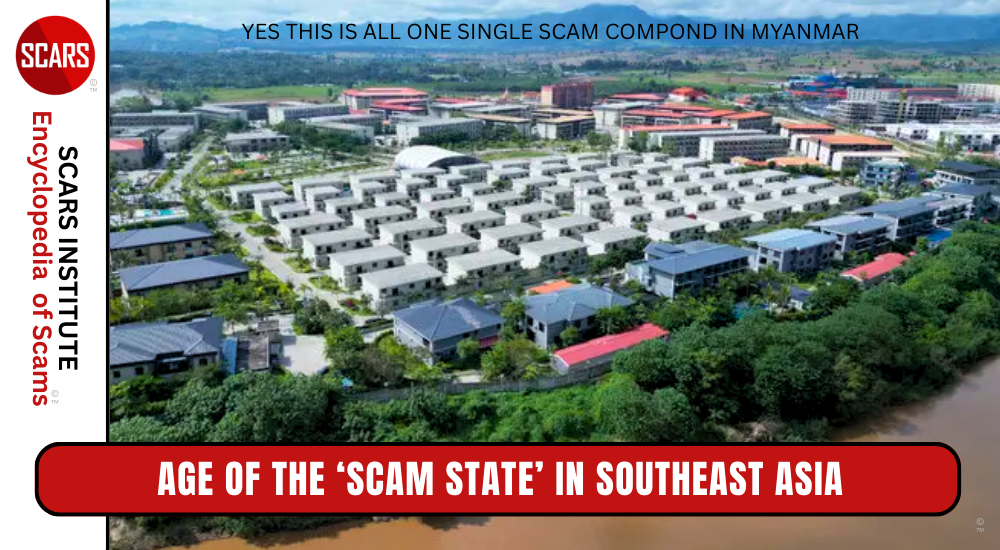
Critically, the strike force recognizes that these are not merely financial crimes but are deeply intertwined with human suffering. The scam compounds, often located in Cambodia, Laos, and Burma (Myanmar), are frequently run by armed groups who traffic and hold individuals against their will, forcing them to perpetrate the scams under threat of abuse. In some regions, the revenue from these illicit operations is so massive it accounts for nearly half of the country’s GDP. U.S. Attorney Pirro described the situation as a “generational wealth transfer from Main Street America into the pockets of Chinese organized crime” and emphasized the need to secure the U.S. cryptocurrency industry for all Americans.
Learn more about this: The Scam States of Southeast Asia and U.S. Scam Center Strike Force
The Scam Center Strike Force combines the formidable resources of the U.S. Attorney’s Office, the DOJ’s Criminal Division, the FBI, and the U.S. Secret Service. It is also actively partnering with other government bodies, including the State Department, the Treasury Department’s Office of Foreign Assets Control (OFAC), and the Department of Commerce. Its strategy is multi-pronged: identifying and prosecuting key leaders of these criminal networks, seizing and disabling the U.S.-based infrastructure used to facilitate the scams, and collaborating with U.S. corporations to prevent American technology from being weaponized against its own citizens.
Learn more about reporting these crimes: reporting.AgainstScams.org
The strike force is not a future promise; it is already operational and delivering results. Its Crypto Seizure team has already seized over $401 million in cryptocurrency from these schemes and is actively working to return stolen funds to victims. Strike Force teams have conducted operations against specific scam compounds in Burma, seizing fraudulent websites and seeking warrants to seize the satellite terminals that connect them to the internet. In a significant move, the Treasury Department has designated related entities, like the Democratic Karen Benevolent Army (DKBA), as Specially Designated Nationals (SDNs), blocking their assets. The strike force has also deployed FBI agents to embed with international partners, such as the Royal Thai Police, to directly combat compounds like the notorious KK Park. Through this aggressive, all-of-government approach, the Scam Center Strike Force is dedicated to educating the public, stopping the flow of wealth to criminals, and delivering justice for victims.
U.S. Scam Center Strike Force Announcement
New Scam Center Strike Force Battles Southeast Asian Crypto Investment Fraud Targeting Americans
Strike Force Targets Chinese TCOs Behind the Schemes & Works in Public-Private Partnership
WASHINGTON – U.S. Attorney Jeanine Ferris Pirro, together with major federal law enforcement and interagency partners, announced the creation of the first District of Columbia Scam Center Strike Force to secure America against Southeast Asian cryptocurrency-related fraud and scams.
Joining in the announcement were Acting Assistant Attorney General Matthew R. Galeotti of the Department of Justice, FBI Deputy Assistant Director Gregory A. Heeb, and Assistant Director Kyo Dolan of the United States Secret Service, Office of Field Operations.
Chinese transnational criminal organizations (TCOs) are using cryptocurrency investment scams and a variety of confidence scams to steal the life savings of everyday Americans. Often using U.S. social media networks or text messages to U.S.-based cell phones, the scammers first gain the trust of their targeted victims. Over time, the scammers convince their victims to invest in real cryptocurrency, only to then trick their victims to transfer those funds into fake cryptocurrency investment websites and applications. Many of those websites are hosted by companies in the United States, but once funds are transferred, the cryptocurrency is quickly laundered into other accounts outside of U.S. jurisdiction.
These schemes, which fraudsters refer to as “pig butchering” because they are “fattening” up their victims, are often run out of scam compounds in Southeast Asia. Workers in the compounds often are victims of human trafficking, held against their will, abused, and guarded by armed groups as they are instructed to target Americans. In some of the Southeast Asian countries where these compounds operate, scam-generated revenue is so massive that it amounts to nearly half of the country’s GDP. Recent reporting estimates that this scam industry defrauds Americans of nearly $10 billion per year.
“Scam centers are creating a generational wealth transfer from Main Street America into the pockets of Chinese organized crime. As the prosecuting office in the nation’s capital, my office has the authority to charge foreign defendants and seize foreign property,” said U.S. Attorney Pirro. “President Trump wants the United States to be the global center of the world’s cryptocurrency industry. So it is absolutely crucial that Americans understand the safe use of this commodity. We will expose and prosecute the criminals who would abuse their trust so that all Americans can feel secure in their investments.”
U.S. Attorney Pirro specifically called on U.S. corporations to partner in the initiative. “Working together in public-private partnership, we must secure the U.S. infrastructure, which is being used as an instrument to defraud Americans in these scams.”
“The FBI is committed to the important work of the Scam Center Strike Force,” said FBI Criminal Division Deputy Assistant Director, Gregory Heeb. “The lasting impact from the highly sophisticated, transnational financial crimes emanating from scam centers can be devastating to victims and their families. It is the FBI’s job to stop these criminals, and with the help of our partners around the globe, we will do just that.”
“Since 2019, the U.S. Secret Service has seen a major uptick in cryptocurrency investment scams,” said Assistant Director Kyo Dolan of the United States Secret Service. The organizations behind these scams leverage an ‘ecosystem of criminality,’ often weaving an intricate web of illicit activities together to perpetrate their schemes. In fiscal year 2025 alone, the U.S. Secret Service has responded to approximately 3,000 victims who contacted us regarding cryptocurrency investment schemes.”
The new Scam Center Strike Force combines the power, reach, and resources of the U.S. Attorney’s Office with the Department of Justice’s Criminal Division, the FBI, and the U.S. Secret Service to crackdown and disrupt these schemes. The Scam Center Strike Force is also seeking to use all government tools available, partnering with the State Department, the Department of Treasury’s Office of Foreign Assets Control (OFAC), and the Department of Commerce.
The Scam Center Strike Force is investigating the worst scam compounds located in Southeast Asia. Strike Force teams focus on identifying and pursuing key leaders—including Chinese organized crime affiliates operating in Cambodia, Laos, and Burma—to bring them to justice.
The Strike Force also is working to seize and disable the U.S.-based facilities and infrastructure that provide the manner and means to execute these scams, which includes U.S. internet service provider and social media accounts scammers use to prey on Americans. The Strike Force will collaborate with U.S. companies to sever access to the scam centers, and prevent U.S. infrastructure from being weaponized against American citizens.
As announced today, the Strike Force is already up and running.
The Strike Force Crypto Seizure team has seized and forfeited $401,657,274.33 in crypto currency from these schemes, and announced today the filing of forfeiture proceedings for $80 million in stolen funds. The Crypto Seizure team is focused on recovering stolen funds and returning them to victims.
The Strike Force Burma team conducted operations against two scam centers located in Burma. At the Tai Chang scam compound, the team seized websites used to victimize Americans. At another Burmese scam center, the team is seeking warrants to seize satellite terminals used to connect the facilities to the internet and enable fraud and money laundering. Today, the Treasury Department designated the Democratic Karen Benevolent Army (DKBA), and other entities related to these scam compounds, as specially-designated nationals (SDN). Established by the Treasury Department Office of Foreign Assets Control, the SDN list contains the names of individuals, groups, and entities, such as terrorists, narcotics traffickers, and transnational criminal organizations, whose assets are blocked and with whom U.S. persons are generally prohibited from conducting business.
A Strike Force Regional team investigated a network of Bali scam centers. The suspects, directed by Cambodia-based facilitators, targeted more than 150 U.S.-based victims. Information the Strike Force provided to local police was critical and essential to the prosecution of 38 Indonesian nationals.
The Strike Force also deployed FBI agents to Bangkok to embed with the Royal Thai Police War Room Task Force to combat scam compounds, such as KK Park in Burma.
The Scam Center Strike Force will use every tool available to help secure Main Street Americans from these scams. With its interagency and public partners, the Strike Force will educate Americans on how to identify these scams, prevent generational wealth from flowing into the pockets of international and domestic criminals, and work with unwavering focus to return stolen funds to victims.
The Scam Center Strike Force is a collaboration of the U.S. Attorney’s Office for the District of Columbia; DOJ’s Criminal Division, including the Computer Crime and Intellectual Property Section, Fraud Section, and Money Laundering, Narcotics and Forfeiture Section; the Federal Bureau of Investigation; and the U.S. Secret Service. The U.S. Attorney’s Office for the District of Rhode Island is also collaborating on the initiative.
Assistant U.S. Attorneys Karen P. Seifert and Kevin Rosenberg represent the United States Attorney’s Office for the District of Columbia on the Strike Force. Today’s cryptocurrency seizures were handled by Assistant U.S. Attorney Rick Blaylock and Trial Attorneys Ethan Cantor and Stefanie Schwartz of DOJ’s Computer Crime & Intellectual Property Section, with the FBI San Francisco, San Diego, Phoenix, Nashville, and Honolulu Field Offices, and the U.S. Secret Service San Francisco and Memphis Field Offices. Today’s seizures related to Tai Chang were handled by Assistant U.S. Attorney Jolie Zimmerman and Trial Attorney Ethan Cantor with the FBI San Diego Field Office, and additional Burma seizures were handled by Assistant U.S. Attorney Jolie Zimmerman, with assistance from Assistant U.S. Attorney Raj Datta, and the FBI Washington Field Office.
If you have been defrauded out of your money by a Southeast Asian Scam Center scheme, please contact the FBI Internet Crime Complaint Center at ic3.gov.
See the video announcement below.
Democratic Karen Benevolent Army (DKBA) Sanctioned & Targeted
On November 12, 2025, the U.S. Department of the Treasury’s Office of Foreign Assets Control (OFAC) sanctioned the Burmese armed group Democratic Karen Benevolent Army (DKBA) and four of its leaders for supporting cyber scam centers that target Americans. OFAC also sanctioned Trans Asia International Holding Group Thailand Company Limited, Troth Star Company Limited, and Thai national Chamu Sawang for collaborating with Chinese organized crime and the DKBA to develop these scam compounds. The revenue from these operations, which often involve human trafficking, finances the DKBA’s illicit activities and Burma’s civil war. This action was coordinated with the DOJ and FBI’s newly established Scam Center Strike Force and aims to disrupt criminal networks stealing billions from Americans through fraudulent investment schemes.
Treasury Sanctions Burma Armed Group and Companies Linked to Organized Crime Targeting Americans
November 12, 2025
WASHINGTON — Today, the Department of the Treasury’s Office of Foreign Assets Control (OFAC) designated the Democratic Karen Benevolent Army (DKBA), a Burmese armed group, along with four of its senior leaders, for supporting cyber scam centers in Burma that target Americans using fraudulent investment schemes. OFAC is also designating Trans Asia International Holding Group Thailand Company Limited (Trans Asia), Troth Star Company Limited (Troth Star), and Thai national Chamu Sawang, who are linked to Chinese organized crime and have worked with the DKBA and other armed groups to develop these scam centers. The revenue generated by scam center workers—who are often themselves victims of human trafficking—supports organized crime and allows the DKBA to finance its harmful activities.
“Criminal networks operating out of Burma are stealing billions of dollars from hardworking Americans through online scams,” said Under Secretary of the Treasury for Terrorism and Financial Intelligence John K. Hurley. “These same networks traffic human beings and help fuel Burma’s brutal civil war. The Administration will keep using every tool we have to go after these cybercriminals—wherever they operate—and to protect American families from their exploitation.”
This action was taken in collaboration with the Federal Bureau of Investigation’s (FBI) San Diego field office, the U.S. Attorney’s Office for the District of Columbia, the criminal division of the Department of Justice, the U.S. Secret Service (USSS), and the Drug Enforcement Administration.
Today, the U.S. Attorney for the District of Columbia, together with the Criminal Division of Department of Justice, the FBI, and the USSS, is also announcing the establishment of a Scam Center Strike Force. Recognizing the immense impact of Southeast Asian scam centers on Americans, the Scam Center Strike Force has tasked agents and attorneys from offices across these agencies to investigate, disrupt, and prosecute the most egregious Southeast Asian scam centers and their leaders, with a focus on Burma, Cambodia, and Laos. The Scam Center Strike Force will work collaboratively with OFAC, the Department of State, and other agencies to use all tools available to the government to disrupt scam centers at the highest levels through sanctions, seizures, and criminal prosecution of individuals; securing U.S infrastructure against use by scammers; and supporting and protecting U.S. victims of these scams through public education and restitution.
AN ONGOING EFFORT TO PROTECT VICTIMS
These designations follow Treasury actions undertaken to combat Burma-based illicit actors perpetrating these scams. On May 5, 2025, OFAC designated the Karen National Army (KNA), a Burma armed group, as a transnational criminal organization (TCO), along with its leader Saw Chit Thu and his two sons Saw Htoo Eh Moo and Saw Chit Chit, for their roles in facilitating human trafficking and cyber scams that harm U.S. citizens. On September 8, 2025, OFAC designated twelve companies and two individuals based in Cambodia and Burma, including two subordinates of KNA leader Saw Chit Thu, that are involved in the operation of networks of scam compounds in Southeast Asia.
These designations build on Treasury’s efforts to protect victims from scams operating across Southeast Asia. On October 14, 2025, OFAC, in coordination with the UK’s Foreign Commonwealth and Development Office, designated the Prince Group, a Cambodian business conglomerate that operates scam centers housing cyber scam operations targeting U.S. and UK persons, as a TCO, and sanctioned 146 associated persons. Concurrently, Treasury’s Financial Crimes Enforcement Network (FinCEN) issued a final rule pursuant to section 311 of the USA PATRIOT Act that severed Cambodia-based Huione Group from the U.S. financial system.
Huione Group has laundered proceeds of cyber heists carried out by the Democratic People’s Republic of Korea and for transnational criminal organizations in Southeast Asia perpetrating virtual currency investment scams. Other actions include OFAC’s designations of Philippines-based computer infrastructure company Funnull Technology Inc. on May 29, 2025, and Ly Yong Phat, his conglomerate L.Y.P. Group, and four of his hotels and resorts on September 12, 2024.
CYBER SCAMS TARGETING AMERICANS
Criminals primarily based in Southeast Asia are increasingly targeting Americans through large-scale cyber scam operations. A U.S. government estimate reported that Americans lost at least $10 billion in 2024 to Southeast Asia-based scam operations, a 66 percent increase over the prior year.
Southeast Asia-based criminal organizations often recruit individuals to work in scam centers under false pretenses. Using debt bondage, physical violence, and the threat of forced prostitution, the scam center operators coerce individuals to scam strangers online using messaging apps or by sending text messages directly to a potential victim’s phone. According to FinCEN’s September 2023 alert on virtual asset investment scams, those involved in these scams often use the promise of potential romantic relationships or friendships to gain the trust of their victims. They then convince their targets to make purported “investments” in virtual assets on websites that are designed to look like legitimate investment platforms, but are actually controlled by the scammers themselves. Ultimately, these scammers steal the funds deposited on the platforms under their control.
The scam operators specifically look to recruit individuals with English language skills to target American victims. Former scammers have reported that they were directed to specifically target Americans, and some even had quotas for the number of targets per day. Individual U.S. victims of these scams have in some cases lost millions of dollars or their entire life savings.
ARMED GROUPS AND SCAM COMPOUNDS IN BURMA
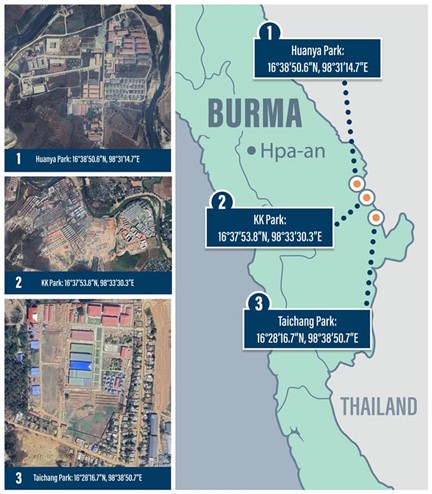
One compound known to have housed cyber scam operations that have targeted and stolen money from Americans is Tai Chang, located near Myawaddy in Burma’s Karen State. The compound is located in territory controlled by the DKBA, an armed group that has supported Burma’s ruling military regime in the country’s civil conflict. The Tai Chang compound was founded by Sai Kyaw Hla, a brigadier general and senior leader of the DKBA, and Trans Asia, a Mae Sot, Thailand-based company that serves as a front for China-based TCOs to invest in scam centers. Trans Asia has also entered into land lease contracts with other entities—including the OFAC-designated KNA and the Burma-based company Troth Star—to develop other scam compounds, including the Huanya compound and the notorious KK Park compound, both located in Myawaddy in Karen State. Scam operators working at these compounds have frequently targeted and stolen money from U.S. persons.
– – –
– – –The DKBA not only provides security for the Tai Chang compound and permits its continued operation, but also actively participates in violence against victims of human trafficking trapped inside the compound. DKBA soldiers have been filmed beating handcuffed scam workers. Rescued victims have claimed that they were subjected to electric shocks, being hung by their arms inside dark rooms, and other brutal treatment. For its participation in these scam operations, the DKBA receives funding that it uses to support its ongoing illicit activities. The DKBA partners with Chinese organized crime on drug, human, arms, and wildlife trafficking, as well as money laundering.
OFAC is designating Trans Asia, Troth Star, the DKBA, and Sai Kyaw Hla pursuant to Executive Order (E.O.) 13694, as further amended by E.O. 13757, E.O. 14144, and E.O. 14306 (“E.O. 13694, as further amended”), for having materially assisted, sponsored, or provided financial, material, or technological support for, or goods or services to or in support of, cyber-enabled activities originating from, or directed by persons located, in whole or substantial part, outside the United States that are reasonably likely to result in, or have materially contributed to, a threat to the national security, foreign policy, or economic health or financial stability of the United States and that have the purpose of or involve causing a misappropriation of funds or economic resources, intellectual property, proprietary or business confidential information, personal identifiers, or financial information for commercial or competitive advantage or private financial gain. OFAC is also designating Trans Asia, Troth Star, the DKBA, and Sai Kyaw Hla pursuant to E.O. 14014 for being responsible for or complicit in, or having directly or indirectly engaged in or attempted to engage in, actions or policies that threaten the peace, security, or stability of Burma.
SENIOR LEADERS OF SCAM-ASSOCIATED ENTITIES
OFAC is also taking action against the senior leaders of DKBA and Trans Asia, who benefit directly from the revenue these scam compounds generate, at the expense of victims inside and outside the compounds. Saw Steel is the commander-in-chief of the DKBA, Saw Sein Win is the adjutant general of the DKBA, and Saw San Aung is the chief of staff of the DKBA. Chamu Sawang, also known as Yu Jianjun, is the director of Trans Asia.
OFAC is designating Saw Steel, Saw Sein Win, and Saw San Aung pursuant to E.O. 13694, as further amended, for being or having been leaders, officials, senior executive officers, or members of the board of directors of the DKBA, a person whose property and interests in property are blocked pursuant to E.O. 13694, as further amended. OFAC is also designating Saw Steel, Saw Sein Win, and Saw San Aung pursuant to E.O. 14014 for being or having been leaders or officials of the DKBA, an entity whose property and interests in property are blocked pursuant to E.O. 14014 as a result of activities related to the leaders’ or official’s tenures.
Additionally, OFAC is designating Chamu Sawang pursuant to E.O. 13694, as further amended, for being or having been a leader, official, senior executive officer, or member of the board of directors of Trans Asia, a person whose property and interests in property are blocked pursuant to E.O. 13694, as further amended. OFAC is also designating Chamu Sawang pursuant to E.O. 14014 for being or having been leaders or officials of Trans Asia, an entity whose property and interests in property are blocked pursuant to E.O. 14014 as a result of activities related to the leader’s or official’s tenure.
SANCTIONS IMPLICATIONS
As a result of today’s action, all property and interests in property of the blocked persons described above that are in the United States or in the possession or control of U.S. persons are blocked and must be reported to OFAC. In addition, any entities that are owned, directly or indirectly, individually or in the aggregate, 50 percent or more by one or more blocked persons are also blocked. Unless authorized by a general or specific license issued by OFAC, or exempt, OFAC’s regulations generally prohibit all transactions by U.S. persons or within (or transiting) the United States that involve any property or interests in property of designated or otherwise blocked persons.
In addition, financial institutions and other persons that engage in certain transactions or activities with the sanctioned entities and individuals may expose themselves to sanctions or be subject to an enforcement action. The prohibitions include the making of any contribution or provision of funds, goods, or services by, to, or for the benefit of any designated person, or the receipt of any contribution or provision of funds, goods, or services from any such person.
Violations of OFAC regulations may result in civil or criminal penalties. OFAC’s Economic Sanctions Enforcement Guidelines provide more information regarding OFAC’s enforcement of U.S. sanctions, including the factors that OFAC generally considers when determining an appropriate response to an apparent violation.
The power and integrity of OFAC sanctions derive not only from OFAC’s ability to designate and add persons to the SDN List, but also from its willingness to remove persons from the SDN List consistent with the law. The ultimate goal of sanctions is not to punish, but to bring about a positive change in behavior. For information concerning the process for seeking removal from an OFAC list, including the SDN List, please refer to OFAC’s Frequently Asked Question 897 here. For detailed information on the process to submit a request for removal from an OFAC sanctions list, please click here.

Glossary
- Asset forfeiture — Asset forfeiture is a legal process where government authorities permanently take money, cryptocurrency, or property that is tied to crime. In the Scam Center Strike Force context, forfeiture targets wallets, accounts, and other assets connected to Southeast Asian scam compounds and their facilitators. When you hear about seizures or forfeiture actions, it means authorities are trying to take back stolen funds so they can eventually be returned to victims.
- Bali scam centers — Bali scam centers are groups of compounds or offices in Indonesia used to run online fraud operations against foreign victims, often directed by organizers based in other countries. These centers may house trafficked or controlled workers who follow scripts to approach and defraud targets, especially Americans. If you are contacted by someone claiming to work in “trading” or “crypto” from Southeast Asia, you may be dealing with a person inside one of these centers.
- Blocked property — Blocked property is any money or asset that is frozen by sanctions so that it cannot be moved, sold, or used. When OFAC adds a person or company to its sanctions list, banks, payment platforms, and businesses must block their funds and report them. If a scammer’s assets are blocked, you may see progress reports about sanctions, even if your personal refund will still take time.
- Chinese transnational criminal organization (TCO) — A Chinese transnational criminal organization is a structured crime network with leaders, financiers, and operators spread across countries, including China and Southeast Asia. These groups organize large “pig-butchering” scams, build scam compounds, and launder stolen funds through global financial systems. When you are targeted from overseas, you may be dealing not with one scammer, but with a TCO that treats fraud as a major business.
- Confidence scam — A confidence scam is a crime where a criminal gains a victim’s trust first, then uses that trust to steal money or information. Pig-butchering, romance-investment scams, and fake crypto coaching all fall into this category because the emotional bond is the main weapon. If someone spends weeks or months building a “relationship” before asking you for money or investments, you are likely facing a confidence scam.
- Crypto investment platform — A crypto investment platform in this context is a website or app that appears to let users trade or invest in digital currencies, but is secretly controlled by scammers. The platform often shows fake profits, charts, and balances to keep victims sending more funds. If you cannot independently verify that a platform is licensed, regulated, and recommended by trusted authorities, you should treat it as unsafe.
- Crypto Seizure team — The Crypto Seizure team is a specialized group within the Scam Center Strike Force that focuses on tracking, freezing, and forfeiting cryptocurrency connected to scams. They use blockchain analysis, court orders, and cooperation with exchanges to intercept stolen assets before they vanish. If your funds were taken in a crypto scam, this is one of the teams working behind the scenes to trace and recover them.
- Democratic Karen Benevolent Army (DKBA) — The Democratic Karen Benevolent Army is an armed group in Burma’s Karen State that controls territory and has been linked to scam compounds such as Tai Chang. According to U.S. sanctions, it provides security, protection, and sometimes direct violence inside these compounds in exchange for revenue from scam operations. If your scam traces back to Myawaddy or Karen State, it may be indirectly funding this group and the civil conflict there.
- Designation (sanctions) — A designation is an official act by a government, such as the U.S. Treasury, that places a person, group, or company on a sanctions list. Once designated, their assets are blocked, and U.S. persons are generally prohibited from doing business with them. When a scam network is designated, it signals that authorities see it as a serious threat and are trying to cut off its money and partners.
- Executive Order 13694 — Executive Order 13694 is a U.S. presidential order that authorizes sanctions against people and entities engaged in harmful cyber activities, including cyber-enabled theft and online fraud. It has been updated to cover groups that steal funds and personal data through scams and cybercrime. When scam-linked organizations are sanctioned under this order, it means their cyber activity is treated as a national security concern, not just ordinary crime.
- Executive Order 14014 — Executive Order 14014 is a U.S. order focused on the situation in Burma, allowing sanctions against people and entities that threaten the peace, security, or stability of the country. It is used to target armed groups and their business partners that profit from scam compounds and human trafficking. If your scam is tied to Burma (Myanmar), this order is one tool used to pressure those who profit from both war and fraud.
- Financial Crimes Enforcement Network (FinCEN) — FinCEN is a bureau of the U.S. Treasury that collects and analyzes financial data to combat money laundering, terrorist financing, and other financial crimes. It issues alerts and rules that help banks and platforms identify patterns such as virtual asset investment scams. When FinCEN warns about a scam pattern, banks may become more cautious about transfers that look similar to what happened in your case.
- Generational wealth transfer — Generational wealth transfer in this context describes the large-scale movement of savings from ordinary families to organized crime through scams. Officials have described scam centers as draining retirement funds, college savings, and family assets built up over decades. When you lose money in these scams, you are not alone, and your loss is part of a much larger pattern that governments are now treating as a major economic threat.
- Huione Group — Huione Group is a Cambodia-based company identified by U.S. authorities as a financial hub for laundering proceeds from cyber scams and even some state-linked hacking. It has been cut off from the U.S. financial system because of its role in moving stolen funds. If your scam involved transfers connected to Cambodia, some of the laundering may have passed through networks similar to or linked with this group.
- Human exploitation in scam centers — Human exploitation in scam centers refers to the trafficking, coercion, and abuse of workers who are forced to carry out scams. Victims can face beatings, electric shocks, threats of forced prostitution, or threats against their families if they refuse to work. When you interact with a scammer online, you may unknowingly be speaking with someone who is also a victim trapped inside such a compound.
- Internet Crime Complaint Center (IC3) — IC3 is the FBI’s official online portal where victims of internet crime, including scams and fraud, can submit complaints. It collects detailed reports that help investigators identify patterns, connect cases, and build larger operations like those run by the Scam Center Strike Force. If you have been scammed, filing a report at ic3.gov is one of the most important steps you can take.
- Interagency cooperation — Interagency cooperation describes multiple government departments and law enforcement agencies working together on complex problems such as transnational scams. In this case, it includes U.S. Attorneys, DOJ divisions, FBI, Secret Service, Treasury, State, Commerce, and foreign partners. When agencies join forces, it increases the chance that the networks that harmed you will be identified, disrupted, and prosecuted.
- Karen National Army (KNA) — The Karen National Army is another armed group in Burma that has been designated as a transnational criminal organization due to its involvement in trafficking and scam operations. It has been linked to scam compounds and companies that host and protect cyber fraud centers. If your scam traces back to Karen State, it may be feeding funds into groups like this that mix armed conflict with organized crime.
- KK Park compound — KK Park is a notorious scam compound near Myawaddy in Burma that became a symbol of cybercrime and forced labor in the region. Reports describe large numbers of trafficked workers forced to run online scams under threat of violence and resale. If your scam involved a person who claimed to be trading from “special zones” near the Thai–Burma border, it might be connected to operations like KK Park.
- Main Street Americans — Main Street Americans refers to ordinary individuals and families who work, save, and invest outside of elite financial circles. Officials have described scam centers as draining wealth from this group through deceptive online schemes. When your life savings are stolen in a pig-butchering scam, you are exactly the type of person this term is meant to protect.
- Money laundering network — A money laundering network is a web of accounts, companies, payment processors, and intermediaries used to disguise the origin of stolen funds. Scam proceeds move through multiple wallets, exchanges, shell companies, and offshore accounts so that the money appears legitimate. If you sent funds through several “steps” or different platforms, you were likely moved through a laundering chain designed to hide the crime.
- Office of Foreign Assets Control (OFAC) — OFAC is the U.S. Treasury office that administers and enforces economic and trade sanctions against targeted countries, groups, and individuals. It maintains the SDN List and issues rules that tell banks and companies which parties they must block. When OFAC sanctions scam-linked groups, it is trying to cut off the financial lifelines that keep the compounds and networks operating.
- Online romance pretext — An online romance pretext is the emotional cover story used by scammers to approach victims, often through dating sites, social media, or messaging apps. The scammer builds a relationship, shares personal stories, and sometimes pretends to plan a future together before introducing “investment opportunities.” If someone you only know online suddenly links love or companionship to money decisions, you are likely facing this pretext.
- Pig-butchering fraud — Pig-butchering fraud is a term used by scammers for long-term schemes where they “fatten up” a victim with fake profits and emotional bonding, then “butcher” them by wiping out their funds. It usually involves fake crypto platforms, false trading dashboards, and constant pressure to reinvest. If you were shown large paper gains and then suddenly blocked from withdrawing your money, this pattern likely matches your experience.
- Prince Group transnational criminal organization — The Prince Group is a Cambodian business conglomerate that has been designated as a transnational criminal organization for operating scam centers and related businesses. According to sanctions, its network of companies provides infrastructure and cover for cyber fraud targeting U.S. and UK victims. If your scam involved Cambodian addresses, luxury developments, or casino-linked operations, it may be connected to entities like this.
- Public–private partnership — Public–Public-private partnership in this setting means government agencies working with private companies, such as social media platforms, telecom firms, and financial institutions. The goal is to block scam communications, shut down fake platforms, and stop transfers faster. When platforms tighten security or warn you about suspicious messages, that is one result of this type of cooperation.
- Scam Center Strike Force — The Scam Center Strike Force is a coordinated U.S. initiative based in the District of Columbia that targets Southeast Asian scam centers and their global financial networks. It combines prosecutors, investigators, cyber specialists, and financial experts to identify leaders, seize assets, and dismantle infrastructure. If your losses are tied to a pig-butchering or similar scam, this is one of the main teams now focused on cases like yours.
- Scam compound — A scam compound is a secured site, often walled and guarded, where dozens or hundreds of people are forced or pressured to work on online scams. These compounds can include dormitories, offices, surveillance systems, and on-site enforcement teams. When you interact with someone who always seems to be online and follows strict scripts, they may be working inside such an environment.
- SDN List (Specially Designated Nationals) — The SDN List is a public list of individuals, companies, and entities whose assets are blocked under U.S. sanctions programs. Banks and other institutions must screen transactions against this list and freeze funds linked to listed parties. If a scammer or their company ends up on the SDN List, it becomes much harder for them to move stolen money through legitimate channels.
- Tai Chang compound — The Tai Chang compound is a scam center near Myawaddy in Burma’s Karen State, operating under the protection of the DKBA and its partners. It has housed cyber scam operations that target Americans through fraudulent investment schemes. If your scam involves references to Myanmar or Karen State, Tai Chang is one example of the type of compound used to run these crimes.
- Trans Asia International Holding Group — Trans Asia International Holding Group is a Mae Sot, Thailand-based company identified by U.S. authorities as a front for Chinese criminal investors in scam centers. It has been linked to land deals and the development of compounds such as Tai Chang, Huanya, and KK Park. If your scam traces to companies with similar profiles near Thai–Burma border towns, they may be playing a similar facilitating role.
- Treasury sanctions — Treasury sanctions are measures imposed by the U.S. Treasury that restrict the financial activities of targeted individuals, companies, or groups. These sanctions can freeze assets, cut off access to the U.S. banking system, and warn the world not to transact with those parties. When you see news about sanctions against scam actors, it means financial pressure is being used as a tool to disrupt the networks that harmed you.
- Virtual asset investment scam — A virtual asset investment scam involves fake or manipulated investments in cryptocurrencies or other digital assets. Scammers build trust, present professional-looking platforms, and then steal deposits rather than investing them. If you were told to move money into a “special” or “exclusive” crypto platform that was not recognized by major regulators or exchanges, you were likely targeted by this type of scam.
- Victim restitution — Victim restitution is the legal process of returning money or providing financial compensation to people who have suffered losses from crime. In scam cases, restitution can come from seized assets, forfeited cryptocurrency, or court-ordered payments from convicted offenders. If you report your case and cooperate with investigators, you increase the chance of being included in future restitution efforts, even if recovery is not guaranteed.
Reference
Cyber Sanctions
The U.S. Department of State works with the U.S. Department of the Treasury and other U.S. government agencies to identify individuals and entities whose conduct meets the criteria set forth in the sanctions authorities listed below, and designate them for sanctions under the delegated authority of the Treasury’s Office of Foreign Assets Control (OFAC). Persons designated under this authority are added to OFAC’s list of Specially Designated Nationals and Blocked Persons (SDN List).
In Executive Order 13694 , issued on April 1, 2015, the President declared a national emergency to deal with the unusual and extraordinary threat to the national security, foreign policy and economy of the United States constituted by the increasing prevalence and severity of malicious cyber-enabled activities originating from, or directed by persons located, in whole or in substantial part, outside the United States. E.O. 13694 authorized sanctions on individuals and entities responsible for or complicit in certain malicious cyber-enabled activities.
Executive Order 13757 was issued on December 28, 2016, and amends E.O. 13694 to additionally authorize sanctions on individuals and entities related to interfering with or undermining elections processes or institution.
Author Biographies
-/ 30 /-
What do you think about this?
Please share your thoughts in a comment below!
Table of Contents


Rapid Report Scammers

In the U.S. & Canada
U.S. & Canada Suicide Lifeline 988
LEAVE A COMMENT?
Recent Comments
On Other Articles
- Wendy Guiher on 15 Things That Nearly Every Online and Phone Scams Have In Common – 2026: “Very concise, direct information. When I look back on the crime against me I now can see ALL of the…” Apr 1, 06:24
- on The Danger of Using AI in Law Enforcement – The Grandmother Wrongly Arrested as a Fraudster – 2026: “Excellent article – I can’t imagine the terror Angela most certainly experienced. Compound this with the lack of accountability by…” Mar 24, 09:20
- on The Crazy Gregor MacGregor and the Country of Poyais Scam – History of Scams – 2026: “interesting” Mar 23, 19:24
- on BEC Fraud Reaches $43 Billion Per Year: “oh my gosh so much of an increase in the fraud I pray the officials can continue tracking and make…” Mar 23, 15:09
- on Establishing The United States Task Force To Eliminate Fraud – 2026: “Make Online Safe Again!” Mar 17, 19:11
- on Establishing The United States Task Force To Eliminate Fraud – 2026: “Finally an administration takes the initiative to help solve the gigantic situation. Make America Safe Again, thank you!” Mar 17, 15:41
- on What Is The Difference Between A Scam Victim And A Scam Survivor? [Updated]: “Due to my scams I don’t fully trust anyone online and I shouldn’t even those people I knew in high…” Mar 7, 12:46
- on SCARS 3 Steps For New Scam Victims 2024: “I was very fearful “he” would come to my home because I was knew my address, I spoke to someone…” Mar 7, 09:50
- on Sadness & Scam Recovery: “Before my scam, my mom passed away and I got a divorce, so I was dealing with the loss of…” Mar 7, 09:37
- on The Story Of Kira Lee Orsag (aka Dani Daniels) [Updated]: “There is NO evidence and she is not, she is a victim too. Sebastian, stop letting your anger think for…” Mar 6, 23:18
ARTICLE META
Important Information for New Scam Victims
- Please visit www.ScamVictimsSupport.org – a SCARS Website for New Scam Victims & Sextortion Victims
- Enroll in FREE SCARS Scam Survivor’s School now at www.SCARSeducation.org
- Please visit www.ScamPsychology.org – to more fully understand the psychological concepts involved in scams and scam victim recovery
If you are looking for local trauma counselors please visit counseling.AgainstScams.org or join SCARS for our counseling/therapy benefit: membership.AgainstScams.org
If you need to speak with someone now, you can dial 988 or find phone numbers for crisis hotlines all around the world here: www.opencounseling.com/suicide-hotlines
A Note About Labeling!
We often use the term ‘scam victim’ in our articles, but this is a convenience to help those searching for information in search engines like Google. It is just a convenience and has no deeper meaning. If you have come through such an experience, YOU are a Survivor! It was not your fault. You are not alone! Axios!
A Question of Trust
At the SCARS Institute, we invite you to do your own research on the topics we speak about and publish, Our team investigates the subject being discussed, especially when it comes to understanding the scam victims-survivors experience. You can do Google searches but in many cases, you will have to wade through scientific papers and studies. However, remember that biases and perspectives matter and influence the outcome. Regardless, we encourage you to explore these topics as thoroughly as you can for your own awareness.
Statement About Victim Blaming
SCARS Institute articles examine different aspects of the scam victim experience, as well as those who may have been secondary victims. This work focuses on understanding victimization through the science of victimology, including common psychological and behavioral responses. The purpose is to help victims and survivors understand why these crimes occurred, reduce shame and self-blame, strengthen recovery programs and victim opportunities, and lower the risk of future victimization.
At times, these discussions may sound uncomfortable, overwhelming, or may be mistaken for blame. They are not. Scam victims are never blamed. Our goal is to explain the mechanisms of deception and the human responses that scammers exploit, and the processes that occur after the scam ends, so victims can better understand what happened to them and why it felt convincing at the time, and what the path looks like going forward.
Articles that address the psychology, neurology, physiology, and other characteristics of scams and the victim experience recognize that all people share cognitive and emotional traits that can be manipulated under the right conditions. These characteristics are not flaws. They are normal human functions that criminals deliberately exploit. Victims typically have little awareness of these mechanisms while a scam is unfolding and a very limited ability to control them. Awareness often comes only after the harm has occurred.
By explaining these processes, these articles help victims make sense of their experiences, understand common post-scam reactions, and identify ways to protect themselves moving forward. This knowledge supports recovery by replacing confusion and self-blame with clarity, context, and self-compassion.
Additional educational material on these topics is available at ScamPsychology.org – ScamsNOW.com and other SCARS Institute websites.
Psychology Disclaimer:
All articles about psychology and the human brain on this website are for information & education only
The information provided in this article is intended for educational and self-help purposes only and should not be construed as a substitute for professional therapy or counseling.
While any self-help techniques outlined herein may be beneficial for scam victims seeking to recover from their experience and move towards recovery, it is important to consult with a qualified mental health professional before initiating any course of action. Each individual’s experience and needs are unique, and what works for one person may not be suitable for another.
Additionally, any approach may not be appropriate for individuals with certain pre-existing mental health conditions or trauma histories. It is advisable to seek guidance from a licensed therapist or counselor who can provide personalized support, guidance, and treatment tailored to your specific needs.
If you are experiencing significant distress or emotional difficulties related to a scam or other traumatic event, please consult your doctor or mental health provider for appropriate care and support.
Also read our SCARS Institute Statement about Professional Care for Scam Victims – click here to go to our ScamsNOW.com website.

Thank you for your comment. You may receive an email to follow up. We never share your data with marketers.