




SCARS Institute’s Encyclopedia of Scams™ Published Continuously for 25 Years


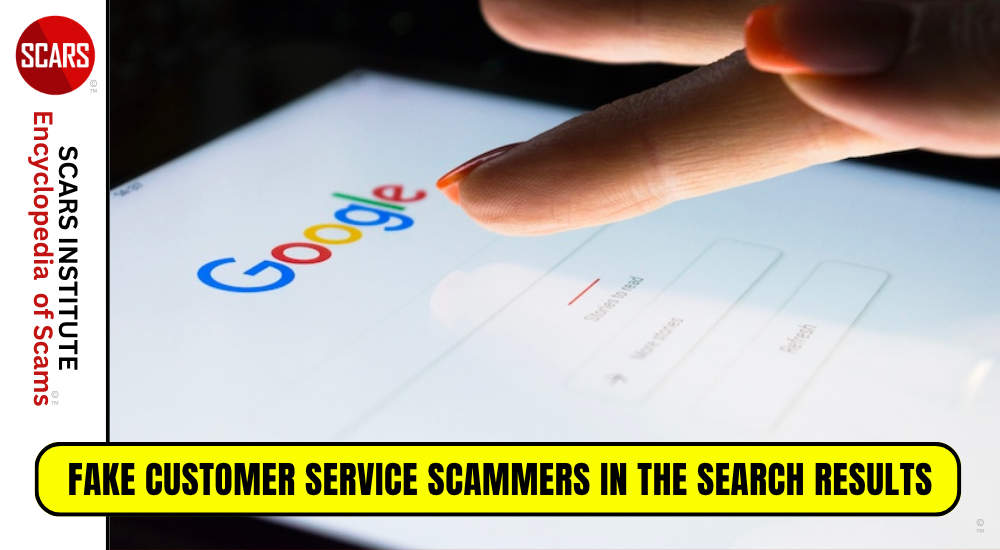
Fake Customer Service Scammers in the Search Results
The Digital Deception: How Fake Customer Service Numbers Are Hijacking Search Results
Catalog of Scams / How Scams Work – A SCARS Institute Insight
Authors:
• SCARS Institute Encyclopedia of Scams Editorial Team – Society of Citizens Against Relationship Scams Inc.
See Author Biographies Below
Article Abstract
Fake customer service number scams exploit moments of urgency by placing fraudulent contact information in search results and advertisements, redirecting consumers to criminal call centers that impersonate legitimate companies. These operations use sophisticated tactics, including search engine manipulation, professional scripts, and emerging technologies such as VoIP and artificial intelligence, to gain trust and extract sensitive financial and personal data. Victims often experience significant financial loss, identity compromise, and prolonged recovery challenges. The scale of the problem is substantial, with billions lost annually to imposter scams. Efforts by companies, search engines, and regulators face ongoing limitations due to the global and adaptive nature of these schemes, requiring increased consumer vigilance, improved verification systems, and broader digital literacy to reduce risk.

The Digital Deception: How Fake Customer Service Numbers Are Hijacking Search Results
In the digital world where convenience reigns supreme, a sinister trend has emerged that preys on consumers at their most vulnerable moments. Fake customer service numbers, strategically placed in search results and advertisements, are routing unsuspecting individuals to sophisticated fraudulent call centers staffed by criminals posing as legitimate support agents. This growing epidemic represents not just a threat to individual consumers but raises fundamental questions about the reliability of our digital information ecosystem.
The Anatomy of a Modern Scam
The scenario typically unfolds when something goes wrong, a credit card is declined, a flight is delayed, a payment fails, or an online account becomes locked. In these moments of stress and urgency, consumers instinctively turn to search engines for quick solutions. What they don’t realize is that criminals have anticipated this exact behavior and positioned themselves perfectly to exploit it.
These fraudulent operations are remarkably sophisticated. Scammers purchase sponsored search results that appear at the top of Google, Bing, and other search platforms, carefully crafting their advertisements to mimic legitimate company branding. They employ search engine optimization techniques to ensure their fake numbers rank prominently in organic search results as well. When a frustrated customer dials these numbers, they’re connected not to the actual company but to fraudsters working from call centers that may be located anywhere in the world.
Once connected, the scam follows a carefully choreographed script. The “customer service representative” speaks professionally, uses industry-specific terminology, and may even reference real company policies to establish credibility. They often begin by “verifying” the customer’s identity, requesting personal information that they will later use for fraudulent purposes. Before the victim realizes what’s happening, they’ve been asked for credit card numbers, social security numbers, online banking credentials, or other sensitive financial information.
The Psychology Behind the Scam’s Success
What makes these scams particularly effective is their exploitation of human psychology. When facing a problem with a financial account or travel plans, people are naturally anxious and eager for a quick resolution. This emotional state makes them less likely to notice subtle warning signs or question inconsistencies in the conversation.
The scammers reinforce this dynamic by creating a sense of urgency. They might claim that the problem needs immediate attention or that a special offer is time-limited. They may also use intimidation tactics, suggesting that failure to act quickly could result in account suspension or additional fees. These psychological triggers override the victim’s critical thinking skills and increase compliance with requests for personal information.
The professional demeanor of the fraudsters further lowers defenses. Many victims report that the scammers were polite, patient, and seemed genuinely concerned about resolving their issues. This performance creates a cognitive dissonance that makes it difficult for victims to reconcile the helpful behavior with the malicious intent behind it.
The Technology Enabling Deception
The technical infrastructure supporting these scams has become increasingly sophisticated. Fraudsters use Voice over Internet Protocol (VoIP) technology that allows them to route calls through various countries, making tracing and enforcement nearly impossible. They employ automated systems that can handle high call volumes and route victims to specialized “agents” based on the type of service being impersonated.
Perhaps most disturbingly, these operations have begun leveraging artificial intelligence to enhance their deception. AI-powered voice synthesis can create remarkably convincing speech patterns that match the regional accents of legitimate call centers. Natural language processing allows scammers to respond more dynamically to customer inquiries rather than relying strictly on scripts. Some operations have even implemented AI systems that can generate realistic company-specific email addresses and chat interfaces to further establish legitimacy.
The manipulation of search results represents another technical challenge. Through black hat SEO techniques, fraudulent websites achieve high rankings by exploiting search algorithm vulnerabilities. They may create hundreds of doorway pages that redirect to their scam numbers, or employ link schemes that artificially boost their domain authority. Despite efforts by search engines to combat these practices, the cat-and-mouse game continues.
Real Victims, Real Consequences
The impact of these scams extends far beyond theoretical concerns. Consider the case of of a U.S. victim, a 34, year, old teacher from Ohio who discovered her credit card was declined while purchasing groceries. After a quick search for her bank’s customer service number, she called what appeared to be the legitimate support line and spoke with a “representative” who helped her “reactivate” her account. Two hours later, she discovered $3,000 had been transferred from her savings account to an overseas destination.
Or the experience of a U.S. family, whose flight was canceled due to weather. The number they found online connected them with scammers who promised rebooking assistance but instead collected their credit card information and charged them $800 for non-existent tickets. When they arrived at the airport, they learned not only had they been scammed, but their original booking status had been manipulated, leaving them without any flight options at all.
These stories represent just the tip of the iceberg. The Federal Trade Commission reports that imposter scams resulted in over $2.3 billion in losses in 2023, with fake customer service numbers representing a growing percentage of these cases. Beyond financial losses, victims often face lengthy battles to recover their identities, repair their credit, and regain trust in digital systems.
The Corporate Response Challenge
Legitimate companies find themselves in an increasingly difficult position. They must balance accessibility with security, knowing that every customer service number they publish potentially becomes a target for scammers. Some have implemented verification systems where customers receive one-time codes via text or email to confirm they’re speaking with actual representatives. Others have invested heavily in public education campaigns to help customers identify authentic communication channels.
However, these efforts face significant limitations. Scammers quickly adapt to new security measures, often incorporating information about verification processes into their scripts to appear more legitimate. Companies also struggle with the global nature of these scam operations; fraudulent call centers can be located in jurisdictions with limited law enforcement cooperation or weak regulations.
Perhaps most challenging is the fact that companies ultimately bear some responsibility for their customers’ negative experiences, even when those experiences result from third-party fraud. A customer who has been scammed while seeking help is unlikely to distinguish between the actual company and the fraudsters who impersonated them, leading to damaged brand reputation and loss of trust.
The Search Engine Dilemma
Search engines, like Google, find themselves at the center of this controversy, serving as the primary gateway through which many victims encounter these scams. Companies like Google and Microsoft have implemented sophisticated systems to detect and remove fraudulent listings, but the scale of the challenge is unimaginably immense. With billions of searches performed every hour and new scam operations constantly emerging, manual review processes cannot keep pace.
The rise of AI, generated search results, and overviews adds another layer of complexity. These systems may inadvertently incorporate information from fraudulent sources when generating responses, lending additional credibility to fake customer service numbers. The black box nature of many AI systems makes it difficult to audit how they determine which sources to trust or how they weigh different types of information.
Search engines face a fundamental tension between providing comprehensive results and protecting users from harm. Aggressive filtering might reduce the incidence of scams but could also limit access to legitimate information. Conversely, more open systems increase exposure to fraudulent content. Finding the right balance remains an ongoing challenge that requires continuous refinement of detection algorithms and human review processes.
Regulatory and Legal Frameworks
The legal landscape surrounding these scams is complex and fragmented. In the United States, various agencies have jurisdiction over different aspects of the problem. The Federal Trade Commission addresses deceptive practices, the Federal Communications Commission regulates telecommunications fraud, and the Department of Justice prosecutes criminal cases. However, coordination between these agencies can be challenging, and jurisdictional issues often arise when perpetrators operate overseas.
Recent legislation has attempted to address the problem more directly. The STOP Act, passed in 2023, increased penalties for telecommunications fraud and established a national database for reporting fraudulent numbers. The Consumer Online Privacy Rights Act (COPRA) includes provisions requiring companies to implement more robust verification systems for customer interactions.
Despite these efforts, enforcement remains difficult. The anonymous nature of digital fraud, combined with international jurisdictional challenges, makes the prosecution of perpetrators rare. Many victims find themselves with limited legal recourse, particularly when the financial losses are relatively small compared to the costs of pursuing legal action.
Protecting Yourself in a Dangerous Digital Landscape
For consumers navigating this treacherous environment, vigilance is essential. Cybersecurity experts recommend several protective measures:
- Bookmark (in your browser) official customer service numbers directly from company websites rather than searching for them when problems arise.
- Be skeptical of sponsored search results, especially those appearing at the top of search pages during urgent situations.
- Never provide sensitive information like social security numbers or full banking credentials over the phone unless you initiated the call using a verified number.
- Legitimate companies will typically not ask for passwords, PINs, or full credit card numbers during customer service calls.
- If something feels wrong about a customer service interaction, hang up and call back using an official number from a trusted source.
- Consider using alternative contact methods like official mobile apps or in-person visits when dealing with sensitive account issues.
- Report suspected fraudulent numbers to both the company being impersonated and the appropriate regulatory agencies.
The Path Forward
Addressing the challenge of fake customer service numbers requires a more direct approach involving technological innovation, regulatory reform, and consumer education. Technologists are developing new verification systems that use cryptographic methods to confirm the authenticity of customer service interactions. Some companies are experimenting with blockchain-based identity verification that could make impersonation significantly more difficult.
Regulatory efforts are increasingly focusing on holding platforms accountable for fraudulent content, potentially requiring search engines and social media platforms to implement more robust verification systems for business listings. International cooperation is also improving, with cross-border task forces targeting the infrastructure that supports these scams.
Consumer education initiatives are helping raise awareness about the risks of relying on search results during urgent situations. Some financial institutions now include warnings about phone scams in their regular customer communications.
Conclusion: A New Digital Literacy Imperative
The proliferation of fake customer service numbers represents more than just another type of internet scam; it highlights fundamental vulnerabilities in our increasingly digital information ecosystem. As we delegate more of our problem-solving to search engines and AI systems, we must develop new forms of digital literacy that account for the possibility of manipulation and deception.
The convenience of instant information comes with inherent risks that require both individual vigilance and systemic solutions. While technological and regulatory measures can help address part of the problem, the ultimate defense lies in developing a critical approach to digital interactions that questions rather than trusts, verifies rather than assumes, and prioritizes security over speed when facing urgent problems.
In this new landscape, the old adage “trust but verify” has never been more relevant. By understanding the tactics employed by scammers and adopting more cautious approaches to customer service interactions, consumers can protect themselves while still enjoying the benefits of our digitally connected world. The challenge for companies, regulators, and technology providers is to create systems that maintain accessibility while implementing the safeguards necessary to prevent malicious actors from exploiting the very systems designed to help us in our moments of need.

Glossary
- AI-Generated Communication Interfaces — AI-generated communication interfaces include fake email systems and chat platforms that mimic legitimate company communication channels. These interfaces enhance the illusion of authenticity. Victims may trust these channels due to their professional appearance. This increases the effectiveness of the scam.
- Artificial Intelligence Voice Synthesis — Artificial intelligence voice synthesis refers to technology used by scammers to generate realistic human speech that mimics legitimate customer service agents. This technology allows fraudsters to sound credible and regionally appropriate, reducing suspicion during phone interactions. Victims may feel reassured by the natural tone and pacing of the voice, which increases trust. This deception makes it more difficult to detect fraud during real-time conversations.
- Automated Call Routing Systems — Automated call routing systems are used by fraudulent call centers to direct victims to specialized agents based on the type of service being impersonated. These systems create the impression of a structured and professional organization. Victims may believe they are interacting with legitimate departments due to seamless transfers. This reinforces the illusion of authenticity and prolongs engagement with scammers.
- Black Hat SEO Techniques — Black hat SEO techniques refer to manipulative strategies used to artificially boost the ranking of fraudulent websites in search engine results. These tactics exploit weaknesses in search algorithms to increase visibility. Victims searching for help may unknowingly encounter these fraudulent listings first. This positioning increases the likelihood of engagement with scam operations.
- Brand Reputation Damage from Impersonation — Brand reputation damage from impersonation occurs when victims associate fraudulent experiences with legitimate companies. Victims may lose trust in the company despite it not being directly responsible. This can impact customer relationships and loyalty. Companies face challenges in restoring trust.
- Cognitive Dissonance in Scam Interaction — Cognitive dissonance occurs when victims experience a conflict between the perceived helpfulness of a scammer and the underlying fraudulent intent. This internal conflict creates confusion and delays recognition of the scam. Victims may rationalize the interaction because the scammer appears professional and supportive. This psychological tension increases vulnerability and prolongs exposure to manipulation.
- Consumer Urgency Response — Consumer urgency response describes the tendency to seek immediate solutions during stressful situations, such as account issues or travel disruptions. This heightened urgency reduces critical evaluation of information sources. Victims may prioritize speed over verification when searching for customer service assistance. This behavior creates an opportunity for scammers to intercept and exploit the interaction.
- Credit Card Reactivation Scam — A credit card reactivation scam involves fraudsters posing as legitimate representatives who claim to restore access to a declined or locked card. Victims are asked to provide sensitive information under the pretense of resolving the issue. This information is then used to conduct unauthorized transactions. The scam exploits trust in financial institutions and the urgency to regain access.
- Cross-Border Fraud Jurisdiction Challenges — Cross-border fraud jurisdiction challenges arise when scammers operate from countries with limited legal cooperation. Law enforcement agencies face difficulties pursuing cases across jurisdictions. Victims may have limited legal recourse. This complexity contributes to the persistence of these scams.
- Cryptographic Verification Systems — Cryptographic verification systems are emerging technologies designed to confirm the authenticity of customer service interactions. These systems use secure digital methods to validate identity and communication channels. Their purpose is to reduce impersonation risks in digital environments. Adoption of these systems may improve consumer protection against fraudulent contacts.
- Customer Service Channel Spoofing — Customer service channel spoofing involves creating fake communication pathways that appear identical to legitimate ones. This includes phone numbers, emails, and chat systems. Victims may not detect the difference. This tactic is central to impersonation scams.
- Digital Information Ecosystem Vulnerability — Digital information ecosystem vulnerability refers to weaknesses in online systems that allow fraudulent content to appear alongside legitimate information. Search engines, advertisements, and AI-generated content can inadvertently amplify deceptive sources. Victims rely on these systems for accurate information during urgent situations. These vulnerabilities create entry points for large-scale scam operations.
- Digital Literacy Deficit — Digital literacy deficit refers to a lack of awareness about how online systems can be manipulated. Victims may not recognize the warning signs of fraud. This gap increases susceptibility to scams. Improving digital literacy is essential for prevention.
- Doorway Pages — Doorway pages are web pages created specifically to rank highly in search engines and redirect users to fraudulent content. These pages often contain minimal or misleading information. Victims may not realize they have been redirected to a scam operation. This technique increases exposure to fake customer service numbers.
- Emotional Manipulation Through Intimidation — Emotional manipulation through intimidation involves scammers using threats such as account suspension or financial penalties to pressure victims. This tactic increases fear and urgency, reducing critical thinking. Victims may comply quickly to avoid perceived consequences. This strategy is highly effective in accelerating decision-making under stress.
- Fraudulent Call Center Operations — Fraudulent call center operations are organized groups of scammers who impersonate legitimate companies through phone interactions. These centers often operate internationally and handle large volumes of calls. Agents are trained to follow scripts that mimic real customer service procedures. This structure enhances the credibility and scalability of the scam.
- Fraudulent Rebooking Scam — Fraudulent rebooking scam involves scammers offering to rebook travel arrangements after cancellations. Victims provide payment information for non-existent services. This results in financial loss and disrupted travel plans. The scam exploits urgency and trust in travel providers.
- Identity Verification Pretext — Identity verification pretext refers to the initial step scammers use to request personal information under the guise of confirming a customer’s identity. This process appears routine and legitimate to victims. Once information is provided, it can be used for identity theft or financial fraud. This tactic is central to many customer service impersonation scams.
- Impersonation of Legitimate Branding — Impersonation of legitimate branding involves copying company logos, language, and communication styles to appear authentic. Scammers use these elements in advertisements and conversations to build trust. Victims may not distinguish between real and fake sources. This increases the likelihood of engagement and compliance.
- International Call Routing — International call routing allows scammers to operate across borders using VoIP technology. Calls can be routed through multiple countries to obscure origin. This complicates law enforcement efforts and makes tracing difficult. Victims may have no indication that the call originates from a fraudulent source.
- Information Verification Failure — Information verification failure occurs when individuals do not confirm the authenticity of contact information before acting. This often happens during stressful situations. Victims may assume accuracy based on search results. This failure increases vulnerability to scams.
- Link Scheme Manipulation — Link scheme manipulation involves creating networks of links between fraudulent websites to artificially increase their authority in search rankings. This technique exploits search engine algorithms. Higher rankings increase visibility to victims. This manipulation strengthens the effectiveness of fraudulent listings.
- Natural Language Processing Exploitation — Natural language processing is used by scammers to generate dynamic and context-aware responses during conversations. This allows fraudsters to move beyond scripted interactions. Victims may perceive the interaction as genuine and responsive. This adaptability increases the success rate of scams.
- Online Banking Credential Theft — Online banking credential theft occurs when victims provide login information during fraudulent interactions. Scammers use these credentials to access financial accounts and transfer funds. This can result in immediate and significant financial loss. Victims may not realize the breach until after unauthorized transactions occur.
- Organic Search Result Manipulation — Organic search result manipulation refers to the process of influencing unpaid search listings to promote fraudulent content. Scammers optimize their websites to appear credible and relevant. Victims may trust these results more than advertisements. This increases the effectiveness of the scam.
- Overreliance on Search Engines — Overreliance on search engines describes the tendency to depend on online search for immediate solutions without verification. This behavior increases exposure to fraudulent listings. Victims may assume top results are trustworthy. This assumption is frequently exploited by scammers.
- Platform Accountability Gap — Platform accountability gap refers to the limited responsibility of search engines and platforms in preventing fraudulent listings. Despite detection efforts, many scams remain visible. Victims may rely on these platforms for accurate information. This gap contributes to ongoing exposure.
- Professional Scripted Interaction — Professional scripted interaction involves scammers using rehearsed dialogue that mirrors legitimate customer service conversations. This includes technical language and structured problem-solving steps. Victims may feel reassured by the familiarity of the interaction. This reduces suspicion and prolongs engagement.
- Psychological Trigger Exploitation — Psychological trigger exploitation refers to the deliberate use of urgency, fear, and reassurance to influence victim behavior. These triggers override rational decision-making processes. Victims may act quickly without verifying information. This tactic increases compliance with fraudulent requests.
- Real-Time Crisis Exploitation — Real-time crisis exploitation occurs when scammers target individuals during moments of immediate stress, such as travel disruptions or financial issues. Victims are more vulnerable to manipulation during these situations. The need for quick resolution reduces caution. This timing significantly increases scam success rates.
- Regulatory Fragmentation — Regulatory fragmentation describes the division of authority among multiple agencies addressing different aspects of fraud. Coordination challenges can delay enforcement actions. Victims may experience inconsistent support. This fragmentation complicates comprehensive responses to scams.
- Scam Call Script Engineering — Scam call script engineering involves designing structured conversations that guide victims through stages of trust-building and data extraction. These scripts incorporate psychological triggers and realistic dialogue. Victims may follow the process without suspicion. This structured approach increases success rates.
- Search Engine Advertisement Abuse — Search engine advertisement abuse involves purchasing paid ad placements that mimic legitimate company listings. These ads often appear at the top of search results. Victims may assume these listings are verified. This placement increases the likelihood of engagement with fraudulent numbers.
- Search Engine Ranking Manipulation — Search engine ranking manipulation includes various tactics used to elevate fraudulent content in search results. These tactics exploit algorithmic weaknesses. Higher ranking increases visibility and trust. This manipulation is central to the success of these scams.
- Search Result Credibility Assumption — Search result credibility assumption refers to the belief that top-ranked results are trustworthy. Victims may not question the legitimacy of these listings. This assumption is exploited by scammers. It increases engagement with fraudulent content.
- Security Verification Adaptation by Scammers — Security verification adaptation by scammers involves incorporating knowledge of legitimate security practices into fraudulent interactions. Scammers reference verification steps to appear credible. Victims may feel reassured by familiar processes. This adaptation enhances deception.
- Sensitive Data Extraction — Sensitive data extraction refers to the process of collecting personal and financial information from victims during fraudulent interactions. This data includes social security numbers, credit card details, and banking credentials. Scammers use this information for financial gain. Victims may not realize the extent of the data collected.
- Sponsored Search Result Placement — Sponsored search result placement allows scammers to position fraudulent listings prominently through paid advertising. These results often appear before organic listings. Victims may not distinguish between paid and legitimate results. This increases exposure to fraudulent contact information.
- Systemic Digital Trust Erosion — Systemic digital trust erosion describes the gradual decline in confidence in online systems due to repeated exposure to fraud. Victims may become distrustful of digital interactions. This erosion affects broader engagement with technology. Rebuilding trust becomes a significant challenge.
- Telephone-Based Impersonation Fraud — Telephone-based impersonation fraud involves scammers posing as legitimate representatives during phone calls. This method relies on voice interaction to build trust. Victims may feel reassured by direct communication. This increases the effectiveness of the deception.
- Transaction Diversion — Transaction diversion occurs when scammers redirect legitimate financial transactions to fraudulent accounts. Victims believe they are completing a valid transaction. Funds are transferred to accounts controlled by criminals. Recovery of these funds is often difficult or impossible.
- Trust Manipulation Through Politeness — Trust manipulation through politeness involves scammers using courteous and patient communication to build rapport. Victims may interpret politeness as sincerity and professionalism. This lowers defenses and increases compliance. The tactic reinforces the illusion of legitimacy.
- Verification Code Authentication Systems — Verification code authentication systems are used by legitimate companies to confirm identity during interactions. Scammers may reference these systems to appear credible. Victims may believe the interaction is secure. This tactic blurs the line between real and fraudulent processes.
- Voice over Internet Protocol Fraud — Voice over Internet Protocol fraud involves using internet-based calling systems to conduct scams. This technology allows flexibility and anonymity for scammers. Calls can originate from anywhere in the world. This makes detection and enforcement challenging.
- Vulnerability During Financial Distress — Vulnerability during financial distress describes the increased susceptibility to scams when individuals face financial problems. Stress reduces critical thinking and increases urgency. Victims may prioritize immediate solutions over verification. This creates ideal conditions for exploitation.
- Website Redirection Schemes — Website redirection schemes involve automatically sending users from one webpage to another without a clear indication. These redirects often lead to fraudulent contact information. Victims may not realize the transition has occurred. This technique increases engagement with scams.
-/ 30 /-
What do you think about this?
Please share your thoughts in a comment below!
Table of Contents



Rapid Report Scammers

In the U.S. & Canada

U.S. & Canada Suicide Lifeline 988
LEAVE A COMMENT?
Recent Comments
On Other Articles
- SCARS Institute Editorial Team on Dr. Bradley Schaeffer – Another Stolen Identity Used To Scam Women: “Eliza, do you understand that you are not in a relationship with him? You are being scammed by a fake…” Jul 19, 19:40
- on Dr. Bradley Schaeffer – Another Stolen Identity Used To Scam Women: “IK MIS JE MIJN AANSTAANE BEL ME” Jul 13, 08:22
- on SPOT THE SCAMMERS GAME • AVOID GETTING SCAMMED AGAIN – 2026: “This was quite fun, strangely haha. I really enjoyed playing it and only missed 2 red flags. Next time I…” Jul 2, 00:49
- on Briana Lee – Impersonation Victim – Stolen Photos Used By Scammers – [UPDATED 2024]: “Sadly, Mr. Stranger, the path you are on can lead to significant mental dysfunction and disorders. Hate only destroys you…” Jun 23, 02:42
- on Scam Victims Still Do Not Report: “You are, sadly, speaking with a scammer. An impersonator. Stephen Murphy does not have an accent. Block the accounts you…” Jun 23, 02:41
- on Scam Victims Still Do Not Report: “Hi have been speaking to Stephen Murphy USA Navy, Military, since September 2018. He has a Spanish Accent by birth,…” Jun 16, 05:54
- on Briana Lee – Impersonation Victim – Stolen Photos Used By Scammers – [UPDATED 2024]: “I’m gonna find Miss xxx Acra in Ghana. And whoever it is will PAY! Justice system does nothing.” Jun 12, 15:17
- on The Persistence of Danielle Delaunay as a Fake Identity – 2026: “That was the woman they used with me!! They were able to send a video of her talking on one…” Jun 2, 16:02
- on The Persistence of Danielle Delaunay as a Fake Identity – 2026: “That’s sad but they do a lot” Jun 2, 14:39
- on Major General William Burke Garrett III – Another Stolen Identity Used To Scam Women: “I am from Guatemala. I was contacted by William Barret two weeks ago, who mentioned that he was a widower…” May 21, 17:13
ARTICLE META
Important Information for New Scam Victims
- Please visit www.ScamVictimsSupport.org – a SCARS Website for New Scam Victims & Sextortion Victims
- Enroll in FREE SCARS Scam Survivor’s School now at www.SCARSeducation.org
- Please visit www.ScamPsychology.org – to more fully understand the psychological concepts involved in scams and scam victim recovery
If you are looking for local trauma counselors please visit counseling.AgainstScams.org or join SCARS for our counseling/therapy benefit: membership.AgainstScams.org
If you need to speak with someone now, you can dial 988 or find phone numbers for crisis hotlines all around the world here: www.opencounseling.com/suicide-hotlines
A Note About Labeling!
We often use the term ‘scam victim’ in our articles, but this is a convenience to help those searching for information in search engines like Google. It is just a convenience and has no deeper meaning. If you have come through such an experience, YOU are a Survivor! It was not your fault. You are not alone! Axios!
A Question of Trust
At the SCARS Institute, we invite you to do your own research on the topics we speak about and publish, Our team investigates the subject being discussed, especially when it comes to understanding the scam victims-survivors experience. You can do Google searches but in many cases, you will have to wade through scientific papers and studies. However, remember that biases and perspectives matter and influence the outcome. Regardless, we encourage you to explore these topics as thoroughly as you can for your own awareness.
Statement About Victim Blaming
SCARS Institute articles examine different aspects of the scam victim experience, as well as those who may have been secondary victims. This work focuses on understanding victimization through the science of victimology, including common psychological and behavioral responses. The purpose is to help victims and survivors understand why these crimes occurred, reduce shame and self-blame, strengthen recovery programs and victim opportunities, and lower the risk of future victimization.
At times, these discussions may sound uncomfortable, overwhelming, or may be mistaken for blame. They are not. Scam victims are never blamed. Our goal is to explain the mechanisms of deception and the human responses that scammers exploit, and the processes that occur after the scam ends, so victims can better understand what happened to them and why it felt convincing at the time, and what the path looks like going forward.
Articles that address the psychology, neurology, physiology, and other characteristics of scams and the victim experience recognize that all people share cognitive and emotional traits that can be manipulated under the right conditions. These characteristics are not flaws. They are normal human functions that criminals deliberately exploit. Victims typically have little awareness of these mechanisms while a scam is unfolding and a very limited ability to control them. Awareness often comes only after the harm has occurred.
By explaining these processes, these articles help victims make sense of their experiences, understand common post-scam reactions, and identify ways to protect themselves moving forward. This knowledge supports recovery by replacing confusion and self-blame with clarity, context, and self-compassion.
Additional educational material on these topics is available at ScamPsychology.org – ScamsNOW.com and other SCARS Institute websites.
Psychology Disclaimer:
All articles about psychology and the human brain on this website are for information & education only
The information provided in this article is intended for educational and self-help purposes only and should not be construed as a substitute for professional therapy or counseling.
While any self-help techniques outlined herein may be beneficial for scam victims seeking to recover from their experience and move towards recovery, it is important to consult with a qualified mental health professional before initiating any course of action. Each individual’s experience and needs are unique, and what works for one person may not be suitable for another.
Additionally, any approach may not be appropriate for individuals with certain pre-existing mental health conditions or trauma histories. It is advisable to seek guidance from a licensed therapist or counselor who can provide personalized support, guidance, and treatment tailored to your specific needs.
If you are experiencing significant distress or emotional difficulties related to a scam or other traumatic event, please consult your doctor or mental health provider for appropriate care and support.
Also read our SCARS Institute Statement about Professional Care for Scam Victims – click here to go to our ScamsNOW.com website.


Thank you for your comment. You may receive an email to follow up. We never share your data with marketers.