



SCARS Institute’s Encyclopedia of Scams™ Published Continuously for 25 Years
Scam Victim Sets Precident: Victims Can Sue Banks For Failing To Stop Scams!
Fraud Victim Wins Right To Sue Their Bank!
Should a bank be held accountable for failing to warn a customer about a fraud scheme?
️A Canadian fraud victim wins the right to sue and to hold a bank accountable for failure to warn about a fraud scheme.
In 2018, Li Zheng sent $69,000 to an unknown individual in Hong Kong, according to court documents filed in support of her lawsuit.
According to Yahoo News Li Zheng maintained she had received a call from someone claiming to be with the Chinese Consulate and was told she was accused of being involved in a money laundering case and was being sought internationally unless she sent money from the Bank of China.
The fraudster told Li Zheng that she had two choices: fly back to China to be held in jail or transfer the funds and the money would be returned to her after the investigation. Li Zheng transferred the money and says she did so with the help of the Bank of China.
Li Zheng claimed that the bank knew about a prevailing fraud of this type targeting people like her and failed to warn her (an allegation that has not yet been proven in court.)
The bank applied for a summary dismissal claiming there was no genuine issue to be tried and won.
The decision was appealed to Canada’s British Columbian Supreme Court which ruled that if the bank did have knowledge of a prevailing fraud and didn’t tell Li Zheng, the omission could form a genuine basis for trial but upheld the dismissal, saying the claim was still bound to fail because of the bank’s “exclusion of liability” clause.
The case made its way to the Court of Appeal which ruled that whether the bank knew of such a fraud and failed to warn Li Zheng represented a genuine issue to be tried. The judge further stated the Bank of China did not provide evidence proving it didn’t know of a similar fraud affecting other people like Zheng or that it warned her.
Li Zheng is now able to proceed with her claim.
This can have a profound impact on the U.S., Australia, and the United Kingdom, which often look at each other’s rulings. This can be a great thing for scam victims, in that it does not just mean recovery of their losses but potentially also punitive damages that can be many times the size of the actual loss.
We expect to see significant changes in banking as this filters through the banking system. But victims will also need to get busy since the limitation for such actions is often just 4 years!
SCARS will continue to monitor this case and advise you of related information.
Court Filing in the case of Li Zheng vs the Bank of China in Canada
[pdf-embedder url=”https://romancescamsnow.com/wp-content/uploads/2023/02/British-Columbia-Bank-of-China-law-suit.pdf” title=”Court Filing in the case of Li Zheng vs the Bank of China in Canada”]
-/ 30 /-
What do you think about this?
Please share your thoughts in a comment below!
Table of Contents
To Understand All Scams
Read This
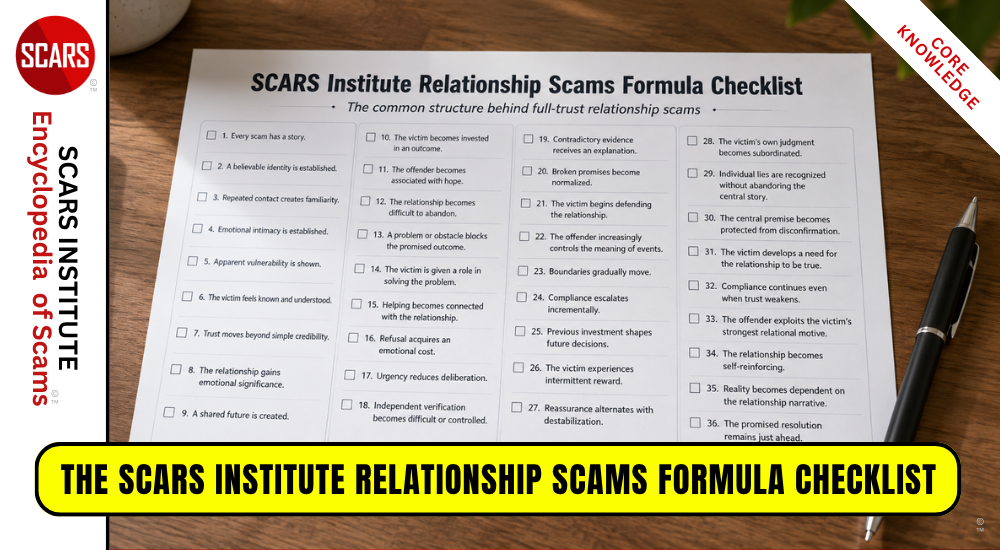
The SCARS Institute Relationship Scams Formula Checklist
This is the Formula that all Relationship Scams Follow


In the U.S. & Canada
U.S. & Canada Suicide Lifeline 988

Recent Comments
On Other Articles
- Barbara on SCARS Institute – Romance Scam Simulator: “Fantastic! I have to go to bed, but I’ll do some more tomorrow. I picked an easy scenario tonight, but…” Oct 9, 18:01
- on United States – Federal Bureau of Investigations [FBI]: “It is only that way because of the shame you feel. The reality is that it was not your fault.…” Sep 30, 15:36
- on United States – Federal Bureau of Investigations [FBI]: “yhisis humiliating experience e and isembarassassing to to own up to peolealreadyassume u are not to bright because Arnold and…” Sep 30, 12:28
- on United States – Federal Bureau of Investigations [FBI]: “should be better known by public live in assisiwdlivi g apartment many manyinstancresof Romance scams here ano.us ederly l” Sep 30, 12:24
- on Is It A Scam? Phone Scam Diagnostic – v1: “I tried the this test Is it a phone scam? Mine was. I think this is a helpful tool to…” Sep 30, 10:34
- on Is It A Scam? Romance Scam Diagnostic – v2: “Carole, as you move forward with your recovery, you will learn how this all works. It was not your fault.…” Sep 29, 17:37
- on Is It A Scam? Romance Scam Diagnostic – v2: “I was blinded by such clever manipulation” Sep 29, 15:15
- on The SCARS Institute Relationship Scams Formula Checklist – 2026: “As I read this I could see myself in every step with my scam. I gained a lot more knowledge…” Aug 28, 19:51
- on The Persistence of Danielle Delaunay as a Fake Identity – 2026: “Unfortunately, you are being scammed. She is using a fake name regardless. At this point, your best option is to…” Aug 26, 20:16
- on The Persistence of Danielle Delaunay as a Fake Identity – 2026: “Dear Sirs, I have met this woman with the name Abigail Boateng in Ghana. I have an intensive mail contact…” Aug 26, 12:28

Thank you for your comment. You may receive an email to follow up. We never share your data with marketers.