




SCARS Institute’s Encyclopedia of Scams™ Published Continuously for 25 Years

Normalcy Bias – A Cognitive Bias
The Normalcy Bias: Understanding the Cognitive Bias that Can Put You in Danger
Cognitive Biases – What Could Go Wrong, Right?
Psychology of Scams – A SCARS Institute Insight
Author:
• Tim McGuinness, Ph.D., DFin, MCPO, MAnth – Anthropologist, Scientist, Director of the Society of Citizens Against Relationship Scams Inc.
Originally Published: 2022 – Article Updated: 2025
Article Abstract
Normalcy bias is a cognitive distortion that convinces people to believe life will continue as usual, even in the face of obvious threats or crises. This bias prevents individuals from recognizing danger, delays protective action, and contributes to vulnerability in emergencies, scams, and personal crises. It causes hesitation, denial, and flawed decision-making by relying on familiar patterns instead of adapting to new realities. Recognizing the three phases of response: denial, deliberation, and decisive action, helps reduce reaction time and improves outcomes in high-risk situations. Overcoming normalcy bias requires self-awareness, exposure to diverse information, and building resilience through preparation and emotional awareness. By understanding and challenging this mental pattern, individuals can reduce their vulnerability, respond faster to unexpected events, and make sound decisions when it matters most.

Cognitive Biases: Humans Have Strong Reasoning Abilities, But Often Refuse to Use Them
Every person believes they are logical, yet human thinking rarely follows pure logic. Emotions, assumptions, and mental shortcuts often shape decisions, especially under stress. One of the most overlooked influences on human behavior is cognitive bias. These biases are automatic patterns of thinking that distort how people interpret situations, especially threats or unusual events.
Among these, normalcy bias stands out as one of the most dangerous. It affects how people respond to risk, warning signs, and even clear evidence that danger is present. Normalcy bias convinces people that life will continue as it always has, even when warning signs suggest otherwise. This bias undermines decision-making, reduces preparedness, and directly contributes to vulnerability in situations ranging from natural disasters to scams.
Understanding normalcy bias is essential, especially for individuals recovering from betrayal, scams, or traumatic experiences. Recognizing how this mental pattern works helps reduce future risk, improves reaction times, and strengthens personal resilience.
What Is Normalcy Bias?
Normalcy bias, sometimes called normality bias, is a mental distortion that causes people to underestimate the likelihood or impact of an unexpected threat. It convinces individuals to believe that because something has never happened to them before, it never will. Even when confronted with clear danger, the brain resists accepting the new reality.
People affected by normalcy bias often stay in unsafe situations, ignore disaster warnings, or overlook obvious red flags in relationships. They may minimize risks, tell themselves everything is fine, or assume problems will resolve without action. This thinking explains why people fail to evacuate during hurricanes, stay silent about health concerns, or dismiss scams as unlikely to happen to them.
Research suggests that normalcy bias affects the vast majority of people during disasters. It also plays a direct role in scam victimization, where nearly everyone affected ignored early signs of manipulation. Unfortunately, this same bias can also interfere with recovery after a traumatic event by convincing victims that their circumstances will simply return to normal without effort.
The Difference Between Normalcy Bias and Other Thinking Errors
It is easy to confuse normalcy bias with other cognitive biases, but they are not the same. For example, confirmation bias causes people to seek out information that supports their beliefs, while ignoring opposing facts. Normalcy bias is more passive. It leads to denial of change entirely, regardless of the evidence.
Normalcy bias also differs from overreaction or worst-case scenario bias. Those distortions push individuals to assume that minor problems signal disaster. Normalcy bias does the opposite. It creates false comfort, lulling people into ignoring serious threats because the current situation feels familiar. Both distortions are dangerous, but normalcy bias often prevents action altogether.
Why Normalcy Bias Exists
Normalcy bias is rooted in the way the human brain processes information. The brain relies heavily on past experiences to interpret present situations. When patterns repeat, the brain recognizes them quickly and responds efficiently. This helps people navigate complex environments without constant analysis.
The problem arises when a situation falls outside normal experience. If the brain lacks a similar memory to draw from, it defaults to assuming the familiar will continue. This is why people delay reacting to sudden crises like scams, accidents, or emergencies. The mind struggles to adjust expectations, so it denies the threat altogether.
This built-in mental shortcut serves a purpose in daily life, helping reduce anxiety and prevent constant worry. However, when danger is real and immediate, normalcy bias becomes a serious liability. It slows reaction times, distorts perception, and prevents people from taking protective action when it matters most.
The Cost of Normalcy Bias
Normalcy bias can carry severe consequences. In emergency situations, it leads people to stay in dangerous locations, delay evacuations, or dismiss life-saving advice. History shows countless examples of individuals ignoring warnings before hurricanes, floods, or other disasters, only to face avoidable harm.
The same pattern appears in personal crises. Scam victims often overlook manipulation tactics, even when something feels wrong. They convince themselves that the situation will improve, the person is trustworthy, or their instincts are unreliable. Normalcy bias also slows responses to health problems, financial instability, or relationship abuse, as individuals deny the severity of the situation.
This bias can even affect long-term societal threats like climate change or economic collapse. When problems escalate slowly or feel unfamiliar, people assume life will continue unchanged, delaying meaningful action.
How to Overcome Normalcy Bias
Reducing the influence of normalcy bias requires conscious effort. First, individuals must actively seek out diverse information. Limiting perspectives or ignoring uncomfortable facts reinforces this bias. Instead, exposing oneself to different viewpoints and credible warnings helps challenge false assumptions.
Self-awareness is equally important. Recognizing when denial is present, questioning gut reactions, and reflecting on mental patterns help reduce automatic thinking errors. Techniques like journaling, mindfulness, or open discussions with trusted people improve emotional awareness and critical thinking.
Resilience also plays a role. The more prepared and adaptable someone feels, the easier it becomes to override normalcy bias. Emergency plans, financial safeguards, or education on risk management equip people to face change with greater confidence. When individuals believe they can handle uncertainty, they are less likely to fall back on distorted thinking.
The Three Phases of Response to Threats
Normalcy bias follows a predictable mental process, often described as the three Ds: denial, deliberation, and decisive action. Understanding these phases helps reduce reaction time and improve outcomes when facing unexpected danger.
Denial
The first response to threat is often denial. The brain resists accepting that the situation is real, especially when the event feels unfamiliar or overwhelming. This is a direct expression of normalcy bias. People may downplay warning signs, tell themselves everything is fine, or refuse to believe that danger is present. Denial delays decision-making and increases vulnerability.
Deliberation
Once denial starts to fade, people enter the deliberation phase. Here, they mentally process the situation, weighing options and consequences. If an individual has no experience with similar threats or lacks preparation, this phase may stall. High stress can trigger physical symptoms like tunnel vision, time distortion, or dissociation, all of which reduce the ability to think clearly. This phase is where training, planning, or education can make a significant difference.
Decisive Moment
Finally, the person reaches the decisive moment. This is when action must occur to protect safety or well-being. Hesitation at this stage can be dangerous, especially in life-threatening situations. The faster someone moves through denial and deliberation, the better their chances of acting effectively. Past trauma can complicate this process, as the brain’s emotional centers, especially the amygdala, may override rational thinking with panic or shutdown responses.
Recognizing the three Ds helps individuals prepare mentally for emergencies or manipulative situations. It also shortens the time between recognizing a problem and responding appropriately.
Conclusion
Cognitive biases, especially normalcy bias, shape how people process risk, react to threats, and make decisions. Left unchallenged, these mental distortions increase vulnerability, slow reactions, and contribute to preventable harm. This applies to disasters, personal crises, scams, and even emotional recovery after trauma.
By understanding how normalcy bias works, individuals gain a tool for reducing its influence. Self-awareness, preparation, and emotional resilience interrupt the automatic patterns that delay action. Recognizing the denial phase, preparing for deliberation, and moving swiftly to decisive action increases personal safety, improves crisis management, and strengthens recovery after betrayal or other traumatic events.
The brain’s mental shortcuts will always be present, but with effort, people can override harmful biases and make more confident, protective choices in uncertain situations.
More About Cognitive Biases & Vulnerabilities



-/ 30 /-
What do you think about this?
Please share your thoughts in a comment below!
Table of Contents
To Understand All Scams
Read This
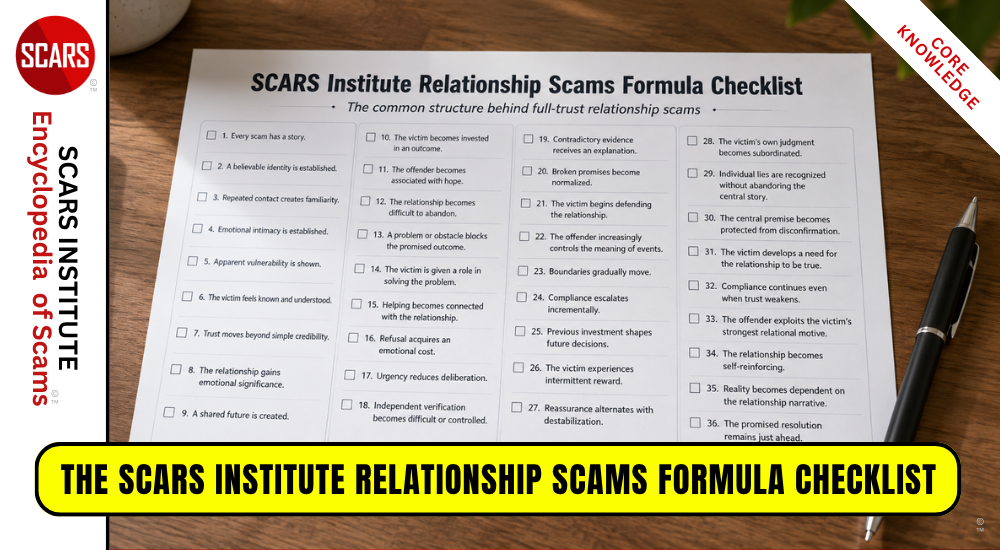
The SCARS Institute Relationship Scams Formula Checklist
This is the Formula that all Relationship Scams Follow




In the U.S. & Canada
U.S. & Canada Suicide Lifeline 988

Recent Comments
On Other Articles
- on SCARS Institute – Romance Scam Simulator: “Fantastic! I have to go to bed, but I’ll do some more tomorrow. I picked an easy scenario tonight, but…” Oct 9, 18:01
- on United States – Federal Bureau of Investigations [FBI]: “It is only that way because of the shame you feel. The reality is that it was not your fault.…” Sep 30, 15:36
- on United States – Federal Bureau of Investigations [FBI]: “yhisis humiliating experience e and isembarassassing to to own up to peolealreadyassume u are not to bright because Arnold and…” Sep 30, 12:28
- on United States – Federal Bureau of Investigations [FBI]: “should be better known by public live in assisiwdlivi g apartment many manyinstancresof Romance scams here ano.us ederly l” Sep 30, 12:24
- on Is It A Scam? Phone Scam Diagnostic – v1: “I tried the this test Is it a phone scam? Mine was. I think this is a helpful tool to…” Sep 30, 10:34
- on Is It A Scam? Romance Scam Diagnostic – v2: “Carole, as you move forward with your recovery, you will learn how this all works. It was not your fault.…” Sep 29, 17:37
- on Is It A Scam? Romance Scam Diagnostic – v2: “I was blinded by such clever manipulation” Sep 29, 15:15
- on The SCARS Institute Relationship Scams Formula Checklist – 2026: “As I read this I could see myself in every step with my scam. I gained a lot more knowledge…” Aug 28, 19:51
- on The Persistence of Danielle Delaunay as a Fake Identity – 2026: “Unfortunately, you are being scammed. She is using a fake name regardless. At this point, your best option is to…” Aug 26, 20:16
- on The Persistence of Danielle Delaunay as a Fake Identity – 2026: “Dear Sirs, I have met this woman with the name Abigail Boateng in Ghana. I have an intensive mail contact…” Aug 26, 12:28

I agree with Dulce – please look at the article – it seems to be out of order as the text box about blaming comes before the ending of the article. I liked this article – it helped to explain in part this recurring nightmare that I’m trying to save people from a tornado but no one will listen. The people include my family and friends, everyone is sitting around having fun when this huge tornado is looming in front of them. I’ve had this nightmare many times which may indicate that normalcy bias was in place in my life and I was about to or do accept the status quo that everything will turn out fine despite the consequences. I see that even my husband, my parents and others that I know all believe that nothing bad will happen or it’s the usual “the weather people are always wrong!” statement that I hear. But when the disaster happens then you see people scrambling to minimize the effects. When it came to the pandemic and the obvious effort by the governing administration to downplay the seriousness of the virus, I prepared our family. We all received the vaccines even though I had heard the stories about people dying from it. While that was a handful in comparison to the hundreds of thousands who didn’t die from the vaccine, we decided to move forward. We had other warnings that we thought were credible as well that framed our decisions with regard to the virus. My parents were hospitalized and only one survived and is still surviving. This complacency that is prevalent in our society shows the tendency of most people to not take action when they should. As for my crime – yes, normalcy bias played a big role. I believed that I knew enough that I would spot the red flag warnings – after all, I had hours and hours of training through work, I should be able to know if I’m being scammed right? I was wrong. Now I have re-education through SCARS. This re-education is everything I should have known. What I knew pre-scam was to protect my company data, but nothing about how to protect myself.
The article has been reviewed and updated. Thank you.
It is hard to understand or realize that you need help and have biases and other vulnerabilities. A first step could be learning about your own psychology
I think that the text that comes after the statement about victim blaming should come before the links to the articles of other cognitive biases. A reader might continue to the other articles before finishing this one.
I am so glad I found SCARS during this time:
“In scam victims, we see this as the overwhelming panic, fear, and frenetic searching for a savior in the days immediately after a scam is discovered. Victims trapped in this mode massively overreact while searching for help, so much so that they cause themselves significant additional trauma as a result.”