



SCARS Institute’s Encyclopedia of Scams™ Published Continuously for 25 Years
Article Abstract
In the ever-expanding digital virtual world of the metaverse, the concept of Metacrime poses a significant threat to individuals and communities alike. This new criminal domain exposes the weaknesses of security and safety, and presents real challenges to law enforcement and criminologists alike.
From cyberbullying and identity theft to fraud and virtual violence, the dangers lurking in virtual spaces are evolving rapidly.
Jurisdictional challenges, varying levels of harm, and differing perspectives complicate efforts to combat these crimes effectively. Law enforcement agencies, legal systems, and platform developers are adapting to address these challenges, but the veil of anonymity and the proliferation of social media platforms continue to pose significant obstacles.
Despite these challenges, individuals can protect themselves by staying informed, using secure authentication methods, being cautious with personal information, and seeking support when needed.

Navigating the Dangers of Metacrime in the Metaverse/Metaspace: Protecting Yourself in the Virtual World
In an age where the digital metaworld/metaverse increasingly intertwines with our daily lives, the concept of metacrime has expanded beyond the physical world into the vast expanse of metaspace/metaverse or virtual space. From cyberbullying and online harassment to identity theft to metaviolence and cyber fraud, the dangers lurking in the virtual world are increasing rapidly and ever-evolving.
Meta Terms
Metaspace/Metaverse: ‘metaspace’ or ‘metaverse’ can be used as a generic term to describe any virtual or simulated environment. This could include:
- Online communities and platforms: Virtual worlds like Second Life or VRChat, online games with social spaces like Fortnite or Roblox, and even social media platforms like Facebook or Twitter can be considered metaspaces as they provide virtual environments for interaction and engagement.
- Augmented reality (AR) and mixed reality (MR) experiences: These technologies overlay digital elements onto the real world, creating a hybrid space that can be considered a metaspace.
- Immersive simulations and training environments: Virtual training simulations used in industries like aviation or healthcare can also be thought of as metaspaces.
- Metaverse, virtualspace, and metaworld can be used interchangeably.
‘MetaCrime:’ – crime in the virtual world
“Metacrime” is a relatively new term used to describe criminal activity that occurs within virtual worlds and online environments, particularly those associated with the emerging concept of the metaverse. However, its precise definition can vary depending on the context and who you ask. Here’s a breakdown of some key points:
Core Idea:
-
- Metacrimes involve actions within virtual spaces that would be considered illegal in the real world, causing harm or violating the rights of others.
Examples:
-
- Theft: Stealing virtual currency, items, or intellectual property within online games or platforms.
- Fraud: Engaging in scams, phishing, or other deceptive practices to defraud users in virtual marketplaces or communities.
- Harassment and abuse: Using virtual spaces to bully, threaten, or intimidate others through text, voice, or avatars.
- Hacking and data breaches: Unauthorized access to or manipulation of systems and data within virtual environments.
- Disinformation and hate speech: Spreading harmful content or inciting violence within virtual communities.
- Violence: various forms of violence against other uses of the metaverse.
Challenges and Uncertainties:
-
- Jurisdictional issues: The legal frameworks for virtual worlds and online spaces are still evolving, making it unclear how real-world laws apply and who has jurisdiction to enforce them.
- Varying levels of harm: The impact of metacrimes can vary greatly depending on the nature of the virtual environment and the actions taken. Some might be relatively harmless pranks, while others could have significant financial or emotional or even traumatic consequences.
- Differing perspectives: Some argue that virtual spaces offer unique freedoms and possibilities that shouldn’t be constrained by traditional legal systems. Others prioritize protecting users and upholding ethical standards within these environments.
Current State:
-
- As the metaverse and virtual spaces evolve, so too will the definitions and understanding of metacrimes.
- Law enforcement agencies and legal systems are adapting to address these new challenges.
- Platforms and developers are implementing security measures and community guidelines to combat harmful behavior.
The Rise of Virtual Crime
With the proliferation of social media platforms, online marketplaces, and digital communication tools, the opportunities for criminal activities in metaspace have grown exponentially. Cybercriminals leverage sophisticated techniques and technologies to exploit vulnerabilities, targeting individuals, businesses, and even governments with devastating consequences.
The Perils of Anonymity
One of the most significant challenges in combating virtual crime is the veil of anonymity that perpetrators often hide behind. The anonymity afforded by the internet emboldens individuals to engage in malicious behavior without fear of repercussion, making it difficult to hold them accountable for their actions.
Cyberbullying and Online Harassment
Cyberbullying and online harassment have become pervasive issues in metaspace, particularly affecting vulnerable populations such as children, teenagers, and marginalized communities. The anonymity of the internet provides bullies with a platform to inflict emotional harm on their victims through cruel messages, derogatory comments, and digital stalking, leaving lasting psychological scars.
Identity Theft and Cyber Fraud
Identity theft and cyber fraud pose significant threats to individuals’ financial security and personal privacy in the virtual world. Cybercriminals employ various tactics, including phishing scams, malware attacks, and social engineering techniques, to steal sensitive information such as credit card numbers, passwords, and social security numbers. Once obtained, this information can be used to commit fraudulent activities, drain bank accounts, and wreak havoc on victims’ lives.
Protecting Yourself in Metaverse
While the dangers of crime in metaverse/metaspace are real and pervasive, there are steps individuals can take to protect themselves and mitigate the risks:
- Stay Informed: Educate yourself about the latest cybersecurity threats and best practices for online safety. Regularly update your knowledge and awareness to stay ahead of evolving cyber threats.
- Use Strong Passwords and Secure Authentication: Create complex passwords for your online accounts and enable two-factor authentication whenever possible to add an extra layer of security.
- Exercise Caution with Personal Information: Be cautious about sharing sensitive information online, especially on social media platforms and in the metaverse. Limit the amount of personal information you disclose and adjust your privacy settings to control who can access your data.
- Be Skeptical of Unsolicited Communications: Beware of phishing emails, suspicious links, and unexpected messages from unknown sources – this includes in the metaverse. Always verify the authenticity of communications before responding or clicking on links.
- Report Suspicious Activity: If you encounter criminal behavior or illegal content online, report it to the appropriate authorities or platform moderators to take action and prevent further harm.
- Seek Support: If you experience cyberbullying, online harassment, or identity theft, don’t hesitate to seek support from trusted friends, family members, or mental health professionals. Remember that you are not alone, and there are resources available to help you navigate these challenges.
Summary
As our lives become increasingly intertwined with the digital world and metaverse, the dangers of crime in the metaverse continue to grow in complexity and severity. By staying informed, practicing good cybersecurity habits, and seeking support when needed, individuals can protect themselves and their loved ones from the perils of virtual crime, creating a safer and more secure online environment for all.
More:
- INTERPOL Warns Of ‘Metacrime’ On The Metaverse – 2024 (scamsnow.com)
- Why Metaverse sexual assaults could be difficult to prosecute – The Washington Post
- Metaverse rape, murder could be treated as crime: UK agency (newsnationnow.com)
- The Metaverse And Its Dark Side: Confronting The Reality Of Virtual Rape (forbes.com)
- What Should Be Considered a Crime in the Metaverse? | WIRED
-/ 30 /-
What do you think about this?
Please share your thoughts in a comment below!
Table of Contents
To Understand All Scams
Read This
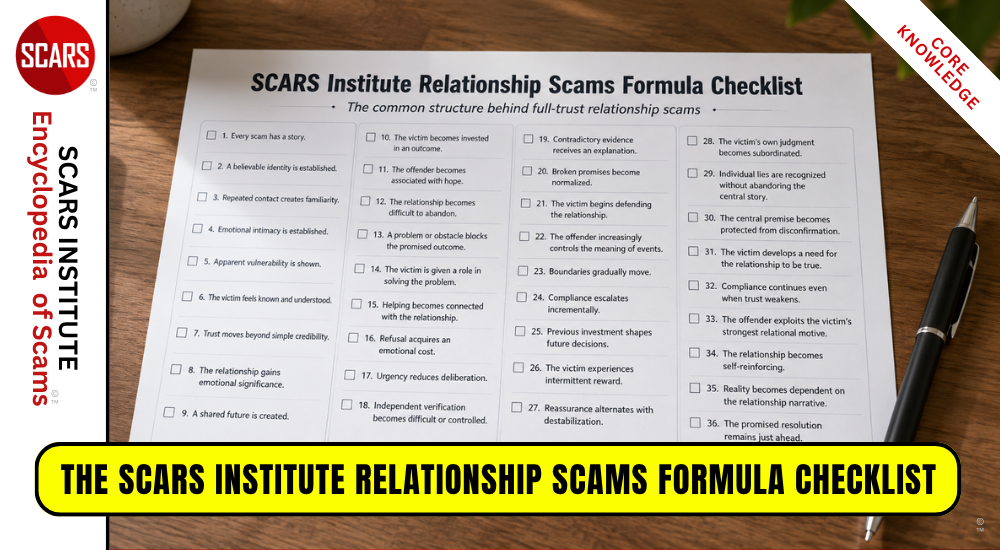
The SCARS Institute Relationship Scams Formula Checklist
This is the Formula that all Relationship Scams Follow




In the U.S. & Canada

U.S. & Canada Suicide Lifeline 988

Recent Comments
On Other Articles
- Barbara on SCARS Institute – Romance Scam Simulator: “Fantastic! I have to go to bed, but I’ll do some more tomorrow. I picked an easy scenario tonight, but…” Oct 9, 18:01
- on United States – Federal Bureau of Investigations [FBI]: “It is only that way because of the shame you feel. The reality is that it was not your fault.…” Sep 30, 15:36
- on United States – Federal Bureau of Investigations [FBI]: “yhisis humiliating experience e and isembarassassing to to own up to peolealreadyassume u are not to bright because Arnold and…” Sep 30, 12:28
- on United States – Federal Bureau of Investigations [FBI]: “should be better known by public live in assisiwdlivi g apartment many manyinstancresof Romance scams here ano.us ederly l” Sep 30, 12:24
- on Is It A Scam? Phone Scam Diagnostic – v1: “I tried the this test Is it a phone scam? Mine was. I think this is a helpful tool to…” Sep 30, 10:34
- on Is It A Scam? Romance Scam Diagnostic – v2: “Carole, as you move forward with your recovery, you will learn how this all works. It was not your fault.…” Sep 29, 17:37
- on Is It A Scam? Romance Scam Diagnostic – v2: “I was blinded by such clever manipulation” Sep 29, 15:15
- on The SCARS Institute Relationship Scams Formula Checklist – 2026: “As I read this I could see myself in every step with my scam. I gained a lot more knowledge…” Aug 28, 19:51
- on The Persistence of Danielle Delaunay as a Fake Identity – 2026: “Unfortunately, you are being scammed. She is using a fake name regardless. At this point, your best option is to…” Aug 26, 20:16
- on The Persistence of Danielle Delaunay as a Fake Identity – 2026: “Dear Sirs, I have met this woman with the name Abigail Boateng in Ghana. I have an intensive mail contact…” Aug 26, 12:28

Thank you for your comment. You may receive an email to follow up. We never share your data with marketers.