





SCARS Institute’s Encyclopedia of Scams™ Published Continuously for 25 Years

The Biden Administration Announced Their Goals For Cybersecurity & Cybersafety
A SCARS Analysis
With this announcement, the Biden Administration is declaring their intentions for how to solve the cybersecurity & cybercrime national emergency that is victimizing the whole of the United States population and businesses.
Yet, as we have come to expect from the Biden presidency, there is nearly nothing that serves to address the ever-present danger that individuals find themselves in. In fact, there is almost no mention, and certainly no real solutions to how to address the plague of cybercrime that are destroying a third of the U.S. population.
Additionally, there is no mention of any issues with or potential reforms of the Communications Decency Act (CDA) section 230. Fortunately, the U.S. Supreme Court is dealing with the at this moment,
The Biden administration’s view, as per this announcement, is that we all have to turn to Big Tech to solve this problem and provide us with some measure of security and safety. And of course, that has worked out so well up until now, right?
The statements made are such an abdication of the needs of the American people, and in our view represent nothing more than an attempt to kick the ball down the road for someone to solve in the future.
The Official Whitehouse Fact Sheet Statement
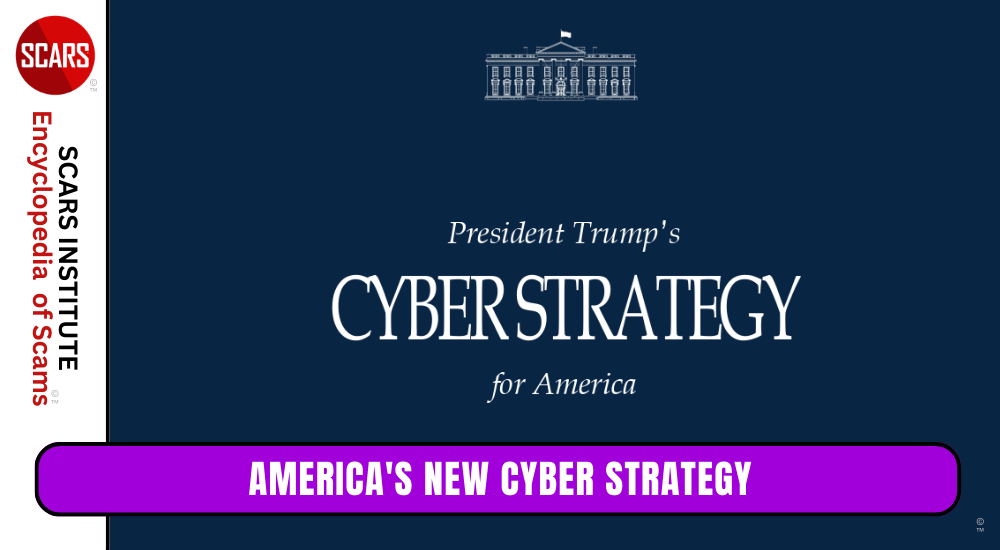
FACT SHEET: Biden-Harris Administration Announces National Cybersecurity Strategy
Today, the Biden-Harris Administration released the National Cybersecurity Strategy to secure the full benefits of a safe and secure digital ecosystem for all Americans. In this decisive decade, the United States will reimagine cyberspace as a tool to achieve our goals in a way that reflects our values: economic security and prosperity; respect for human rights and fundamental freedoms; trust in our democracy and democratic institutions; and an equitable and diverse society. To realize this vision, we must make fundamental shifts in how the United States allocates roles, responsibilities, and resources in cyberspace.
- We must rebalance the responsibility to defend cyberspace by shifting the burden for cybersecurity away from individuals, small businesses, and local governments, and onto the organizations that are most capable and best-positioned to reduce risks for all of us.
- We must realign incentives to favor long-term investments by striking a careful balance between defending ourselves against urgent threats today and simultaneously strategically planning for and investing in a resilient future.
The Strategy recognizes that government must use all tools of national power in a coordinated manner to protect our national security, public safety, and economic prosperity.
VISION
Our rapidly evolving world demands a more intentional, more coordinated, and more well-resourced approach to cyber defense. We face a complex threat environment, with state and non-state actors developing and executing novel campaigns to threaten our interests. At the same time, next-generation technologies are reaching maturity at an accelerating pace, creating new pathways for innovation while increasing digital interdependencies.
This Strategy sets out a path to address these threats and secure the promise of our digital future. Its implementation will protect our investments in rebuilding America’s infrastructure, developing our clean energy sector, and re-shoring America’s technology and manufacturing base. Together with our allies and partners, the United States will make our digital ecosystem:
- Defensible, where cyber defense is overwhelmingly easier, cheaper, and more effective;
- Resilient, where cyber incidents and errors have little widespread or lasting impact; and,
- Values-aligned, where our most cherished values shape—and are in turn reinforced by— our digital world.
The Administration has already taken steps to secure cyberspace and our digital ecosystem, including the National Security Strategy, Executive Order 14028 (Improving the Nation’s Cybersecurity), National Security Memorandum 5 (Improving Cybersecurity for Critical Infrastructure Control Systems), M-22-09 (Moving the U.S. Government Toward Zero-Trust Cybersecurity Principles), and National Security Memorandum 10 (Promoting United States Leadership in Quantum Computing While Mitigating Risks to Vulnerable Cryptographic Systems). Expanding on these efforts, the Strategy recognizes that cyberspace does not exist for its own end but as a tool to pursue our highest aspirations.
APPROACH
This Strategy seeks to build and enhance collaboration around five pillars:
1. Defend Critical Infrastructure – We will give the American people confidence in the availability and resilience of our critical infrastructure and the essential services it provides, including by:
- Expanding the use of minimum cybersecurity requirements in critical sectors to ensure national security and public safety and harmonizing regulations to reduce the burden of compliance;
- Enabling public-private collaboration at the speed and scale necessary to defend critical infrastructure and essential services; and,
- Defending and modernizing Federal networks and updating Federal incident response policy
2. Disrupt and Dismantle Threat Actors – Using all instruments of national power, we will make malicious cyber actors incapable of threatening the national security or public safety of the United States, including by:
- Strategically employing all tools of national power to disrupt adversaries;
- Engaging the private sector in disruption activities through scalable mechanisms; and,
- Addressing the ransomware threat through a comprehensive Federal approach and in lockstep with our international partners.
3. Shape Market Forces to Drive Security and Resilience – We will place responsibility on those within our digital ecosystem that are best positioned to reduce risk and shift the consequences of poor cybersecurity away from the most vulnerable in order to make our digital ecosystem more trustworthy, including by:
- Promoting privacy and the security of personal data;
- Shifting liability for software products and services to promote secure development practices; and,
- Ensuring that Federal grant programs promote investments in new infrastructure that are secure and resilient.
4. Invest in a Resilient Future – Through strategic investments and coordinated, collaborative action, the United States will continue to lead the world in the innovation of secure and resilient next-generation technologies and infrastructure, including by:
- Reducing systemic technical vulnerabilities in the foundation of the Internet and across the digital ecosystem while making it more resilient against transnational digital repression;
- Prioritizing cybersecurity R&D for next-generation technologies such as postquantum encryption, digital identity solutions, and clean energy infrastructure; and,
- Developing a diverse and robust national cyber workforce
5. Forge International Partnerships to Pursue Shared Goals – The United States seeks a world where responsible state behavior in cyberspace is expected and reinforced and where irresponsible behavior is isolating and costly, including by:
- Leveraging international coalitions and partnerships among like-minded nations to counter threats to our digital ecosystem through joint preparedness, response, and cost imposition;
- Increasing the capacity of our partners to defend themselves against cyber threats, both in peacetime and in crisis; and,
- Working with our allies and partners to make secure, reliable, and trustworthy global supply chains for information and communications technology and operational technology products and services.
Coordinated by the Office of the National Cyber Director, the Administration’s implementation of this Strategy is already underway.


-/ 30 /-
What do you think about this?
Please share your thoughts in a comment below!
Table of Contents
To Understand All Scams
Read This
The SCARS Institute Relationship Scams Formula Checklist
This is the Formula that all Relationship Scams Follow


In the U.S. & Canada

U.S. & Canada Suicide Lifeline 988

Recent Comments
On Other Articles
- Barbara on SCARS Institute – Romance Scam Simulator: “Fantastic! I have to go to bed, but I’ll do some more tomorrow. I picked an easy scenario tonight, but…” Oct 9, 18:01
- on United States – Federal Bureau of Investigations [FBI]: “It is only that way because of the shame you feel. The reality is that it was not your fault.…” Sep 30, 15:36
- on United States – Federal Bureau of Investigations [FBI]: “yhisis humiliating experience e and isembarassassing to to own up to peolealreadyassume u are not to bright because Arnold and…” Sep 30, 12:28
- on United States – Federal Bureau of Investigations [FBI]: “should be better known by public live in assisiwdlivi g apartment many manyinstancresof Romance scams here ano.us ederly l” Sep 30, 12:24
- on Is It A Scam? Phone Scam Diagnostic – v1: “I tried the this test Is it a phone scam? Mine was. I think this is a helpful tool to…” Sep 30, 10:34
- on Is It A Scam? Romance Scam Diagnostic – v2: “Carole, as you move forward with your recovery, you will learn how this all works. It was not your fault.…” Sep 29, 17:37
- on Is It A Scam? Romance Scam Diagnostic – v2: “I was blinded by such clever manipulation” Sep 29, 15:15
- on The SCARS Institute Relationship Scams Formula Checklist – 2026: “As I read this I could see myself in every step with my scam. I gained a lot more knowledge…” Aug 28, 19:51
- on The Persistence of Danielle Delaunay as a Fake Identity – 2026: “Unfortunately, you are being scammed. She is using a fake name regardless. At this point, your best option is to…” Aug 26, 20:16
- on The Persistence of Danielle Delaunay as a Fake Identity – 2026: “Dear Sirs, I have met this woman with the name Abigail Boateng in Ghana. I have an intensive mail contact…” Aug 26, 12:28

Thank you for your comment. You may receive an email to follow up. We never share your data with marketers.