




SCARS Institute’s Encyclopedia of Scams™ Published Continuously for 25 Years

FRAUD WARNING: Credit Card Skimmer – Credit Card Fraud Is Everywhere!
Understanding Credit Card Skimmers: A Hidden Threat to Your Finances
FRAUD WARNING – A SCARS Institute Insight
Author:
• SCARS Institute Encyclopedia of Scams Editorial Team – Society of Citizens Against Relationship Scams Inc.
Article Abstract
Credit card skimmers are deceptive, often invisible devices that steal your card data during routine transactions, posing a hidden but serious threat to your financial security. These tools are discreetly installed on ATMs, gas pumps, and retail card readers, where they capture your card number, expiration date, and sometimes even your PIN. In 2024 alone, skimming helped push U.S. fraud losses to $12.5 billion. Criminals using skimmers range from solo fraudsters to organized crime rings and even insider employees, all exploiting the low-risk, high-reward nature of this crime.
Like imposters blending into everyday settings, skimmers mimic legitimate technology, making them easy to miss and hard to trace. To protect yourself, experts recommend inspecting card readers for unusual attachments, testing for looseness, checking alignment, and avoiding any devices that look tampered with. High-risk locations, like outdoor ATMs and gas stations, require extra vigilance. Covering the keypad, monitoring your accounts regularly, using contactless payments, and reporting suspicious machines are effective steps to prevent falling victim. Recognizing how skimmers work and who installs them empowers you to stay ahead of these criminals. In a world where fraudsters increasingly exploit trust and routine, staying alert can mean the difference between financial safety and significant loss.
Understanding Credit Card Skimmers: A Hidden Threat to Your Finances
As you swipe or insert your credit card at a gas pump or ATM in a bustling city like Boise, Idaho, you trust that your financial information is secure. However, a tiny device called a credit card skimmer could be lurking, ready to steal your card details and drain your accounts. These deceptive tools, often placed by cunning criminals, pose a growing threat to consumers across the U.S. In 2024, fraud losses reached $12.5 billion, with card skimming contributing significantly due to its low risk and high reward for thieves. Much like imposters who blend seamlessly into society, skimmers hide in plain sight, mimicking legitimate card readers to betray your trust. This article explains what credit card skimmers are, how they function, who deploys them, and how you can spot them to protect your money, incorporating practical tips to keep you vigilant.
What Are Credit Card Skimmers?
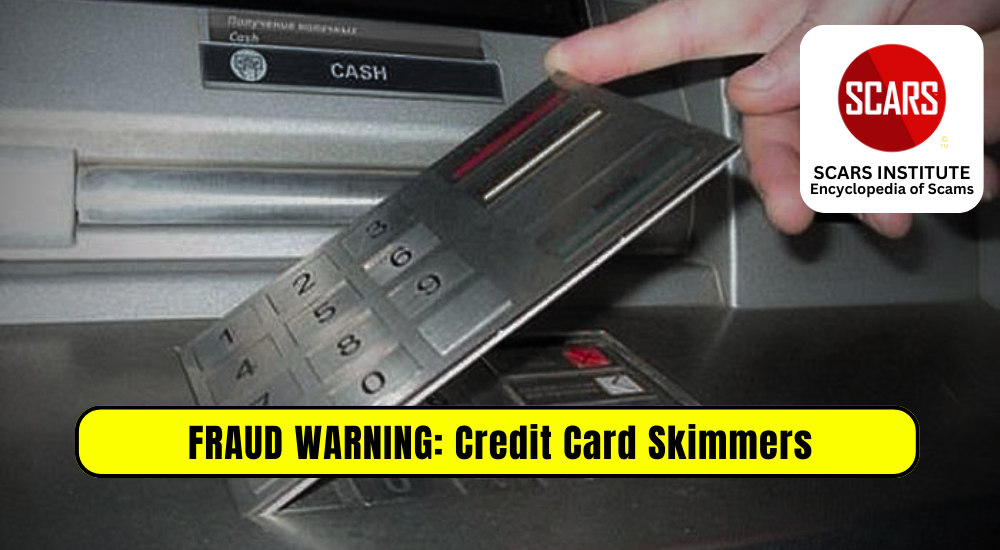
A credit card skimmer is a small, illicit device attached to or inserted into a legitimate card reader, designed to capture your card’s data during a transaction. These devices target the magnetic stripe or chip information on your debit or credit card, storing details like your card number, expiration date, and sometimes your PIN. Once collected, this data allows criminals to clone your card, make unauthorized purchases, or sell your information on the dark web. Skimmers are typically found at high-traffic locations like gas stations, ATMs, or retail point-of-sale terminals, where they can operate unnoticed.
Skimmers come in various forms, from external overlays that fit snugly over a card reader to internal components hidden inside the machine. Some include tiny cameras or keypad overlays to record your PIN, increasing the potential for fraud. It’s like a thief slipping a spy into your wallet, one expert noted, highlighting their covert nature. In 2024, skimming incidents surged, with devices detected in cities from Boise to Boston, costing victims thousands per incident. The ease of installing these devices makes them a favorite tool for financial criminals, threatening your financial security with every swipe.
How Credit Card Skimmers Work
Credit card skimmers operate through a deceptively simple yet effective process, exploiting the moment you use your card. Imagine you’re at a gas pump on Boise’s State Street, unaware that a skimmer has been placed on the card reader. Here’s how the scam unfolds:
Installation of the Device
The skimmer is discreetly attached to the card reader, often in seconds. External skimmers are plastic overlays that snap over the original reader, mimicking its appearance. Internal skimmers, more sophisticated, are wired into the machine’s circuitry, requiring access to the device’s interior. Some skimmers pair with a pinhole camera or keypad overlay, hidden above the reader, to capture your PIN as you type. We design our devices to be invisible, a captured skimmer installer once boasted, revealing the intent to deceive.
Data Capture
When you insert or swipe your card, the skimmer reads and stores your card’s data. Magnetic stripe skimmers grab the track data encoded on the strip, while chip skimmers, though less common due to encryption, may target unencrypted transactions or fallback to stripe data. If a camera or overlay is present, it records your PIN, giving thieves full access to your account. The skimmer saves this information in its memory or transmits it wirelessly via Bluetooth to the criminal, often within minutes.
Data Retrieval and Exploitation
The scammer returns to collect the skimmer or retrieves the data remotely, sometimes using a smartphone from a nearby car. With your card details, they create counterfeit cards, make online purchases, or sell the data on dark web marketplaces for $10–$100 per card, according to 2024 cybersecurity reports. If your PIN was captured, they can withdraw cash from your account at ATMs, amplifying the damage. The process is swift, and you may not notice the theft until fraudulent charges appear on your statement.
Victim Impact
The aftermath hits hard. You might discover unauthorized transactions totaling thousands, or your bank account could be emptied. Beyond financial loss, you face the stress of disputing charges, replacing cards, and restoring your credit. The betrayal leaves you wary of every card reader, questioning the safety of routine transactions, much like a victim of deception who struggles to trust again.
Who Places Credit Card Skimmers?
The criminals behind credit card skimmers are opportunistic and skilled, ranging from lone actors to organized groups, all driven by the promise of easy profits. These fraudsters share traits with imposters who blend into society, hiding their motives behind ordinary appearances. Here’s who typically deploys skimmers:
Lone Opportunists
Many skimmers are placed by individuals seeking quick cash. These criminals, often in their 20s or 30s, purchase skimming devices online for as little as $50–$200, learning installation techniques from dark web tutorials. They target poorly monitored locations like standalone ATMs or gas pumps, where they can install and retrieve devices unnoticed. It’s a low-effort way to make thousands, one anonymous scammer posted on a forum in 2024, reflecting their mindset. These individuals may act alone, hitting multiple sites in a city like Boise before moving on.
Organized Crime Rings
More sophisticated skimming operations involve coordinated teams, sometimes linked to international crime syndicates. These groups employ “installers” to place skimmers, “collectors” to retrieve data, and “fencers” to sell stolen card details. In 2024, such rings were active in urban hubs, with devices found at 24 locations in a single operation, as noted by federal authorities. These criminals use advanced skimmers with Bluetooth or GSM capabilities, allowing remote data access without returning to the scene. Their scale amplifies the damage, targeting hundreds of victims per campaign.
Insider Threats
Occasionally, skimmers are placed by insiders, such as gas station employees or maintenance technicians, who have access to card readers. These individuals may be bribed or coerced by crime rings, installing internal skimmers during routine servicing. I was offered $1,000 to look the other way, a former cashier admitted online, illustrating the temptation. Insider involvement complicates detection, as the skimmer is hidden within the machine’s wiring.
Regardless of their profile, skimmer deployers rely on stealth and social engineering, blending into everyday settings to avoid suspicion. Their ability to mimic legitimate technicians or customers makes them as deceptive as fictional monsters, exploiting your trust in routine transactions.
How to Spot Credit Card Skimmers
Protecting yourself from credit card skimmers requires vigilance and a proactive approach, especially at high-risk locations like ATMs and gas pumps. By learning to identify these devices, you can safeguard your financial information and avoid the fallout of fraud. Here are practical steps to spot skimmers, adapted from expert guidance:
Inspect Visually
Before using a card reader, examine it for unusual attachments. Skimmers often appear as overlays that fit over the original reader, sometimes with a slightly bulkier or convex shape. It looked just a bit too thick, one Boise resident recalled after spotting a skimmer at a gas station in 2024. Check for devices that seem out of place or don’t match the machine’s design. Also, look for tiny cameras or pinhole lenses above the keypad, which may record your PIN.
Test Physically
Gently wiggle the card reader and keypad with your fingers. If they feel loose, wobbly, or detachable, it could indicate a skimmer overlay. Legitimate readers are securely fastened and don’t move when tugged. I tugged on the reader, and it popped right off, a cautious consumer shared online, describing how they uncovered a skimmer at an ATM. Be discreet to avoid damaging the machine, but trust your instincts if something feels off.
Check Alignment
Ensure the card reader and keypad align seamlessly with the machine’s surface. Misalignment, such as uneven edges or gaps, can signal a skimmer placed hastily over the original device. Compare the reader’s appearance to others nearby—if one looks different, it’s a red flag. The keypad was slightly crooked, a victim noted after nearly using a tampered ATM in Boise’s downtown.
Watch for Suspicious Features
Skimmers may have subtle differences, like a rough texture, faded colors, or mismatched fonts compared to the machine’s branding. Some feature a slot that feels tighter or less smooth when you insert your card. If the reader looks bulkier than others at the same location, It just didn’t feel right, trust that observation and avoid using it. Compare the device to images of legitimate readers online if you’re unsure.
Exercise Extra Caution at High-Risk Locations
ATMs and gas pumps are prime targets for skimmers due to their accessibility and frequent use. Before swiping, inspect these machines thoroughly, especially if they’re in isolated or poorly lit areas. I always check gas pumps twice, a Boise commuter advised, reflecting a growing awareness of skimming risks. Opt for indoor ATMs at banks or well-monitored locations, and use contactless payments like mobile apps when possible to bypass card readers entirely.
Additional Precautions
To further protect yourself, cover the keypad with your hand when entering your PIN to block potential cameras. Monitor your bank statements weekly for unauthorized charges, and set up transaction alerts with your bank to catch fraud early. If you suspect a skimmer, don’t use the machine and report it to the business or bank immediately. Using credit cards instead of debit cards limits your liability, as they offer stronger fraud protections under U.S. law.
Summary
Credit card skimmers are stealthy devices that steal your card data during transactions, costing U.S. consumers billions annually, with 2024 fraud losses hitting $12.5 billion. Found at ATMs, gas pumps, and retail terminals, these tools capture your card number and PIN, enabling thieves to clone cards or sell your information. Lone opportunists, organized crime rings, or even insiders place skimmers, exploiting their low-risk, high-reward nature. Much like imposters who deceive by blending in, skimmers mimic legitimate readers, betraying your trust in everyday purchases. To spot them, inspect card readers for bulky attachments, wiggle them for looseness, check alignment, and watch for odd features, especially at high-risk locations like Boise’s gas stations. Cover your PIN, monitor accounts, and use contactless payments to stay safe. By staying vigilant, you can protect your finances from these hidden threats and avoid the distress of fraud, preserving your peace of mind in a world of deceptive devices.
-/ 30 /-
What do you think about this?
Please share your thoughts in a comment below!
Table of Contents
To Understand All Scams
Read This
The SCARS Institute Relationship Scams Formula Checklist
This is the Formula that all Relationship Scams Follow




In the U.S. & Canada

U.S. & Canada Suicide Lifeline 988

Recent Comments
On Other Articles
- Barbara on SCARS Institute – Romance Scam Simulator: “Fantastic! I have to go to bed, but I’ll do some more tomorrow. I picked an easy scenario tonight, but…” Oct 9, 18:01
- on United States – Federal Bureau of Investigations [FBI]: “It is only that way because of the shame you feel. The reality is that it was not your fault.…” Sep 30, 15:36
- on United States – Federal Bureau of Investigations [FBI]: “yhisis humiliating experience e and isembarassassing to to own up to peolealreadyassume u are not to bright because Arnold and…” Sep 30, 12:28
- on United States – Federal Bureau of Investigations [FBI]: “should be better known by public live in assisiwdlivi g apartment many manyinstancresof Romance scams here ano.us ederly l” Sep 30, 12:24
- on Is It A Scam? Phone Scam Diagnostic – v1: “I tried the this test Is it a phone scam? Mine was. I think this is a helpful tool to…” Sep 30, 10:34
- on Is It A Scam? Romance Scam Diagnostic – v2: “Carole, as you move forward with your recovery, you will learn how this all works. It was not your fault.…” Sep 29, 17:37
- on Is It A Scam? Romance Scam Diagnostic – v2: “I was blinded by such clever manipulation” Sep 29, 15:15
- on The SCARS Institute Relationship Scams Formula Checklist – 2026: “As I read this I could see myself in every step with my scam. I gained a lot more knowledge…” Aug 28, 19:51
- on The Persistence of Danielle Delaunay as a Fake Identity – 2026: “Unfortunately, you are being scammed. She is using a fake name regardless. At this point, your best option is to…” Aug 26, 20:16
- on The Persistence of Danielle Delaunay as a Fake Identity – 2026: “Dear Sirs, I have met this woman with the name Abigail Boateng in Ghana. I have an intensive mail contact…” Aug 26, 12:28

Thank you for your comment. You may receive an email to follow up. We never share your data with marketers.