


SCARS Institute’s Encyclopedia of Scams™ Published Continuously for 25 Years
How Is It That You Are Getting Scam Calls From People On Your Contacts List?
Have you received a call from someone on your contacts list, but it wasn’t them? It’s odd and scary. Here’s how it happens.
Just yesterday, my mom called me saying that she received two phone calls from my girlfriend’s son. When she answered the phone, no one was on the other line. So, she called him back to see what he needed. He was very confused because he never called her. Then, she became confused because the calls she received were from his number, it even said his name. How could something like this happen?
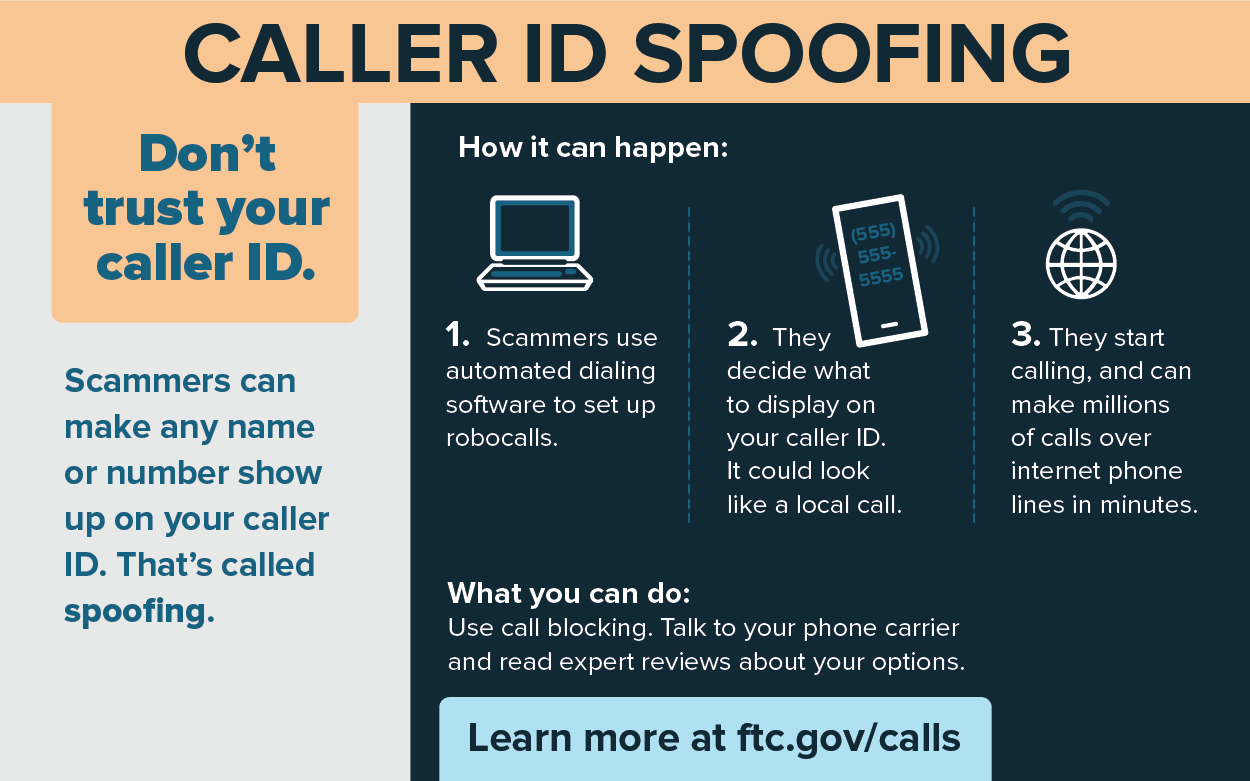
Has something like that happened to you in the past? Perhaps, when you answered the phone from the call coming from a person on your contacts list, there was someone else on the other line trying to con you out of money. This is becoming more and more common. It’s called Caller ID Spoofing.
What is Caller ID Spoofing?
According to the FCC:
Spoofing is when a caller deliberately falsifies the information transmitted to your caller ID display to disguise their identity. Scammers often use neighbor spoofing so it appears that an incoming call is coming from a local number, or spoof a number from a company or a government agency that you may already know and trust. If you answer, they use scam scripts to try to steal your money or valuable personal information, which can be used in fraudulent activity.
According to Verizon:
- Caller ID spoofing is the process of changing the Caller ID to any number other than the actual calling number.
- Caller ID spoofing happens when a caller knowingly falsifies the info transmitted to disguise the number they’re calling from.
- The number that displays on your Caller ID may look as though it’s coming from a government agency, business, or even someone in your contacts list in an attempt to trick you into answering the call.
- If the caller’s intent is to defraud, cause harm or scam you into providing info you may not otherwise provide over the phone, the spoofing is illegal.
- If no harm is intended or caused, the spoofing is not illegal. Some people may have legitimate reasons to hide their info, such as a law enforcement agency or a doctor’s office.
What Is Neighbor Spoofing?
Neighbor spoofing is a form of spoofing in which robocallers display a number similar to your own on your caller ID to increase the chance that you’ll answer the call.
Is Caller ID Spoofing Legal?
There are some cases where it’s illegal, and there are others where it’s actually legal to do (which we will get into here in a bit). First, the FCC says:
Under the Truth in Caller ID Act, FCC rules prohibit anyone from transmitting misleading or inaccurate caller ID information with the intent to defraud, cause harm or wrongly obtain anything of value. Anyone who is illegally spoofing can face penalties of up to $10,000 for each violation.
Now, the FCC does state that there are also legal and legitimate uses for Caller ID Spoofing. They give the example of when a doctor calls a patient from their personal phone number, the caller ID shows that the call is coming from their office. No harm, no foul there, right?
How To Avoid Caller ID Spoofing
You may not be able to tell right away if an incoming call is spoofed. Be extremely careful about responding to any request for personal identifying information.
- Don’t answer calls from unknown numbers. If you answer such a call, hang up immediately.
- If you answer the phone and the caller – or a recording – asks you to hit a button to stop getting the calls, you should just hang up. Scammers often use this trick to identify potential targets.
- Do not respond to any questions, especially those that can be answered with “Yes” or “No.”
- Never give out personal information such as account numbers, Social Security numbers, mother’s maiden names, passwords, or other identifying information in response to unexpected calls or if you are at all suspicious.
- If you get an inquiry from someone who says they represent a company or a government agency, hang up and call the phone number on your account statement, in the phone book, or on the company’s or government agency’s website to verify the authenticity of the request. You will usually get a written statement in the mail before you get a phone call from a legitimate source, particularly if the caller is asking for a payment.
- Use caution if you are being pressured for information immediately.
- If you have a voicemail account with your phone service, be sure to set a password for it. Some voicemail services are preset to allow access if you call in from your own phone number. A hacker could spoof your home phone number and gain access to your voicemail if you do not set a password.
- Talk to your phone company about call-blocking tools and check into apps that you can download to your mobile device. The FCC allows phone companies to block robocalls by default based on reasonable analytics. More information about robocall blocking is available at fcc.gov/robocalls.
Remember to check your voicemail periodically to make sure you aren’t missing important calls and to clear out any spam calls that might fill your voicemail box to capacity.
What Can You Do About Caller ID Spoofing?
Unfortunately, it’s hard to decipher if a call from one of your contacts is a scam or not until you answer. First things first, avoid answering yes or no questions and never give out personal information. If the caller asks you to hit a button on your phone, just hang up. Another thing that you can do if you receive a call from one of your contacts and it seems a little off (especially if you aren’t sure if it’s legit or them) is to tell the caller that you will call them back in a second. Then, go into your phone to call your contact to confirm if it was them or not. If you think you’ve been the victim of a spoofing scam, you can file a complaint with the FCC at https://reportfraud.ftc.gov/#/?orgcode=SCARS
-/ 30 /-
What do you think about this?
Please share your thoughts in a comment below!
Table of Contents
To Understand All Scams
Read This
The SCARS Institute Relationship Scams Formula Checklist
This is the Formula that all Relationship Scams Follow




In the U.S. & Canada
U.S. & Canada Suicide Lifeline 988

Recent Comments
On Other Articles
- Barbara on SCARS Institute – Romance Scam Simulator: “Fantastic! I have to go to bed, but I’ll do some more tomorrow. I picked an easy scenario tonight, but…” Oct 9, 18:01
- on United States – Federal Bureau of Investigations [FBI]: “It is only that way because of the shame you feel. The reality is that it was not your fault.…” Sep 30, 15:36
- on United States – Federal Bureau of Investigations [FBI]: “yhisis humiliating experience e and isembarassassing to to own up to peolealreadyassume u are not to bright because Arnold and…” Sep 30, 12:28
- on United States – Federal Bureau of Investigations [FBI]: “should be better known by public live in assisiwdlivi g apartment many manyinstancresof Romance scams here ano.us ederly l” Sep 30, 12:24
- on Is It A Scam? Phone Scam Diagnostic – v1: “I tried the this test Is it a phone scam? Mine was. I think this is a helpful tool to…” Sep 30, 10:34
- on Is It A Scam? Romance Scam Diagnostic – v2: “Carole, as you move forward with your recovery, you will learn how this all works. It was not your fault.…” Sep 29, 17:37
- on Is It A Scam? Romance Scam Diagnostic – v2: “I was blinded by such clever manipulation” Sep 29, 15:15
- on The SCARS Institute Relationship Scams Formula Checklist – 2026: “As I read this I could see myself in every step with my scam. I gained a lot more knowledge…” Aug 28, 19:51
- on The Persistence of Danielle Delaunay as a Fake Identity – 2026: “Unfortunately, you are being scammed. She is using a fake name regardless. At this point, your best option is to…” Aug 26, 20:16
- on The Persistence of Danielle Delaunay as a Fake Identity – 2026: “Dear Sirs, I have met this woman with the name Abigail Boateng in Ghana. I have an intensive mail contact…” Aug 26, 12:28

Thank you for your comment. You may receive an email to follow up. We never share your data with marketers.