


SCARS Institute’s Encyclopedia of Scams™ Published Continuously for 25 Years
Border Patrol Scam Warning – U.S. Customs and Border Patrol (CBP) Warns U.S. Residents of Prolific Phone Scam
Source: U.S. Customer & Border Patrol
A Border Patrol telephone scam is targeting residents nationwide in an attempt to gain banking information from unsuspecting victims.
U.S. Customs and Border Protection agents and officers nationwide are continuing to receive numerous calls from residents concerned about unsolicited calls from scammers posing as U.S. Border Patrol agents and U.S. Customs and Border Protection officers.
Border Patrol Phone Scams: Recognizing and Protecting Yourself from U.S. Government Impersonation
Border Patrol phone scams have been a persistent problem, with scammers impersonating U.S. government agents to deceive and exploit unsuspecting individuals. These scams often involve threats, intimidation, and demands for money, causing significant financial and emotional distress to victims.
Overview of Board Partol Scams
Residents are reporting the calls are a pre-recorded message stating, “a box of drugs and money being shipped has your (caller) name on it and it has been intercepted.”
The caller is then instructed to press #1 to speak with a CBP Officer/Agent, which then attempts to get the caller’s banking information. There have also been reports of this same type of scam, however, the caller is an actual person, not a pre-recorded message.
These calls, whether a pre-recorded message or live person, are phone scams/phishing attempts and residents are urged to not provide the caller with any information.
Modus Operandi of Border Patrol Phone Scams
Scammers typically employ a combination of tactics to manipulate their victims. They may:
-
Pose as CBP agents: Scammers often claim to be agents from the U.S. Customs and Border Protection (CBP) agency, using official-sounding names and badge numbers to gain credibility.
-
Fabricate urgent situations: Scammers may create a sense of urgency by claiming to have intercepted illegal packages or uncovered suspicious activity linked to the victim.
-
Demand immediate action: Scammers may pressure victims to make quick decisions, often demanding immediate payment or threatening legal action if the victim does not comply.
-
Request personal information: Scammers may ask for personal information, such as Social Security numbers, bank account details, or credit card numbers, to further their deceptive scheme.
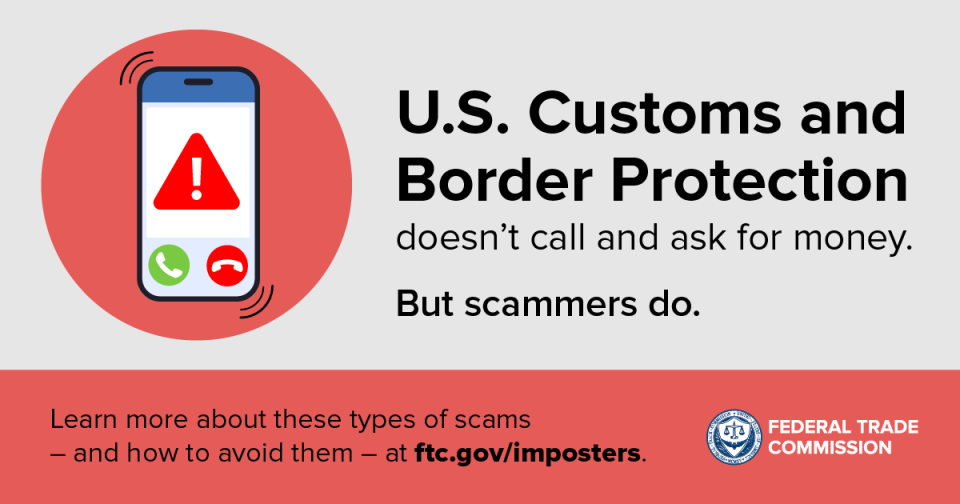
The Department of Homeland Security and CBP does not solicit money over the phone.
“If you receive one of these calls, don’t give out any of your information. The best thing you can do is write down the caller’s number and report it,” said Grand Forks Sector Border Patrol Chief Anthony S. Good.
Other Examples of Common Stories Used by Border Patrol Scammers
Border Patrol scammers use a variety of stories to frighten their victims and get them to give personal banking and other details. These stories often play on fears about immigration, crime, and legal consequences.
Here are some examples of the stories that Border Patrol scammers tell their victims:
-
“You are under investigation for illegal immigration activities.” This story is designed to scare victims into believing that they are in trouble with the law and that they need to take immediate action to avoid arrest or deportation.
-
“Your Social Security number has been linked to a criminal investigation.” This story is designed to make victims feel vulnerable and fearful that their identity has been compromised. Scammers may claim to be investigating a crime related to illegal immigration or other criminal activity.
-
“You have an outstanding warrant for your arrest.” This story is designed to create a sense of urgency and panic, prompting victims to make quick decisions and comply with the scammer’s demands.
-
“You owe money to the CBP and must pay it immediately to avoid legal action.” This story is a direct attempt to extort money from victims. Scammers may claim that the debt is related to a fine for a border crossing violation or another immigration-related offense.
-
“You have been selected to receive a government grant, but you need to provide your personal information to verify your eligibility.” This story is designed to trick victims into revealing personal details under the guise of receiving a government benefit. Scammers may use this information to commit identity theft or other fraudulent activity.
The Impact of Border Patrol Scams
Border Patrol phone scams can have severe consequences for victims, including:
-
Financial losses: Scammers often request significant sums of money, leaving victims with financial burdens and potential debt.
-
Emotional distress: The fear, anxiety, and embarrassment caused by these scams can lead to emotional distress and psychological harm.
-
Identity theft: Scammers may use stolen personal information to commit identity theft, further compromising victims’ financial security and creditworthiness.
-
Reputational damage: The association with a fraudulent activity can tarnish an individual’s reputation and social standing, affecting personal relationships and career prospects.
Protecting Yourself from Border Patrol Phone Scams
To safeguard yourself from Border Patrol phone scams, follow these precautions:
-
Remain vigilant: Be skeptical of unsolicited calls from individuals claiming to be government agents.
-
Verify caller identity: Ask for the caller’s name, badge number, and department, and request to call them back at a known official government number.
-
Never share personal information: Do not provide personal information, such as Social Security numbers, bank account details, or credit card numbers, over the phone unless you are certain of the caller’s identity.
-
Question suspicious requests: If a caller demands immediate payment or threatens legal action, question their authenticity and do not comply.
-
Hang up and report: If you suspect a scam, hang up immediately and report the incident to the Federal Trade Commission (FTC) and the CBP.
Remember, the CBP never solicits money over the phone or requests personal information through unsolicited calls.
How to Report these Border Patrol Scams
If such calls are received, people should make a note of the number and any pertinent details about the call/caller, and immediately hang up. Residents are encouraged to report the incidents as soon as possible. Phone scams can be reported to the Federal Trade Commission online.
Learn more at reporting.AgainstScams.org
Summary
By exercising caution, staying informed, and reporting suspicious activity, you can protect yourself from the harmful effects of Border Patrol phone scams and ensure your personal information and financial security remain safe.
About The Border Patrol
U.S. Customs and Border Protection is the unified border agency within the Department of Homeland Security charged with the comprehensive management, control, and protection of our nation’s borders, combining customs, immigration, border security, and agricultural protection at and between official ports of entry.
More:
- Government Impersonation Scams Are On The Rise! (scamsnow.com)
- Bank Account Takeover Fraud (Phone Scam) (romancescamsnow.com)
- Cloning Your Relative’s Voice For Phone Scams [VIDEO] (romancescamsnow.com)
- New Abortion Phone Scam (romancescamsnow.com)
- One Ring Call Phone Scam – Scam Basics (romancescamsnow.com)
- Robocall Scam Phone Call Examples – Watch Out! [VIDEOS] (romancescamsnow.com)
- Police Impersonation Scam Phone Calls – How Scams Work (romancescamsnow.com)
- Scammers Are The New Boogeymen! 2023 (scamsnow.com)
- Bank Account Takeover Fraud Can Happen To You! A Victim’s Story! (scamsnow.com)
- Why Scammers Don’t Give Up (scamsnow.com)
-/ 30 /-
What do you think about this?
Please share your thoughts in a comment below!
Table of Contents
To Understand All Scams
Read This
The SCARS Institute Relationship Scams Formula Checklist
This is the Formula that all Relationship Scams Follow


In the U.S. & Canada
U.S. & Canada Suicide Lifeline 988

Recent Comments
On Other Articles
- Barbara on SCARS Institute – Romance Scam Simulator: “Fantastic! I have to go to bed, but I’ll do some more tomorrow. I picked an easy scenario tonight, but…” Oct 9, 18:01
- on United States – Federal Bureau of Investigations [FBI]: “It is only that way because of the shame you feel. The reality is that it was not your fault.…” Sep 30, 15:36
- on United States – Federal Bureau of Investigations [FBI]: “yhisis humiliating experience e and isembarassassing to to own up to peolealreadyassume u are not to bright because Arnold and…” Sep 30, 12:28
- on United States – Federal Bureau of Investigations [FBI]: “should be better known by public live in assisiwdlivi g apartment many manyinstancresof Romance scams here ano.us ederly l” Sep 30, 12:24
- on Is It A Scam? Phone Scam Diagnostic – v1: “I tried the this test Is it a phone scam? Mine was. I think this is a helpful tool to…” Sep 30, 10:34
- on Is It A Scam? Romance Scam Diagnostic – v2: “Carole, as you move forward with your recovery, you will learn how this all works. It was not your fault.…” Sep 29, 17:37
- on Is It A Scam? Romance Scam Diagnostic – v2: “I was blinded by such clever manipulation” Sep 29, 15:15
- on The SCARS Institute Relationship Scams Formula Checklist – 2026: “As I read this I could see myself in every step with my scam. I gained a lot more knowledge…” Aug 28, 19:51
- on The Persistence of Danielle Delaunay as a Fake Identity – 2026: “Unfortunately, you are being scammed. She is using a fake name regardless. At this point, your best option is to…” Aug 26, 20:16
- on The Persistence of Danielle Delaunay as a Fake Identity – 2026: “Dear Sirs, I have met this woman with the name Abigail Boateng in Ghana. I have an intensive mail contact…” Aug 26, 12:28

Thank you for your comment. You may receive an email to follow up. We never share your data with marketers.