

SCARS Institute’s Encyclopedia of Scams™ Published Continuously for 25 Years

Avoid Disaster & Charity Scams
Protecting Generosity: How to Avoid Charity Scams
Catalog of Scams – A SCARS Institute Insight
PLEASE NOTE: Because of the rampant number of charity scams, the SCARS Institute no longer accepts individual donations.
Article Abstract
Charity scams exploit compassion, urgency, and trust, targeting donors who want to help during disasters and personal crises. Criminals create fake charities, impersonate government agencies, hijack crowdfunding platforms, and pressure people into donating through unsafe methods like gift cards, wire transfers, cryptocurrency, or peer-to-peer apps. In 2024, the FBI’s Internet Crime Complaint Center (IC3) received over 4,500 reports of fraudulent charity schemes, causing losses of about $96 million, while total U.S. fraud losses exceeded $12.5 billion. Protecting generosity requires caution and verification. Donors can reduce their risk by confirming charities through trusted resources like CharityNavigator.org, donating only via official websites, and avoiding unsolicited links or payment requests. Safe giving means pausing before donating, using secure payment methods, and reporting suspicious activity to the FBI’s IC3 or the FTC at ReportFraud.ftc.gov. By staying vigilant, donors can ensure their contributions support legitimate causes and prevent criminals from profiting off compassion.
Protecting Generosity: How to Avoid Charity Scams
It is vital to avoid disaster and charity scams! Disasters and personal crises often bring out the best in people, inspiring compassion, solidarity, and generosity. Unfortunately, these same moments of vulnerability attract those who seek to exploit them. Scammers understand that kindness opens wallets, and they prey on the emotional urgency that follows natural disasters, personal tragedies, and global crises. By creating fake charities, impersonating legitimate organizations, or hijacking donation platforms, these criminals steal from well-meaning donors and divert aid away from people who truly need it.
Charity scams appear in many forms. Some use official-sounding names and professional-looking websites designed to convince donors that their money will reach victims. Others imitate government relief agencies, leveraging trust to collect personal data or demand fraudulent payments. Crowdfunding platforms have also become common targets, with scammers setting up campaigns using stolen photos, fabricated stories, and duplicate fundraisers to trick people into donating. These schemes are carefully crafted to manipulate emotions and push individuals into giving quickly without verifying where their money is going.
Beyond disasters, scammers work year-round to take advantage of goodwill. They exploit social media platforms, email lists, and text messaging to reach as many people as possible, often using urgency and fear as tools. Requests for gift cards, wire transfers, cryptocurrency, or peer-to-peer payment apps are common red flags. In many cases, once the money is sent, there is little chance of recovering it.
The good news is that protecting donations is possible with awareness and caution. By verifying charities through trusted sources, avoiding unsolicited links, and donating only through official websites, individuals can ensure their contributions reach legitimate organizations. Taking time to pause, research, and confirm before sending money helps safeguard resources and keeps scammers from profiting off tragedy.
Charity scams succeed because they exploit trust and empathy. Recognizing the warning signs and knowing where to turn for verification allows donors to give confidently while protecting themselves. With the right precautions, generosity can reach the people and causes that need it most, without enriching criminals who prey on compassion.
These Scams are Very Common
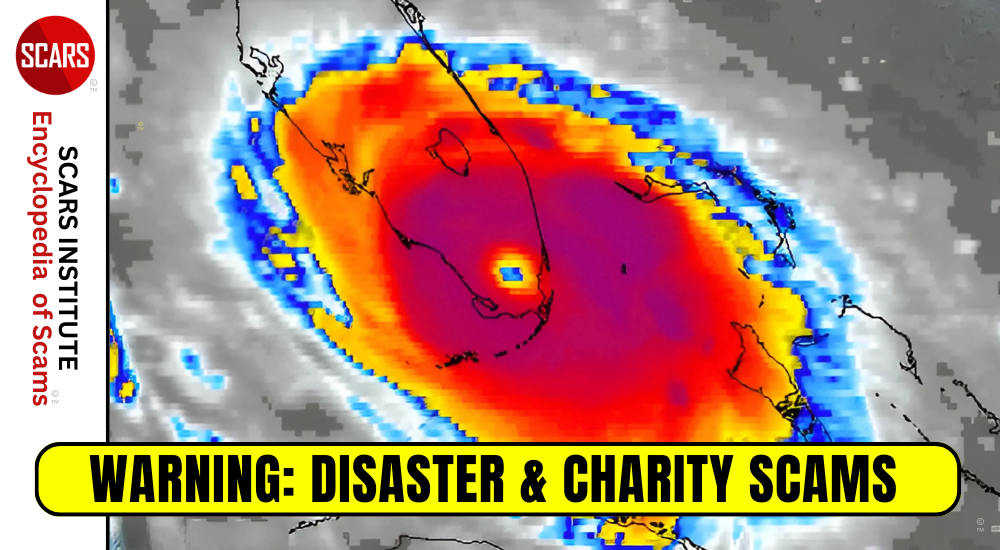
When caring individuals see suffering in others, whether from hurricanes, wildfires, or other disasters, they are moved to act. Sadly, this compassion can be exploited. Scammers quickly set up false charities, clone relief websites, or hijack crowdfunding campaigns to steal generously intended donations. These crimes are not rare. In 2024 alone, the FBI’s Internet Crime Complaint Center (IC3) received over 4,500 reports of losses tied to fraudulent charities and disaster relief campaigns, totaling around $96 million. Nationally, Americans reported losing more than $12.5 billion to fraud in the same year, a 25 percent rise from the previous year.
Reducing your risk of falling victim starts with awareness and cautious action. Here’s how to identify charity scams and take reliable steps to protect your generosity.
How to Avoid Charity Scams – Step by Step
- Verify Official Sources
If a disaster-related relief message appears, never follow unsolicited links. Go directly to FEMA.gov or DisasterAssistance.gov for help. Fraudulent FEMA sites may ask for personal data or fake payments; FEMA never charges fees. - Check Charity Credentials
Research charities using trusted platforms like CharityNavigator.org, CharityWatch, or your state’s charitable regulator. Avoid ads, social media links, or unusual URLs. Scammers often employ names similar to real charities; small changes can hide fraud. - Avoid Risky Fundraising Pages
Crowdfunding sites like GoFundMe often host both legitimate and fake campaigns. Only donate to fundraisers created by people you know or by widely verified, reputable groups. Scammers frequently use stolen images and fictitious stories. - Be Wary of Fraudulent Help Offers
After disasters, unscrupulous contractors or impersonators may pose as aid workers or Red Cross volunteers. Legitimate helpers do not charge upfront or operate without credentials, licensing, or written estimates. - Use Secure Payment Methods
Never donate using gift cards, wire transfers, cryptocurrency, or peer-to-peer apps such as Venmo or Zelle. These methods offer little protection and are commonly invoked in fraud. Instead, use credit cards or checks through verified websites for safer tracking. - Slow Down and Report Suspicious Activity
Scammers thrive on urgency and emotion. If something feels off, pause. Verify the cause, ask questions, and check independent sources. Then, report suspected scams to the FBI’s IC3 or the FTC’s ReportFraud.ftc.gov. Your reports help law enforcement track and stop criminals - Why It Matters
Your generosity can make a real difference if it reaches legitimate causes. Charity fraud not only diverts resources but also undermines trust in charitable systems. In 2024, nearly 38 percent of people who reported scams said they lost money; fake charities can be part of that wave. By following these steps, verifying legitimacy, protecting personal information, using safe payment methods, and staying alert, you help keep your gifts where they belong and your compassion intact.
Conclusion
Charity scams succeed because they exploit trust, compassion, and urgency. Scammers understand that people want to help others during disasters and personal crises, and they use this instinct to their advantage. By creating fake charities, copying the names of real organizations, or impersonating government agencies, they divert money away from legitimate causes and into criminal networks. The result is not only financial loss but also fewer resources reaching the people who truly need them.
Protecting donations begins with slowing down and verifying before giving. Relying on official sources, researching organizations through trusted databases, and avoiding risky payment methods dramatically lowers the chance of falling victim. Donors can also help others by reporting suspicious charities to the FBI’s IC3 or the FTC’s ReportFraud.ftc.gov, enabling law enforcement to track and shut down fraudulent operations.
Generosity is one of society’s greatest strengths, but it requires caution to ensure that it reaches the right hands. With awareness, deliberate action, and reliable resources, individuals can continue to give confidently and securely. Scammers rely on panic, but informed donors can protect themselves, their money, and the causes they care about most.
Please Note: The SCARS Institute (Society of Citizens Against Relationship Scams Inc.) is a privately funded nonprofit registered in the state of Florida, USA. We do not accept private donations any longer.
Reference
-/ 30 /-
What do you think about this?
Please share your thoughts in a comment below!
Table of Contents
To Understand All Scams
Read This
The SCARS Institute Relationship Scams Formula Checklist
This is the Formula that all Relationship Scams Follow





In the U.S. & Canada
U.S. & Canada Suicide Lifeline 988

Recent Comments
On Other Articles
- Barbara on SCARS Institute – Romance Scam Simulator: “Fantastic! I have to go to bed, but I’ll do some more tomorrow. I picked an easy scenario tonight, but…” Oct 9, 18:01
- on United States – Federal Bureau of Investigations [FBI]: “It is only that way because of the shame you feel. The reality is that it was not your fault.…” Sep 30, 15:36
- on United States – Federal Bureau of Investigations [FBI]: “yhisis humiliating experience e and isembarassassing to to own up to peolealreadyassume u are not to bright because Arnold and…” Sep 30, 12:28
- on United States – Federal Bureau of Investigations [FBI]: “should be better known by public live in assisiwdlivi g apartment many manyinstancresof Romance scams here ano.us ederly l” Sep 30, 12:24
- on Is It A Scam? Phone Scam Diagnostic – v1: “I tried the this test Is it a phone scam? Mine was. I think this is a helpful tool to…” Sep 30, 10:34
- on Is It A Scam? Romance Scam Diagnostic – v2: “Carole, as you move forward with your recovery, you will learn how this all works. It was not your fault.…” Sep 29, 17:37
- on Is It A Scam? Romance Scam Diagnostic – v2: “I was blinded by such clever manipulation” Sep 29, 15:15
- on The SCARS Institute Relationship Scams Formula Checklist – 2026: “As I read this I could see myself in every step with my scam. I gained a lot more knowledge…” Aug 28, 19:51
- on The Persistence of Danielle Delaunay as a Fake Identity – 2026: “Unfortunately, you are being scammed. She is using a fake name regardless. At this point, your best option is to…” Aug 26, 20:16
- on The Persistence of Danielle Delaunay as a Fake Identity – 2026: “Dear Sirs, I have met this woman with the name Abigail Boateng in Ghana. I have an intensive mail contact…” Aug 26, 12:28

Thank you for your comment. You may receive an email to follow up. We never share your data with marketers.