

SCARS Institute’s Encyclopedia of Scams™ Published Continuously for 25 Years
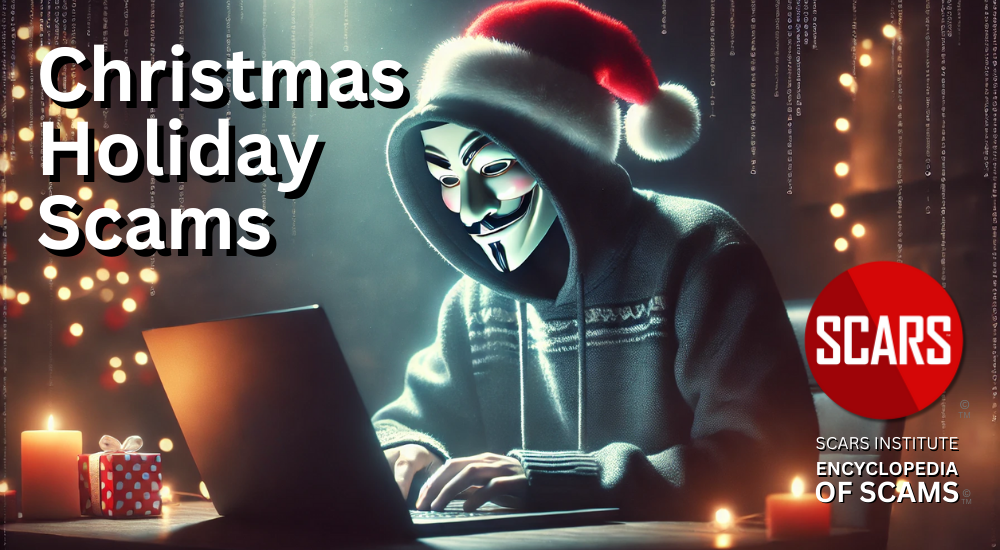
Avoid Christmas Holiday Scams
Typical Christmas Holiday Scams: What to Watch Out For and Avoid – Don’t Become a Scam Victim This Year
Catalog of Scams – A SCARS Institute Insight
Author:
• SCARS Institute Encyclopedia of Scams Editorial Team – Society of Citizens Against Relationship Scams Inc.
Article Abstract
During the Christmas holiday scams season, scammers exploit the festive spirit and increased online activity to target unsuspecting individuals through various schemes.
Common holiday scams include fake online shops offering unrealistic discounts, phishing emails impersonating trusted retailers or courier services, and charity fraud designed to take advantage of seasonal generosity.
Social media scams, gift card tampering, romance scams, and travel fraud further highlight the range of deceptive tactics employed during this time. Delivery scams involving fake tracking links are also prevalent as people eagerly await packages.
To stay protected, individuals should verify websites, avoid suspicious links, research charities, and remain cautious with unsolicited offers or requests. By staying informed and vigilant, people can safeguard their finances and personal information while fully enjoying the holiday season.
Typical Christmas Holiday Scams: What to Watch Out For and Avoid – Don’t Become a Scam Victim This Year
The holiday season is a time of joy, generosity, and shopping. Unfortunately, it is also a prime opportunity for scammers to exploit people’s goodwill, urgency, and excitement. From fraudulent websites to fake charities, understanding these scams can help you protect yourself and your loved ones during this festive period. Below are eight common Christmas holiday scams and tips on how to avoid them.
1. Fake Online Shops
Scammers create fake e-commerce websites offering unbelievably good deals on popular gifts to steal money or personal information. These sites are designed to look legitimate, featuring enticing prices to lure shoppers into making quick purchases. Once payment details are entered, the scammers either disappear with your money or use your credit card information for further fraudulent activities.
Tip: Always shop from trusted, well-known retailers. Verify the legitimacy of a website by checking reviews, payment security features, and contact information.
2. Delivery Scams
During the holiday season, people are eagerly awaiting package deliveries, making delivery scams particularly effective. Fraudsters send fake texts or emails pretending to be from courier services, claiming packages require additional fees or personal details to complete delivery. Clicking on these links can lead to phishing sites or malware downloads.
Tip: Avoid clicking on unexpected delivery-related links. Instead, verify delivery updates directly on the courier’s official website using tracking numbers.
3. Gift Card Scams
Criminals manipulate gift cards sold in stores or request payments via pre-paid gift cards for online purchases. In some cases, scammers tamper with gift cards before sale, stealing the funds once the cards are activated. Online scams often insist on gift card payments, as these are difficult to trace and recover.
Tip: Only purchase gift cards from reputable sources. Never pay for goods or services using gift cards when requested online.
4. Charity Fraud
The season of giving makes people more inclined to donate to charities, which scammers exploit by creating fake charitable organizations. Fraudulent websites and phone calls request donations, tugging at heartstrings with fabricated stories.
Tip: Verify the legitimacy of a charity through its official website or platforms like Charity Navigator. Be wary of unsolicited donation requests, especially if payment must be made urgently.
5. Social Media Scams
Fraudsters leverage social media platforms to post fake competitions, giveaways, and extreme discounts. These posts often encourage users to click on links, share personal information, or send small payments to claim their “prizes.” In reality, the scammers steal personal details or money.
Tip: Avoid clicking on links or participating in competitions shared through unfamiliar accounts. Verify the authenticity of promotions through the company’s official page or website.
6. Phishing Emails
Cybercriminals disguise emails as messages from trusted retailers, banks, or service providers. These emails often include urgent calls to action, such as confirming account details, recovering lost orders, or clicking links for exclusive deals. Once clicked, they steal sensitive information like passwords or banking details.
Tip: Be cautious with unsolicited emails. Verify the sender’s email address and avoid clicking on suspicious links. Contact the organization directly if in doubt.
7. Romance Scams
Fraudsters exploit individuals looking for companionship during the holiday season by building trust and emotional connections online. They eventually fabricate emergencies requiring financial assistance, manipulating victims into sending money under false pretenses.
Tip: Be wary of online relationships that progress too quickly or involve requests for financial help. Never send money to someone you have not met in person.
8. Travel Scams
The holidays often involve travel, which scammers take advantage of by offering fake travel deals and vacation packages. These offers may involve low prices for flights, hotels, or tours that seem too good to be true. Once payment is made, victims realize the services do not exist.
Tip: Book travel through trusted platforms or directly with airlines and hotels. Be skeptical of unsolicited offers and deals requiring immediate payment.
How to Avoid Holiday Scams
- Verify Websites: Only shop on trusted, official websites. Avoid deals that seem too good to be true.
- Double-Check Delivery Messages: Never click on unexpected links in delivery-related emails or texts.
- Be Cautious with Gift Cards: Buy gift cards from reputable retailers and avoid paying for online purchases with them.
- Research Charities: Confirm a charity’s legitimacy through its website or official databases.
- Think Before You Click: Ignore suspicious emails, e-cards, and social media offers for giveaways or extreme discounts.
Conclusion
The holiday season, while joyous, creates ample opportunities for scammers to exploit unsuspecting individuals. Recognizing the most common Christmas scams—such as fake online shops, phishing emails, and charity fraud—can help you stay alert and safeguard your finances and personal information. By verifying sources, avoiding suspicious links, and exercising caution, you can protect yourself and fully enjoy the spirit of the season. Stay informed, stay vigilant, and make this holiday season scam-free.
-/ 30 /-
What do you think about this?
Please share your thoughts in a comment below!
Table of Contents
To Understand All Scams
Read This
The SCARS Institute Relationship Scams Formula Checklist
This is the Formula that all Relationship Scams Follow



In the U.S. & Canada
U.S. & Canada Suicide Lifeline 988

Recent Comments
On Other Articles
- Barbara on SCARS Institute – Romance Scam Simulator: “Fantastic! I have to go to bed, but I’ll do some more tomorrow. I picked an easy scenario tonight, but…” Oct 9, 18:01
- on United States – Federal Bureau of Investigations [FBI]: “It is only that way because of the shame you feel. The reality is that it was not your fault.…” Sep 30, 15:36
- on United States – Federal Bureau of Investigations [FBI]: “yhisis humiliating experience e and isembarassassing to to own up to peolealreadyassume u are not to bright because Arnold and…” Sep 30, 12:28
- on United States – Federal Bureau of Investigations [FBI]: “should be better known by public live in assisiwdlivi g apartment many manyinstancresof Romance scams here ano.us ederly l” Sep 30, 12:24
- on Is It A Scam? Phone Scam Diagnostic – v1: “I tried the this test Is it a phone scam? Mine was. I think this is a helpful tool to…” Sep 30, 10:34
- on Is It A Scam? Romance Scam Diagnostic – v2: “Carole, as you move forward with your recovery, you will learn how this all works. It was not your fault.…” Sep 29, 17:37
- on Is It A Scam? Romance Scam Diagnostic – v2: “I was blinded by such clever manipulation” Sep 29, 15:15
- on The SCARS Institute Relationship Scams Formula Checklist – 2026: “As I read this I could see myself in every step with my scam. I gained a lot more knowledge…” Aug 28, 19:51
- on The Persistence of Danielle Delaunay as a Fake Identity – 2026: “Unfortunately, you are being scammed. She is using a fake name regardless. At this point, your best option is to…” Aug 26, 20:16
- on The Persistence of Danielle Delaunay as a Fake Identity – 2026: “Dear Sirs, I have met this woman with the name Abigail Boateng in Ghana. I have an intensive mail contact…” Aug 26, 12:28

Thank you for your comment. You may receive an email to follow up. We never share your data with marketers.